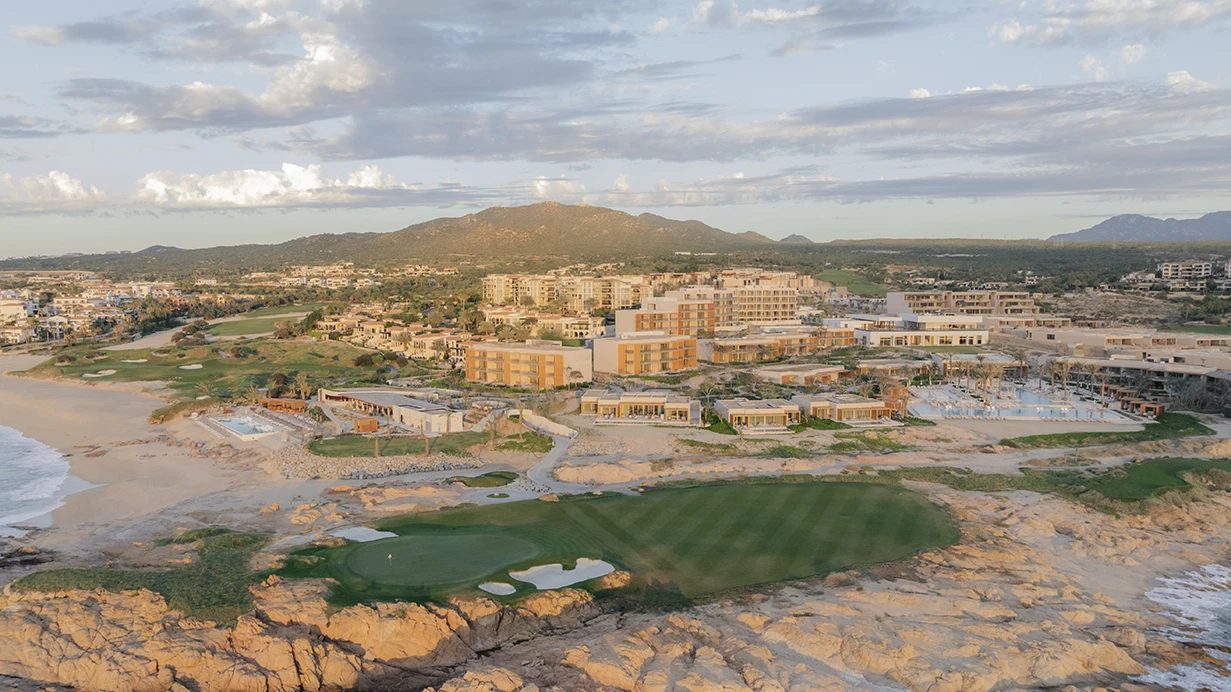
Every time a world-class hotel opens in Los Cabos, the residential properties around it appreciate. This is not speculation — it is the most reliable pattern in the Cabo real estate market. Four Seasons lifted Costa Palmas from an unknown East Cape development to a globally recognized address. Montage turned Twin Dolphin from a golf community into a luxury destination. And Amanvari, which opened in August 2026, is already reshaping how the East Cape is priced.
Want to Position Ahead of the Next Hotel Opening?
I track every resort pipeline project in Los Cabos. Let me show you which communities are next in line for the hotel-driven value lift.
Get In TouchKey Takeaways
- Properties within a master-planned community that adds a branded hotel typically see 20–40% appreciation from announcement to hotel opening, based on observed patterns at Costa Palmas, Twin Dolphin, and Diamante.
- The value lift is driven by three factors: brand recognition (global marketing spend), infrastructure investment (roads, utilities, amenities), and access to hotel services (restaurants, spa, concierge, beach club) for residents.
- The current pipeline includes Grand Hyatt and Conrad at Oleada (2026–2027), St. Regis at Quivira (under construction), and potential future projects at Cabo del Sol and other Corridor sites.
- Timing matters: the maximum value inflection happens between hotel groundbreaking and 12 months post-opening. Early buyers capture the most appreciation.
- Not all hotel openings create equal value. Ultra-luxury flags (Aman, Four Seasons, Ritz-Carlton) create the strongest halo effect; upper-upscale flags (Hyatt, Hilton) bring more volume but a more modest premium.
The Pattern: How Hotels Lift Property Values
The mechanism is straightforward. A world-class hotel brings:
- Brand recognition. When Four Seasons opens at Costa Palmas, the development goes from "that project on the East Cape" to "the Four Seasons address." The hotel's global marketing budget — tens of millions of dollars annually — promotes the destination to exactly the demographic that buys luxury property. You cannot buy that kind of exposure.
- Infrastructure investment. Hotels require roads, water, power, telecommunications, and landscaping at standards that residential developments alone rarely achieve. That infrastructure benefits every property in the community.
- Amenity access. Residents within a hotel-anchored community typically gain access to the hotel's restaurants, spa, beach club, and concierge services — either included in HOA fees or available at resident rates. This transforms the daily living experience.
- Rental management pipeline. Hotels operate branded rental programs that bring professional management to residential units within the same community. This drives higher occupancy and nightly rates for homeowners who participate.
Case Studies: What Actually Happened
Costa Palmas + Four Seasons + Amanvari
Costa Palmas is the textbook example. This 1,500-acre East Cape development was a speculative project when it broke ground. Four Seasons opened its 145-room resort in 2019, and the residential pricing trajectory changed immediately. Lot prices that started at $500,000–$800,000 pre-hotel now trade at $1.5M–$5M+. Finished homes that were $2M–$4M pre-Four Seasons now list at $5M–$25M.
Then Amanvari opened on August 1, 2026 — 18 casitas at $3,000–$4,500/night — and the premium intensified further. Costa Palmas is now one of only a handful of addresses globally with both Four Seasons and Aman on the same property. That distinction makes it a tier-one global luxury address, comparable to Amanyara + Como in Turks and Caicos or the hotel concentration in the Maldives atolls.
Twin Dolphin + Montage
Twin Dolphin was a respected but relatively quiet golf community before Montage announced its 122-room resort. The hotel opened and immediately elevated the community's profile with a luxury traveler audience that had never heard of Twin Dolphin. Residential lot prices increased 25–35% during the construction period, and resale values of existing homes jumped as new buyers arrived — drawn by the Montage name and amenity access.
Looking for Pre-Hotel-Opening Opportunities?
The best time to buy near a future hotel is before it opens, not after. Let me walk you through which communities are in that window right now.
Book a CallThe Current Hotel Pipeline: Where to Look
St. Regis at Quivira — Under Construction
Quivira already has Copala condos, the Nicklaus-designed golf course, and the Pueblo Bonito resort complex. The addition of a St. Regis takes it to a different level. St. Regis is Marriott's pinnacle luxury flag — the brand of the Astor family, white-glove butler service, global prestige. Michelin-starred chef Carlos Gaytán is confirmed for the signature restaurant.
Artist's rendering — the St. Regis at Quivira is not yet built. For buyers, the construction phase is the opportunity window. Properties within Quivira — particularly Copala resale units and available lots — are currently priced without the St. Regis premium fully baked in. Once the hotel opens and begins operating, expect the same value lift pattern observed at Costa Palmas and Twin Dolphin.
Grand Hyatt & Conrad at Oleada — Late 2026 / 2027
See our detailed Oleada guide. The Grand Hyatt (300 rooms) targets late 2026 and the Conrad (130 rooms + 40 branded residences) follows in 2027. While not ultra-luxury flags, the dual Hilton presence creates a different kind of value proposition: high-volume tourism driving services and rental demand.
Soho House at Cabo del Sol — Expected 2026
Cabo del Sol already has the Park Hyatt and two legendary golf courses (Ocean and Desert). Soho House, the members-only club brand, estimated early 2026 opening with restaurant, three bars, beach club, and Soho Health Club. For buyers in Cabo del Sol, this adds a social and lifestyle amenity layer that the community did not previously have.
Timing Strategy: When to Buy
Based on the pattern observed across multiple Los Cabos hotel openings, here is the typical value timeline:
- Announcement to groundbreaking: 5–15% appreciation as early speculators and informed buyers position.
- Groundbreaking to topping out: another 10–20% as the project becomes visible, real, and photographable. Marketing launches. Media coverage increases.
- 12 months pre-opening: this is the sweet spot. The hotel is clearly going to open, marketing is ramping, but the full operational premium is not yet priced into residential. Buyers who enter here capture the final leg of pre-opening appreciation.
- Opening to 12 months post-opening: the brand halo takes effect. TripAdvisor reviews appear, social media posts from guests generate organic awareness, and the residential market reprices to reflect the new reality.
- 12+ months post-opening: pricing stabilizes at the new higher baseline. You are now buying at the post-hotel premium rather than ahead of it.
The takeaway: the maximum risk-adjusted return comes from buying after groundbreaking (confirming the project is real) but before opening (capturing the remaining appreciation). Right now, that window applies to St. Regis at Quivira, Conrad at Oleada, and Soho House at Cabo del Sol.
Risks and Caveats
Not every hotel opening creates the same value lift:
- Ultra-luxury flags (Aman, Four Seasons, Ritz-Carlton Reserve, St. Regis) create the strongest halo effect because their guest demographic overlaps directly with the luxury property buyer demographic.
- Upper-upscale flags (Grand Hyatt, Hilton, Marriott core brands) bring volume and services but a more modest residential premium. They are community-builders, not price-multipliers.
- Hotel delays and cancellations are a real risk. Pre-construction timelines in Mexico regularly slip 12–24 months. Some projects are announced and never built. Never buy solely on a hotel announcement — wait for groundbreaking and visible construction progress.
- Oversaturation risk in specific corridors. If too many hotels open too close together, they compete for the same guests and the amenity premium dilutes. Los Cabos is not at this point yet — the market absorbs 3.8M visitors annually — but it is worth monitoring.
Position Your Investment Ahead of the Next Opening
I track every hotel pipeline project in Los Cabos and know which properties are best positioned to capture the value lift. Let me build a strategy for your budget.
Get In TouchFrequently Asked Questions
How much do property values increase when a hotel opens nearby?+
Based on observed patterns at Costa Palmas (Four Seasons), Twin Dolphin (Montage), and other Los Cabos communities, properties within a master-planned community that adds a branded hotel typically appreciate 20 to 40% from announcement to hotel opening. Ultra-luxury flags (Aman, Four Seasons, Ritz-Carlton) create the strongest effect. The appreciation continues 12 to 18 months post-opening as the brand's marketing and reputation take effect.
What hotels are opening in Los Cabos in 2026 and 2027?+
The active pipeline includes: Amanvari at Costa Palmas (opened August 2026), Grand Hyatt at Oleada (targeting late 2026), St. Regis at Quivira (under construction), Soho House at Cabo del Sol (estimated 2026), and Conrad at Oleada with 40 branded residences (2027). The SJD Airport $370M expansion running through 2029 supports continued new hotel investment.
When is the best time to buy near a future hotel?+
The optimal buying window is after groundbreaking (confirming the project is real) but before the hotel opens. This captures the remaining pre-opening appreciation while minimizing the risk of a project cancellation. In the current market, that window applies to St. Regis at Quivira, Conrad at Oleada, and Soho House at Cabo del Sol.
Do all hotel brands create the same property value increase?+
No. Ultra-luxury flags like Aman, Four Seasons, Ritz-Carlton Reserve, and St. Regis create the strongest residential value halo because their guest demographics overlap directly with luxury property buyers. Upper-upscale flags like Grand Hyatt and Hilton bring volume tourism and services with a more modest residential premium. The effect also depends on the community size — a hotel in a small exclusive community has a proportionally larger impact than one in a large master-planned development.
What are the risks of buying near a hotel under construction?+
Three main risks: (1) Construction delays — pre-construction timelines in Mexico regularly slip 12 to 24 months. (2) Project cancellation — some announced hotels are never built. Wait for visible construction progress, not just an announcement. (3) Oversaturation — too many hotels in the same corridor competing for guests can dilute the amenity premium, though Los Cabos is not at this point with 3.8 million annual visitors.
Aaron Cuha
Real Estate Advisor & Los Cabos Market Expert
Real estate advisor and founder of Living In Cabo. 15+ years helping families navigate complex real estate decisions. Strategic partner with Ronival — Baja's largest brokerage.