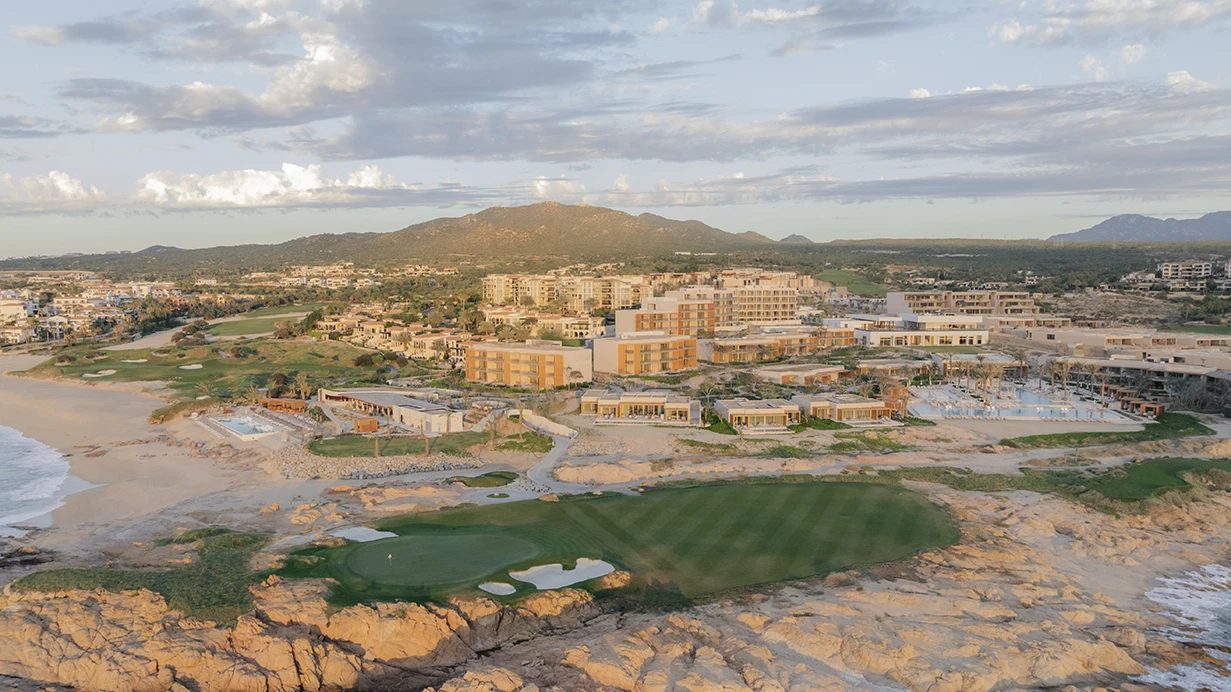
Los Cabos is in the middle of a $500M+ infrastructure build-out that will reshape which neighborhoods appreciate fastest over the next five years — a second desalination plant, a third highway, Costco expansion, and airport growth are all either under construction or in active planning.
Key Takeaways
- ✓ Second desalination plant (250 L/s, Acciona partnership) targeted for October 2026 completion — resolves the #1 buyer concern
- ✓ Eje Interurbano third highway corridor will open inland communities like El Tezal and Fonatur to faster growth
- ✓ SJD airport handled 7.2M passengers in 2024 (+12.5% YoY) with continued capacity expansion
- ✓ Infrastructure improvements have historically driven 10-20% appreciation in affected corridors within 2-3 years
- ✓ Best-positioned neighborhoods: El Tezal, Fonatur, the mid-Corridor, and Pacific Side
Want to Buy Ahead of the Infrastructure Curve?
I'll help you identify which neighborhoods are best positioned to benefit from these projects and connect you with the right agent.
Get Investment GuidanceThe Second Desalination Plant: Solving the Water Question
Let me be blunt about this: water supply has been the single biggest infrastructure risk in Los Cabos real estate for the past decade. Every serious buyer I work with asks about it, and for good reason. The region sits in a desert — annual rainfall averages less than 10 inches — and the first desalination plant, while functional, didn't fully close the gap between supply and demand during peak season.
The second desalination plant, built through a partnership with Acciona (one of the world's largest water-infrastructure companies), will add 250 liters per second of treated water capacity. Targeted for completion in October 2026, this plant will push total desalination output well past current peak demand. Combined with improvements to the distribution network, it effectively removes water scarcity as a constraint on future development.
Why does this matter for property values? Because institutional investors — the developers building the $100M+ projects that drive regional appreciation — have consistently cited water uncertainty as the primary risk factor in their underwriting. Remove that risk, and you unlock a wave of capital that's been sitting on the sidelines. That's not speculation; it's the stated position of multiple developers in the Los Cabos Developers Association (ADIT).
What Water Security Means for Property Values
The most direct beneficiaries are communities that have faced development moratoria or slowdowns due to water allocation constraints. Several master-planned communities along the Corridor and in the El Tezal corridor have had new phases delayed pending water infrastructure — those delays end once the second plant is operational.
- Developers currently waitlisted for water allocation can break ground on delayed phases
- Insurance and lending institutions that have flagged water risk will recalibrate
- Resale properties in water-constrained areas should see a risk-premium discount disappear
- New developments on the Pacific Side and East Cape become more viable as regional capacity grows
Eje Interurbano: The Third Highway Changes Everything
Right now, there are essentially two ways to drive between Cabo San Lucas and San Jose del Cabo: Highway 1 (the Transpeninsular) through the inland route, and the Corridor's coastal road. During peak season — December through April — both are clogged. A 20-minute drive becomes 45-60 minutes.
The Eje Interurbano is a planned third corridor running through the inland hills, connecting the two cities via a faster, less congested route. It's still in the planning and early development phase, but the alignment has been surveyed and government commitment has been formalized.
If you're thinking about buying in El Tezal or Fonatur, pay attention. These inland communities have historically traded at a discount to Corridor oceanfront because of access — it took too long to get there during traffic. The Eje Interurbano specifically routes through or near both of them. When a highway project cuts commute times by 40-50% to a neighborhood, history shows property values respond. The original Highway 1 widening in the mid-2000s correlated with 15-25% appreciation in newly accessible communities within three years.
Costco Expansion to San Jose del Cabo
This one gets less attention than the highway and desalination projects, but for daily quality of life, it matters as much. Costco currently operates one location in Cabo San Lucas — and anyone living in San Jose del Cabo, the Corridor, or the East Cape drives 30-45 minutes each way to get there.
A second Costco in the San Jose area changes the convenience calculus for thousands of residents. Beyond the practical benefit of closer shopping, it signals something important: Costco's real estate team does exhaustive demographic analysis before committing to a new location. When they commit to San Jose del Cabo, they're telling you that the population density and spending power in that corridor has crossed a threshold that justifies a $15-20M store investment. That's a data point, not an opinion.
For property values, the effect is straightforward. Buyers — especially full-time residents and snowbirds — weigh daily convenience heavily. A Costco within 15 minutes versus 45 minutes is a genuine lifestyle improvement. Communities near the new location will see an uptick in buyer interest. Based on US data from the Joint Center for Housing Studies at Harvard, proximity to major retail anchors correlates with 3-5% higher home values on average.
Fonatur Roundabout Modernization
FONATUR — Mexico's national tourism development fund that originally master-planned the San Jose del Cabo tourist zone — is modernizing the primary roundabout interchanges. If you've driven through San Jose, you know these roundabouts: they're the bottleneck points where traffic backs up during every busy season.
The modernization includes improved traffic flow design, better signage, upgraded landscaping, and pedestrian infrastructure. It sounds mundane, but for the Fonatur residential zone specifically, it translates to improved walkability, reduced congestion, and a more finished, modern feel that directly impacts property desirability.
Fonatur has been one of my "quiet value" picks for a while. It offers walkable access to San Jose del Cabo's downtown, the Art District, restaurants, and schools — at price points ($250K-$2M) that are a fraction of Corridor oceanfront. As infrastructure modernization continues, the gap between Fonatur's quality of life and its pricing becomes harder to ignore.
Want the Infrastructure Map for Your Budget?
Book a free call and I'll walk you through exactly which projects affect which neighborhoods — and where the pricing hasn't caught up yet.
Book a Free CallSJD Airport: 7.2 Million Passengers and Growing
San Jose del Cabo International Airport (SJD) handled approximately 7.2 million passengers in 2024, up 12.5% from 6.4 million in 2023, according to Grupo Aeroportuario del Pacifico (GAP). The airport now serves direct flights from over 40 US and Canadian cities, with new routes added seasonally.
Airport passenger growth is one of the most reliable leading indicators for resort real estate markets. More flights mean more tourists, more tourists mean more rental income for property owners, and more rental income means higher property values. The relationship isn't theoretical — it's documented in every major resort market from Hawaii to the Riviera Maya.
For Los Cabos specifically, the shift toward year-round service (rather than seasonal-only routes) is the bigger story. Airlines like Southwest, Alaska, JetBlue, and WestJet have been adding shoulder-season and summer frequencies, which extends the rental season for property owners. For more on how this affects specific routes, see our 2026 new flights guide.
Electric Bus Transit: Early Stage but Worth Watching
An electric bus transit system connecting Cabo San Lucas and San Jose del Cabo has been proposed and is in early feasibility stages. If built, it would be the first reliable public transit link between the two cities — currently, service workers and residents without cars rely on colectivos (minibuses) and taxis.
I'm not going to pretend this is imminent or certain. It's in the "proposed and studied" category, not the "under construction" category. But if it happens, the impact on communities along the route would be significant — reduced car dependency, lower cost of living for service workers (which affects HOA staffing costs), and a modernization signal that appeals to environmentally conscious buyers.
Where Infrastructure Meets Opportunity: The Investment Thesis
Here's my framework for translating infrastructure projects into buying decisions:
The best time to buy in any market is before the infrastructure arrives, not after. Right now, El Tezal condos trade at $250K-$800K — a fraction of Corridor pricing. Fonatur offers walkable San Jose living at $250K-$2M. The Pacific Side has properties from $300K-$3M with genuine frontier upside. All three corridors are directly served by 2026 infrastructure projects. For the complete breakdown of Cabo communities by price and location, see our best areas to buy guide.
Established luxury communities like Palmilla and Chileno Bay will also benefit from infrastructure improvements — but their current pricing already reflects premium access. The outsized returns go to buyers who position ahead of the curve, not after it. Whether Los Cabos is a good long-term investment overall, see our 2026 investment analysis.
Position Yourself Ahead of the Infrastructure
I'll map the infrastructure timeline to your budget and goals — and show you where the pricing hasn't caught up yet.
Contact Me TodayFrequently Asked Questions
When will the second Los Cabos desalination plant be completed?+
The second desalination plant is targeted for completion in October 2026. Built through a partnership with Acciona, it will add 250 liters per second of capacity. Combined with the existing first plant, total desalination capacity will exceed the current residential and tourism demand, resolving water-supply constraints that have been the number-one infrastructure concern for property buyers in the region.
What is the Eje Interurbano highway in Los Cabos?+
The Eje Interurbano is a planned third highway corridor connecting Cabo San Lucas and San Jose del Cabo through an inland route, supplementing the existing Transpeninsular Highway (Highway 1) and the Corridor's coastal road. It aims to reduce traffic congestion, especially during peak tourist season, and will improve access to inland communities like El Tezal, Club Campestre, and Fonatur. The project is in planning/early development phases.
Is Costco opening in San Jose del Cabo?+
Yes. Costco has confirmed expansion to the San Jose del Cabo area. While exact opening dates have shifted, the project is moving forward with land secured and construction planned. This follows Costco's existing Cabo San Lucas location and will serve the growing east-side population, reducing driving times for residents of San Jose del Cabo, the East Cape, and Corridor communities.
How does infrastructure affect property values in Los Cabos?+
Infrastructure improvements historically drive 10-20% price appreciation in affected corridors within 2-3 years of completion, based on analysis of prior Los Cabos projects. The original Transpeninsular Highway widening in the mid-2000s correlated with rapid appreciation along the Corridor. Water security (desalination) removes the single biggest risk factor cited by institutional investors, while road access improvements open previously undervalued areas to development.
How many passengers does SJD airport handle?+
San Jose del Cabo International Airport (SJD) handled approximately 7.2 million passengers in 2024, up from 6.4 million in 2023 — a 12.5% year-over-year increase according to Grupo Aeroportuario del Pacifico (GAP). The airport serves as the primary gateway for Los Cabos tourism and real estate buyers, with direct flights from over 40 US and Canadian cities.
What is Fonatur doing to modernize Los Cabos?+
FONATUR (Mexico's national tourism development fund) is modernizing the primary roundabout interchanges in San Jose del Cabo, improving traffic flow at key bottleneck intersections. Additionally, FONATUR continues to upgrade the tourist corridor's landscaping, signage, and pedestrian infrastructure. These improvements directly benefit the Fonatur residential zone in San Jose del Cabo, which is seeing renewed buyer interest as walkability and access improve.
Is there going to be electric bus transit in Los Cabos?+
An electric bus transit system connecting Cabo San Lucas and San Jose del Cabo has been proposed and is in early feasibility/planning stages. If implemented, it would provide the first reliable public transit link between the two cities, reducing car dependency for service workers and providing a commute alternative for residents. No firm construction timeline has been announced as of mid-2026.
Which Los Cabos neighborhoods benefit most from the infrastructure boom?+
The areas positioned for the strongest infrastructure-driven appreciation are: El Tezal (benefits from Eje Interurbano highway access and proximity to both cities), Fonatur/San Jose downtown (FONATUR roundabout modernization and Costco proximity), the Corridor between the two desalination plants, and the Pacific Side (improved road access opens previously remote areas). East Cape communities also benefit from cumulative access improvements.

Aaron Cuha
Real Estate Advisor & Los Cabos Market Expert
Real estate advisor and founder of Living In Cabo. 15+ years helping families navigate complex real estate decisions. Strategic partner with Ronival — Baja's largest brokerage.