Marina slip rates in Los Cabos run $23 to $32 per foot per day. Marina Cabo San Lucas has 380 slips for vessels up to 200 feet; Puerto Los Cabos is expanding from 230 to 400. I've walked both docks with clients — here's whether a slip investment actually pencils.
Key Takeaways
- Marina Cabo San Lucas: ~380 slips, vessels up to 200 feet
- Puerto Los Cabos: ~230 slips today, expanding toward 400
- Slip rates run $23-$32/ft/day plus tax; Puerto Los Cabos owners get a 10% discount
- Liveaboard costs run $2,500-$5,000/month all-in
- Bisbee's tournament season drives marina occupancy and slip demand to its annual peak
Thinking About Marina-Adjacent Property or a Slip?
I've walked both Cabo marinas with clients making this exact decision. Let's figure out which setup actually fits how you'll use the boat.
Talk to Aaron1. Two Marinas, Two Very Different Vibes
I've walked both docks in Marina Cabo San Lucas and Puerto Los Cabos more times than I can count, usually with a client trying to decide whether they want a boat, a marina-view condo, or both. They are not the same product, and conflating them is the first mistake I see buyers make.
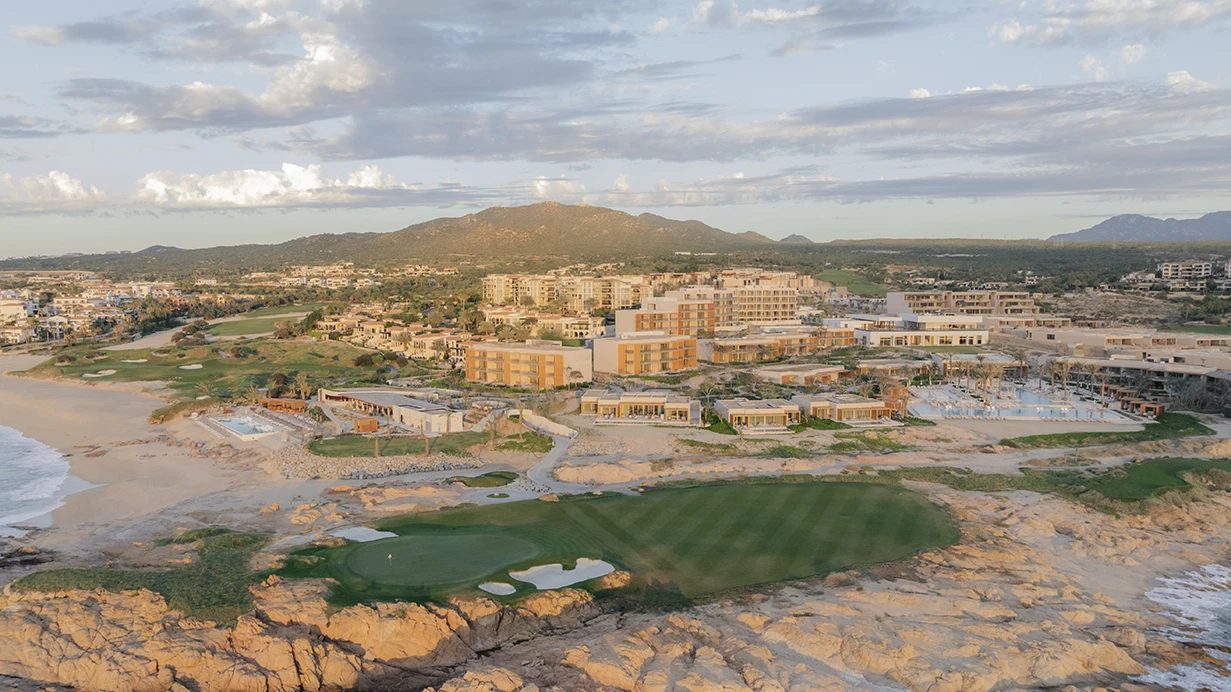
Marina Cabo San Lucas is the loud, commercial, downtown marina — sportfishing fleets lined up at dawn, superyachts tied off next to charter boats, restaurants and bars spilling right onto the boardwalk. Puerto Los Cabos, out toward San Jose del Cabo, is quieter, more residential, and built as part of a master-planned community rather than a standalone commercial harbor.
I had a client a couple of years back who was dead set on a slip at Marina Cabo San Lucas simply because it's the name he'd heard. We walked both docks on the same trip. By the end of the day at Puerto Los Cabos — quieter water, a golf course visible from the breakwater, none of the jet-ski traffic and diesel fumes of the downtown marina — he'd completely changed his mind. That's the value of walking both in person before committing to either.
2. The Marinas by the Numbers
| Metric | Marina Cabo San Lucas | Puerto Los Cabos |
|---|---|---|
| Current slip count | ~380 | ~230, expanding to ~400 |
| Max vessel length | 200 ft | Smaller-to-mid range, growing |
| Setting | Downtown, commercial hub | Residential master-plan community |
| Owner slip discount | Not structured by ownership | 10% for property owners |
| Character | Sportfishing fleet, nightlife, superyachts | Quieter, family-oriented, growing |
Neither is objectively "better" — they serve different owners. If you want to walk off your boat into a bar at 9pm, Marina Cabo San Lucas is unmatched. If you want your boat five minutes from a quiet residence and a golf course, Puerto Los Cabos is the better fit, and it's only getting more capable as the slip expansion completes.
3. What a Slip Actually Costs
Published daily rates across Los Cabos marinas run $23 to $32 per foot per day, plus applicable Mexican tax. Run the math on a 60-foot boat: at $27/ft/day (a reasonable mid-range estimate), that's roughly $1,620 a day at the daily rate — clearly not the number most owners actually pay, since almost nobody berths a boat on a pure daily rate for months at a time.
- Daily/transient rate: $23-$32/ft/day — used by visiting boats, tournament traffic, and short stays
- Monthly rate: Substantially discounted off the daily rate, the standard structure for locally-based vessels
- Annual/long-term lease: The lowest effective per-day cost, typically the right structure if you're keeping a boat in Cabo year-round
- Puerto Los Cabos owner discount: 10% off slip rates for residential property owners in the development
The takeaway: don't underwrite a slip decision off the daily rate you see in a marketing brochure. Ask for the actual annual lease pricing before you commit to keeping a boat here full-time.
4. Vessel Ownership, Import Rules, and Insurance
If you're buying a boat to base permanently in Mexico rather than chartering an existing one, importation is its own process separate from the real estate side of this decision. Foreign-flagged vessels typically operate under a Temporary Import Permit (TIP), which requires renewal and has its own documentation trail through Mexican customs (Aduana). Some owners instead choose to formally import and register the vessel under Mexican flag, which changes the tax and resale picture — this is a decision worth making with a maritime attorney, not guessing at based on a marina office's informal advice.
Insurance is the other piece people underestimate. US-based marine insurance policies don't automatically cover a vessel based full-time in Mexican waters — confirm your policy explicitly extends to Mexican marinas and Mexican territorial waters, or get a Mexico-specific marine policy through a broker who understands the local claims process. I've seen more than one owner discover a coverage gap only after a claim, which is exactly the wrong time to find out.
- Temporary Import Permit (TIP): Standard route for a foreign-flagged vessel kept in Mexico part-time or full-time
- Mexican flag registration: An alternative for owners planning long-term, permanent basing — changes tax treatment and resale process
- Marine insurance: Confirm explicit Mexican-waters coverage rather than assuming a US policy travels with the boat
- Crew and captain licensing: Required documentation differs for a privately-used vessel versus one operating commercially as a charter
Want Real Numbers, Not Brochure Rates?
Book a call and I'll get you actual current lease pricing from both marinas before you commit to a slip or a marina-adjacent purchase.
Book a Call5. The Liveaboard Option
A growing number of owners in Cabo San Lucas skip the condo entirely and live aboard their vessel full or part-time. All-in liveaboard costs — slip fees, utilities, marina services — typically run $2,500 to $5,000 a month depending on vessel size and marina choice. Compare that to renting a comparable waterfront condo near Hacienda Beach, and for the right vessel and the right owner, it's a genuinely competitive lifestyle option, not just a novelty.
It's not for everyone — hurricane season prep, provisioning logistics, and simply less square footage than a condo are real trade-offs. But I have clients who've done it for years and wouldn't go back to a fixed address.
6. Can a Slip or Boat Actually Make You Money?
There are two real paths to income here, and they're very different businesses. The first is subleasing the slip itself when you're not using it, where marina rules allow it — a modest, largely passive supplement to ownership costs. The second is running an actual sportfishing or luxury charter operation, which is a real business requiring a captain, crew, insurance, marketing, and booking management — not passive income by any stretch.
Our yacht charter guide goes deeper on what that business actually requires. My honest take for most buyers: don't purchase a boat or slip primarily as an investment vehicle. Buy it because you'll use it and love it, and treat any charter income as a bonus that offsets carrying costs rather than the reason for the purchase.
| Charter Type | Typical Vessel Size | Revenue Model |
|---|---|---|
| Half-day sportfishing charter | 28-45 ft | Per-trip booking, highest volume, lowest per-trip revenue |
| Full-day sportfishing / tournament charter | 35-60 ft | Premium per-trip pricing, tournament-season spikes |
| Luxury day charter (sunset cruise, snorkeling) | 40-70 ft | Group bookings, strong margins on beverage/catering add-ons |
| Superyacht charter | 80 ft+ | Weekly rates, highest revenue ceiling, highest crew and insurance overhead |
Whichever category you're evaluating, run the numbers on a fully-loaded basis — captain and crew wages, fuel, dockage, insurance, marketing, and maintenance reserves — before assuming gross charter revenue translates to meaningful net profit. Most operators I know treat the boat itself as a lifestyle asset first and a business second, and structure their expectations accordingly.
7. Bisbee's and the Seasonal Surge
Every fall, the Bisbee's tournament series — anchored by Bisbee's Black & Blue, one of the richest fishing tournaments in the world — brings a wave of multi-million-dollar sportfishing yachts into Cabo San Lucas. Marina occupancy and slip demand hit their annual peak during tournament weeks, and it's a genuine spectacle if you've never seen the fleet lined up at the marina during weigh-in.
If you're weighing slip availability, know that late summer and fall bring the tightest competition for transient space at Marina Cabo San Lucas specifically. Long-term leaseholders aren't displaced, but anyone shopping for short-term slip access during that window should book well ahead.
8. Should You Buy a Slip, or Just Buy Near the Marina?
For most of my clients, the better move is buying marina-adjacent real estate rather than trying to own a slip outright — most Cabo marinas operate under lease and concession structures rather than fee-simple slip ownership anyway. A residence in Hacienda Beach or within Puerto Los Cabos gives you the walk-to-your-boat lifestyle, real estate appreciation, and rental flexibility, while slip access gets arranged separately through the marina's leasing office.
Owning a slip (or a long-term lease position) makes the most sense specifically if you're running a charter business, keeping a large vessel here full-time, or you've already got the boat and just need a reliable home for it. Know which category you're in before you start shopping — it changes the entire decision.
9. Getting Started
Whether you're chasing marina-adjacent real estate or trying to understand slip economics before buying a boat, walk both marinas in person before deciding — the vibe difference between downtown Cabo San Lucas and Puerto Los Cabos genuinely changes which one is right for you. Explore our marina living guide for more detail, and reach out when you're ready to look at specific properties or slip leases.
Let's Find You the Right Marina Setup
I know both marinas and the communities around them. Let's match your boat, your budget, and your lifestyle to the right address.
Contact Aaron TodayFrequently Asked Questions
How much does a marina slip cost in Los Cabos?+
Daily slip rates in Los Cabos marinas run $23 to $32 per foot per day, plus applicable tax, depending on the marina and season. For a 60-foot vessel, that's roughly $1,380 to $1,920 a day at published rates, though long-term and annual leases bring the effective daily cost down substantially.
How many slips does Marina Cabo San Lucas have?+
Marina Cabo San Lucas has approximately 380 slips and accommodates vessels up to 200 feet, making it the primary marina serving downtown Cabo San Lucas, the sportfishing fleet, and the bulk of the region's charter and superyacht traffic.
Is Puerto Los Cabos marina expanding?+
Yes. Puerto Los Cabos currently operates around 230 slips and has announced plans to expand to roughly 400 slips, positioning it as a serious second marina hub in the region alongside Marina Cabo San Lucas, with a quieter, more residential setting near San Jose del Cabo.
Do property owners get a discount on marina slips?+
At Puerto Los Cabos, residential property owners in the development receive a 10% discount on slip rates, a meaningful perk for anyone who owns a boat and lives in or near the marina community. Marina Cabo San Lucas doesn't tie slip pricing to residential ownership in the same structured way, since it functions as more of a standalone commercial marina.
How much does it cost to live aboard a boat in a Cabo marina?+
Liveaboard costs, combining slip fees, utilities, and marina services, typically run $2,500 to $5,000 a month depending on vessel size and marina. That's competitive with — and in some cases cheaper than — renting a comparable waterfront condo, which is part of why the liveaboard community in Cabo San Lucas has grown steadily.
Can I generate income from a marina slip investment?+
Yes, primarily through two paths: subleasing the slip itself when you're not using it (where marina rules permit), or owning a vessel based there and running it as a sportfishing or luxury charter operation. Charter revenue potential scales heavily with vessel size and captain relationships — it's a business, not passive income, and should be underwritten as one.
Does the Bisbee's tournament affect marina slip demand?+
Significantly, during tournament season. Bisbee's Black & Blue and the broader Bisbee's tournament series bring an influx of multi-million-dollar sportfishing yachts into Cabo San Lucas each fall, temporarily driving marina occupancy and slip demand to their annual peak — worth factoring in if you're weighing seasonal slip availability or charter income potential.
Should I buy marina-adjacent property instead of a slip directly?+
For most of my clients, yes — buying a residence in a marina-adjacent community like Hacienda Beach or Puerto Los Cabos gives you walk-to-your-boat convenience, the lifestyle draw, and real estate appreciation, while slip access is arranged separately through lease or purchase depending on the marina's structure. Owning the slip itself makes the most sense if you're running a charter business or keeping a large vessel in Cabo full-time.

Aaron Cuha
Real Estate Advisor & Los Cabos Market Expert
Real estate advisor and founder of Living In Cabo. 15+ years helping families navigate complex real estate decisions. Strategic partner with Ronival — Baja's largest brokerage.