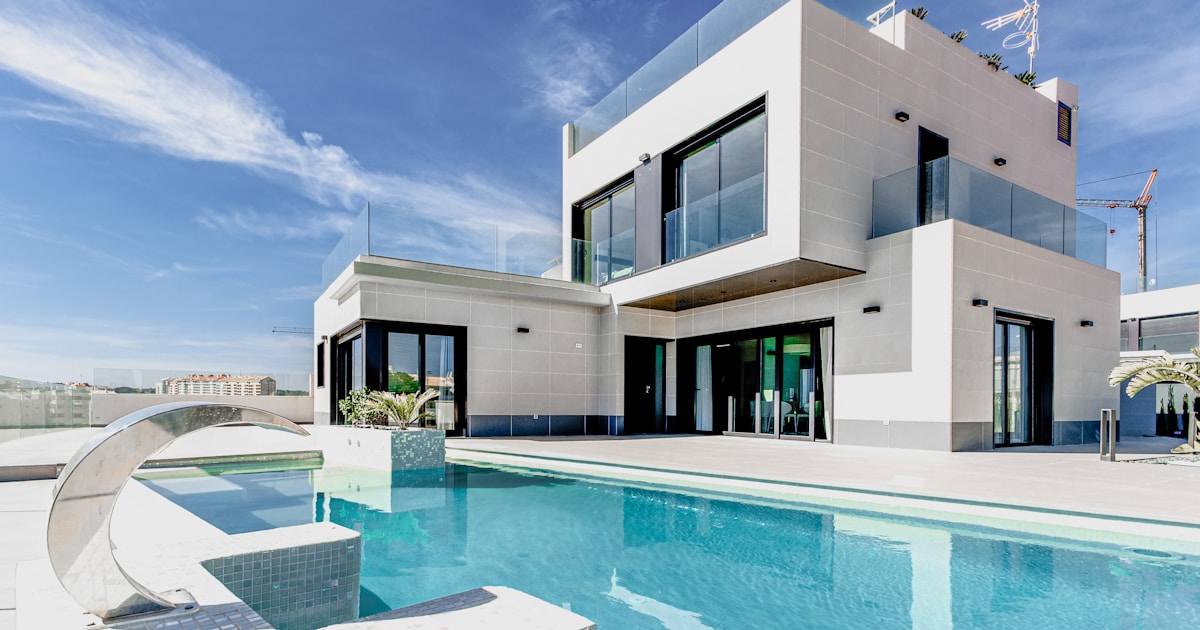
Three of my clients added casitas to their Cabo properties last year. One sailed through permits in six weeks, built a 650-square-foot guest house for $95,000, and now rents it on Airbnb at $175/night in high season. One fought the municipality of Los Cabos for four months over a drainage issue that should have been resolved in the original site plan. The third got denied outright because the COS/CUS limits on her lot had already been maxed by the primary residence — a fact nobody mentioned at closing.
Building a casita (what Americans call an ADU — accessory dwelling unit) on your Cabo property is one of the smartest moves you can make. But unlike the US, where ADU laws have been dramatically loosened in most states, Mexico has a completely different permitting framework that you need to understand before you break ground.
Key Takeaways
- Casita construction in Los Cabos costs $80–$200/sqft depending on finish level, for a typical all-in cost of $50,000–$130,000 for a 600–800 sq ft structure
- You must verify your COS (coeficiente de ocupación del suelo) and CUS (coeficiente de utilización del suelo) limits before designing — these set the maximum ground coverage and total built area allowed on your lot
- A licencia de construcción (building permit) from the municipality takes 4–8 weeks to obtain and costs $1,500–$4,000 depending on the project scope
- Most gated communities require HOA architectural committee approval in addition to the municipal permit — and some prohibit secondary structures entirely
- A well-built casita adds $40–$80/night rental income and 8–12% to overall property resale value in Los Cabos
Planning a Casita on Your Cabo Property?
We connect you with architects and contractors who know the permit process inside out.
Get ConnectedMexican Zoning: COS, CUS, and What They Mean for Your Casita
Before you sketch a single floor plan, you need to understand two numbers that govern what you can build on your lot:
COS (Coeficiente de Ocupación del Suelo) — the percentage of your lot that can be covered by structures at ground level. Think of it as the building footprint limit. In most Los Cabos residential zones, COS ranges from 40% to 60%.
CUS (Coeficiente de Utilización del Suelo) — the ratio of total built area (all floors) to lot size. A CUS of 1.0 means you can build up to 100% of your lot area across all floors. In Los Cabos residential zones, CUS typically ranges from 0.6 to 1.2.
Example: You have a 5,000-square-foot lot with COS 0.50 and CUS 0.80.
- Maximum ground footprint: 2,500 sq ft (50% of lot)
- Maximum total built area: 4,000 sq ft (80% of lot × all floors)
- Your existing home has a 1,800 sq ft footprint and 2,400 sq ft total area (two-story)
- Remaining COS capacity: 700 sq ft of ground footprint
- Remaining CUS capacity: 1,600 sq ft of total area
- A 600 sq ft single-story casita would fit within both limits
Where to find your COS/CUS: request your uso de suelo (zoning certificate) from the Dirección de Desarrollo Urbano of the Municipio de Los Cabos. This document states the allowed land use, density, and building coefficients for your specific lot. Cost: $500–$1,500. Timeline: 2–4 weeks.
If you are buying a lot with plans to add a casita later, get the uso de suelo before closing. I cannot emphasize this enough. My client who got denied had purchased a lot where the existing home already consumed 95% of the CUS allowance. There was literally no room left for a casita — and she did not find out until she applied for the construction permit.
The Permit Process Step by Step
Building a casita requires the same permitting process as any construction in Mexico. Here is the sequence:
- Uso de suelo verification (2–4 weeks, $500–$1,500). Confirm your lot's zoning allows a secondary structure and that COS/CUS capacity remains
- Architectural plans ($2,000–$6,000). Hire a licensed Mexican architect (arquitecto con cédula profesional) to draw plans that comply with local building codes. The plans must show the casita's footprint, elevations, structural system, plumbing, and electrical
- Structural engineering if required ($1,500–$4,000). For casitas on hillside lots, near arroyos, or with more than one story, a structural engineer's stamp is required
- HOA architectural committee review (2–6 weeks). If your property is in a gated community, submit plans to the HOA for review. Some communities have strict design guidelines governing roof pitch, exterior materials, color palette, setbacks, and height limits. El Dorado and Querencia have the most stringent review processes I have seen — allow 6 weeks minimum
- Licencia de construcción application (4–8 weeks, $1,500–$4,000). Submit plans to the municipal Dirección de Desarrollo Urbano. The fee is based on the square meters being built. The permit is valid for 12–24 months depending on project size
- DRO (Director Responsable de Obra) registration. Mexican law requires a licensed DRO to be registered as the responsible party for the construction. Your architect or contractor typically serves this role. Their name goes on the permit, and they are legally responsible for code compliance
Total pre-construction timeline: 8–16 weeks. Total pre-construction cost: $5,500–$15,500.
What a Casita Actually Costs to Build
Construction costs in Los Cabos depend heavily on finish level:
| Finish Level | Cost/sq ft | 600 sq ft Casita | What You Get |
|---|---|---|---|
| Basic | $80–$110 | $48K–$66K | Block walls, tile floor, basic fixtures, mini-split AC, kitchenette |
| Mid-range | $120–$160 | $72K–$96K | Plastered walls, porcelain tile, quality fixtures, full kitchen, covered terrace |
| High-end | $170–$200+ | $102K–$120K+ | Custom finishes, natural stone, designer fixtures, outdoor shower, palapa |
These are all-in numbers including foundation, structure, roof, interior finishes, plumbing, electrical, AC, and basic landscaping. They do not include the permit and design fees listed above.
Build timeline: 3–5 months for basic and mid-range, 5–8 months for high-end. Add 20% to whatever your contractor quotes for timeline — this is Cabo, not Denver.
HOA Restrictions: The Hurdle Nobody Warns About
Here is where most casita plans die. Many gated communities in Los Cabos have regimen condominal provisions that either prohibit secondary structures outright or impose restrictions that make them impractical:
- Querencia: Allows casitas but requires architectural committee approval with strict design guidelines. Minimum 50-foot setback from main structure. Review process: 4–6 weeks
- Diamante: Casitas allowed on most villa lots but not on condo/townhome lots. Must match the primary structure's architectural style
- Palmilla: Casitas allowed on estate lots only (typically 10,000+ sq ft). Separate utility metering required
- El Dorado: Highly restrictive. Casitas allowed only on select estate lots with individual approval from Discovery Land Company. The approval process can take 3+ months
- Rancho San Lucas and Rancho Cerro Colorado: Generally more permissive for casitas on larger lots. Approval timeline: 2–4 weeks
If you are buying a lot specifically to add a casita, get the HOA's architectural guidelines and a written confirmation that casitas are allowed on your specific lot before closing. Verbal assurances from sales agents are worthless.
Want to Know If Your Lot Allows a Casita?
Book a call and we will review your COS/CUS limits and HOA restrictions before you invest in plans.
Book a CallCasita Rental Income: The Math
A well-designed casita is one of the best rental income generators on a Cabo property. Here is why: it lets you rent part of your property while using the rest.
Typical casita rental performance in Los Cabos (600–800 sq ft, one bedroom, full kitchen, private entrance):
- Nightly rate: $120–$200 in peak season (November–April), $80–$140 in green season (May–October)
- Occupancy: 55–70% annually when listed on Airbnb, VRBO, and direct booking channels
- Gross annual income: $28,000–$45,000
- Net after management (20%), cleaning, and platform fees (15%): $18,000–$29,000
On a $90,000 mid-range casita build (including permits and design), that is a 20–32% cash-on-cash return in year one. The math is even better if you self-manage — though most absentee owners should not.
The strategic advantage: when you are in Cabo, you can use the main house and let the casita earn. When you are not in Cabo, you can rent both independently. Two listings from one property means two income streams and higher total revenue than a single larger listing would generate.
Design Considerations for Cabo Casitas
Based on what I have seen work best for rental and resale value:
- Separate entrance. The casita must feel like its own space, not a spare bedroom. A dedicated walkway, gate, or path that does not require passing through the main house's living areas
- Full kitchen, not just a kitchenette. Casitas with full kitchens rent for 25–30% more than those with only a mini-fridge and microwave. Guests want to cook, especially families
- Outdoor living space. A covered terrace or palapa with seating is non-negotiable in Cabo. Guests will spend 60% of their time outside
- Quality AC system. A single mini-split unit ($1,500–$2,500 installed) handles a 600 sq ft space easily. Do not cheap out on the AC — a guest who cannot sleep because it is 90°F at night leaves a one-star review
- Private bathroom with walk-in shower. Skip the bathtub. Nobody takes a bath in Cabo. Use the space for a larger shower with good water pressure
Three Casita Mistakes I See Constantly
- Building without permits. It happens — and sometimes nothing goes wrong. But when you sell, the buyer's attorney will check the construction permits against the actual built area. An unpermitted casita either needs to be retroactively permitted ($3,000–$8,000 and months of paperwork) or demolished. Do not gamble
- Ignoring drainage. Cabo gets 10–12 inches of rain annually, almost all of it in September and October. A casita that blocks natural drainage paths will flood — either itself or the main house. Your architect should include a drainage study
- Skimping on the foundation. Cabo soil ranges from sand to granite. A casita with an inadequate foundation on expansive soil will crack within two rainy seasons. A proper foundation adds $5,000–$10,000 but prevents $20,000 in repairs
Ready to Build Your Casita?
We help Cabo property owners navigate the permit process, find vetted architects, and connect with honest contractors.
Get StartedFrequently Asked Questions
How much does it cost to build a casita in Cabo?+
A 600-square-foot casita in Los Cabos costs $48,000–$66,000 for basic finish, $72,000–$96,000 for mid-range, and $102,000–$120,000+ for high-end. These are all-in construction costs ($80–$200/sqft) including foundation, structure, plumbing, electrical, and finishes. Add $5,500–$15,500 for permits, architectural plans, and engineering. Total timeline: 5–9 months from design to occupancy.
What permits do I need to build a casita in Mexico?+
You need: (1) uso de suelo verification confirming your lot allows a secondary structure ($500–$1,500, 2–4 weeks); (2) architectural plans from a licensed Mexican architect ($2,000–$6,000); (3) HOA architectural committee approval if in a gated community (2–6 weeks); and (4) a licencia de construcción from the municipality ($1,500–$4,000, 4–8 weeks). A DRO (Director Responsable de Obra) must be registered as the legally responsible party.
What are COS and CUS limits in Los Cabos?+
COS (coeficiente de ocupación del suelo) is the percentage of your lot that can be covered by buildings at ground level — typically 40–60% in residential zones. CUS (coeficiente de utilización del suelo) is the ratio of total built area (all floors) to lot size — typically 0.6–1.2. If your existing home uses most of these allowances, there may be no capacity for a casita. Verify with a uso de suelo certificate from the municipality before proceeding.
Can I rent out a casita on Airbnb in Los Cabos?+
Yes, in most areas. A 600–800 sq ft casita with one bedroom, full kitchen, and private entrance typically rents for $120–$200/night in peak season and $80–$140 in green season, achieving 55–70% annual occupancy. Gross annual income ranges from $28,000–$45,000. Net income after property management (20%), cleaning, and platform fees (15%) is $18,000–$29,000. Check your HOA rules — some communities restrict short-term rentals.
Do gated communities in Cabo allow casitas?+
It varies widely. Querencia and Diamante allow casitas on most villa lots with architectural committee approval. Palmilla allows them only on estate lots (10,000+ sq ft). El Dorado is highly restrictive with a 3+ month approval process. Rancho San Lucas and Rancho Cerro Colorado are generally more permissive. Always get written confirmation that casitas are allowed on your specific lot before purchasing — verbal assurances are worthless.
How long does it take to build a casita in Los Cabos?+
Pre-construction (permits and design): 8–16 weeks. Construction: 3–5 months for basic and mid-range finish, 5–8 months for high-end. Total from first design meeting to move-in: 5–9 months. Add 20% to your contractor's timeline estimate — delays from material sourcing, weather (rainy season in August–October), and permit processing are common in BCS.
What happens if I build a casita without permits?+
Building without permits is risky. When you sell, the buyer's attorney will compare construction permits to actual built area. An unpermitted structure must either be retroactively permitted ($3,000–$8,000 and months of paperwork) or demolished. The municipality can also issue fines and stop-work orders during construction. Insurance may not cover an unpermitted structure. Always build with proper permits.

Aaron Cuha
Real Estate Advisor & Los Cabos Market Expert
Real estate advisor and founder of Living In Cabo. 15+ years helping families navigate complex real estate decisions. Strategic partner with Ronival — Baja's largest brokerage.