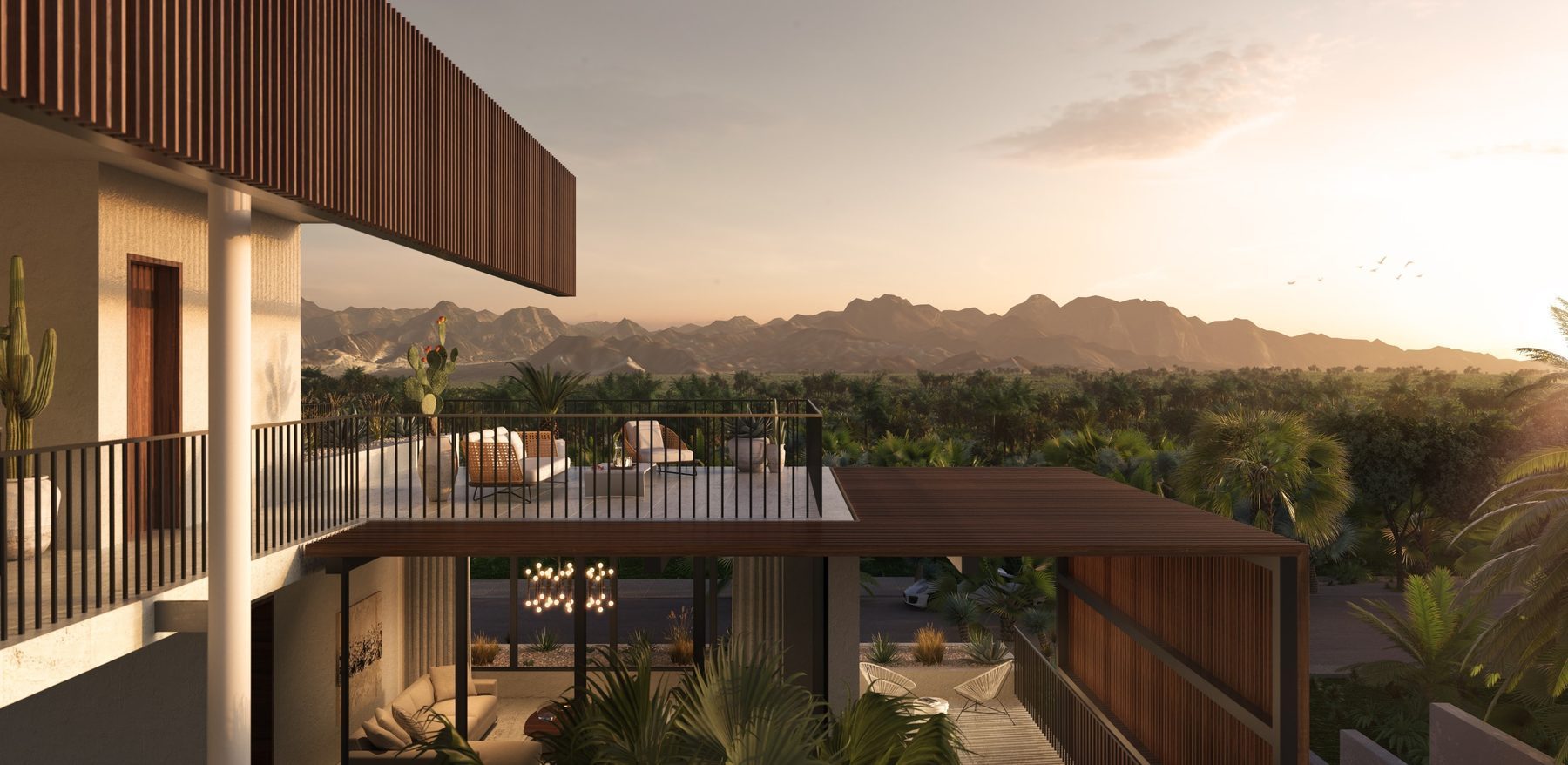
Buying pre-sale from a developer in Los Cabos can save you 15 to 25 percent versus resale — and I have seen early buyers in Quivira and Rancho San Lucas realize 30-plus percent appreciation by delivery. But the process is fundamentally different from buying resale, and the risks are real.
Key Takeaways
- ✓ Pre-sale discounts typically range from 15–25% below projected completion price
- ✓ Standard payment structure: 30/30/40 spread over 18–36 months of construction
- ✓ Biggest risk: deposits go to the developer, not escrow — verify track record before signing
- ✓ Always hire an independent attorney — never rely solely on the developer's legal team
- ✓ Best pre-sale opportunities in 2026: new phases at Quivira, Rancho San Lucas, and Cabo del Sol
Considering a Pre-Sale Purchase?
We know which developers deliver on time and which ones do not. Get honest guidance before you commit capital to a construction timeline.
Get Pre-Sale GuidanceWhy Buy Pre-Sale?
The math is straightforward. Developers need capital to build, and they are willing to sell units at below-market prices to fund construction. You are essentially providing construction financing in exchange for a discount.
Here is a real example: a two-bedroom unit at a Quivira tower sold pre-sale in Phase 1 for $380,000. By the time the building was delivered 24 months later, comparable completed units were listing at $520,000. That is a 37 percent return on a phased investment — not on the full $380,000 at once, but on incremental payments over two years.
The other advantage is customization. Pre-sale buyers can often select finishes, floor plans, and sometimes even make layout modifications. Once a unit is delivered, changes cost two to three times more.
How Pre-Sale Payment Structures Work
Los Cabos developers typically use one of these payment models:
The 30/30/40 Model
The most common structure:
- 30% at contract signing — this is your commitment deposit and it triggers the developer to allocate your unit
- 30% during construction — usually split into two or three milestone payments (foundation complete, structure complete, finishes started)
- 40% at delivery — the final payment when you take possession and the deed is transferred
On a $500,000 pre-sale unit, that means $150,000 up front, $150,000 spread over 12 to 18 months, and $200,000 at delivery. Some buyers use the construction period to save or arrange the final payment.
The 50/50 Model
Some luxury developers — especially those building custom villas — use a simpler structure: 50 percent at signing, 50 percent at delivery. This is more common for higher-priced units ($1 million and above) where the developer has sufficient capital from other sources.
Launch Incentive Structures
During launch events, developers sometimes offer enhanced terms: reduced deposits (10 to 20 percent instead of 30), longer payment timelines, or included upgrades (premium finishes, furniture packages, appliance packages). These are worth pursuing if you can attend a launch event in person — Rancho San Lucas and Cabo del Sol both run launch events for new phases.
The Purchase Agreement: What to Look For
This is where an independent attorney earns their fee. Never sign a pre-sale contract reviewed only by the developer's legal team. Here is what your attorney should verify:
- Delivery date with penalty clause: The contract should specify a delivery date and what happens if the developer misses it — either a financial penalty (typically 0.1 to 0.5 percent of the purchase price per month of delay) or the right to cancel and receive a full refund
- Refund terms for non-delivery: If the project is never completed, how and when are your deposits returned? The best contracts specify a timeline (60 to 90 days) and guarantee the return of all payments
- Specification sheet (anexo tecnico): This is the document that defines exactly what you are getting — floor plan, finishes, appliances, fixtures. It should be attached to the contract as an exhibit, not referenced separately
- Force majeure scope: Developers will claim force majeure for delays. Make sure the clause is specific — pandemics, natural disasters, government shutdowns — not a blanket excuse for any delay
- Assignment rights: Can you sell or assign the contract before delivery? Some developers allow it (sometimes with a fee), which gives you an exit option if your circumstances change
Want a Pre-Sale Contract Reviewed?
Our network includes bilingual real estate attorneys who specialize in pre-sale agreements. Get an independent review before you sign.
Book a CallDeveloper Due Diligence Checklist
Before you write the first check, verify these items:
- Licencia de construccion: The municipal building permit. No permit, no deal — even if the sales office is beautiful and the renderings are stunning. I have seen projects with gorgeous marketing materials that never obtained their building permits.
- Land title verification: Have your attorney run a title search on the underlying land. Confirm it is not ejido (communal agricultural land that requires conversion before development), there are no liens, and the developer has clear ownership or a valid lease.
- Track record: Has this developer completed projects before? Visit their delivered properties. Talk to owners. Check construction quality. Established developers like Pueblo Bonito (Quivira), Solmar Group (Rancho San Lucas), and Irongate (Costa Palmas) have institutional backing and multi-decade track records.
- Financial backing: Is the project bank-financed? Projects with construction loans from major banks (Banorte, BBVA, Scotiabank) have institutional oversight. Self-financed projects from unknown developers carry more risk.
- Environmental permits: The MIA (Manifestacion de Impacto Ambiental) is required for developments near the coast. Verify it has been approved by SEMARNAT.
The Real Risks
I would be doing you a disservice if I did not lay out the risks clearly:
- Construction delays: Almost every pre-sale project in Los Cabos is delivered 3 to 12 months late. Budget for it mentally and financially. If the delay exceeds your contract's timeline, your penalty clause kicks in.
- Quality variance: What you see in the model unit is not always what you get. Developers sometimes substitute materials or downgrade finishes during construction. Your specification sheet is your protection — make sure it is detailed.
- No escrow protection: Unlike the US, buyer deposits in Mexico do not automatically go into escrow. They go to the developer. If the developer goes bankrupt, you are an unsecured creditor. This is why developer due diligence is non-negotiable.
- Currency risk: Pre-sale contracts are often priced in USD, but some are in pesos. A peso-denominated contract exposes you to exchange rate fluctuations over the 18-to-36-month payment period.
- Market risk: If the market softens before delivery, your unit could be worth less than your purchase price. This happened to some 2019 pre-sale buyers during the 2020 pandemic pause.
Best Pre-Sale Opportunities in 2026
Based on my evaluation of current offerings:
- Quivira: New tower phases with ocean and golf views, backed by Pueblo Bonito's 40-year track record. Entry-level condos in the $400,000 to $600,000 range.
- Rancho San Lucas: Solmar Group continues building out this master-planned community on the Pacific. New villa phases and condos from $350,000 to $900,000.
- Cabo del Sol: The Park Hyatt residences are the marquee addition to this established Corridor community. Pre-sale condos from $800,000. See our Park Hyatt first look.
- Costa Palmas: Amanvari residences and new Four Seasons phases represent the ultra-luxury end. Entry above $1.5 million but with the strongest appreciation trajectory in the region. See our Amanvari guide.
For a broader comparison of new versus existing properties, see our guide on pre-construction vs resale in Los Cabos.
Ready to Explore Pre-Sale Options?
We track every new development phase in Los Cabos. Get early access to launch pricing and our honest assessment of each project's delivery track record.
Contact Us TodayFrequently Asked Questions
How much can I save buying pre-sale vs resale in Los Cabos?+
Typical savings range from 15 to 25 percent compared to the projected completion price. Phase 1 buyers in communities like Quivira and Rancho San Lucas have seen 20 to 40 percent appreciation by the time their units are delivered. However, the savings depend on the developer's pricing strategy — some price Phase 1 aggressively, while others leave less margin.
What is a typical pre-sale payment schedule in Los Cabos?+
Most Los Cabos developers use a 30/30/40 or 30/40/30 structure: 30 percent at signing, 30 to 40 percent during construction milestones (foundation, structure, finishes), and the remaining 30 to 40 percent at delivery. Some luxury developers offer 50/50 (half at signing, half at delivery). Payment periods typically span 18 to 36 months depending on the construction timeline.
Do I need a fideicomiso for a pre-sale purchase?+
Yes, if the property is in the restricted zone (within 50 kilometers of the coast, which includes all of Los Cabos). The fideicomiso is typically set up between the signing of the purchase agreement and final delivery. Some developers coordinate the fideicomiso setup as part of their sales process, while others leave it to the buyer's attorney.
What happens if the developer does not finish the project?+
This is the biggest risk in pre-sale purchases. In Mexico, buyer deposits are not automatically held in escrow — they go to the developer. If the developer fails, recovering your investment requires legal action. To mitigate this risk, buy from established developers with a track record of completed projects, verify that the developer has the necessary building permits (licencia de construccion), and insist on a purchase agreement that specifies refund terms for non-delivery.
Can I finance a pre-sale purchase in Los Cabos?+
Traditional mortgages are generally not available for pre-sale units because the property does not yet exist as a completed asset. However, the phased payment structure itself acts as financing — you are spreading payments over 18 to 36 months. Some buyers use a HELOC on a US property to fund the payments. After delivery, you can potentially refinance through a Mexican bank or cross-border lender.
How do I verify a Los Cabos developer is legitimate?+
Check for a valid licencia de construccion from the municipality. Verify the developer has completed previous projects (visit them, talk to owners). Confirm the land title is clean through a title search. Ask for bank references and confirm the developer's relationship with a major Mexican bank. Established communities like Quivira (Pueblo Bonito), Rancho San Lucas (Solmar), and Costa Palmas (Irongate) have institutional backing that reduces risk.

Aaron Cuha
Real Estate Advisor & Los Cabos Market Expert
Real estate advisor and founder of Living In Cabo. 15+ years helping families navigate complex real estate decisions. Strategic partner with Ronival — Baja's largest brokerage.