Canadians are now the second-largest foreign buyer group in Los Cabos. Buying is fully legal through a fideicomiso, but CRA reporting, RRSP strategy, and CAD wiring are where most buyers get burned.
Key Takeaways
- ✓ Canadians use the same fideicomiso as Americans — $2,000-$3,000 setup, $550-$1,000/year
- ✓ CRA Form T1135 is required annually if Mexican property cost exceeds CAD $100,000
- ✓ 4 new direct Canada-to-Cabo flights launch winter 2026-27 (Porter + Air Transat)
- ✓ CAD has weakened ~13% against MXN over the past year — currency timing matters
- ✓ Avoid RRSP withdrawals to fund a purchase — use TFSA, HELOC, or cross-border mortgages
- ✓ Snowbirds need private travel/expat health insurance — provincial plans do not cover Mexico
Buying in Cabo From Canada?
Our team has guided Canadian buyers from Vancouver to Halifax through fideicomiso, financing, and CRA reporting. Get a free consultation with a Cabo specialist who has worked dozens of cross-border closings.
Schedule a Free Consultation1. Why Canadians Are Flooding Into Cabo
Canadians are the second-largest foreign buyer group in Los Cabos behind Americans, and arrivals are setting records. The Los Cabos Tourism Board projected 240,000 Canadian arrivals in 2025 — a 20% year-over-year increase. Foreign Direct Investment from Canada into Baja California Sur reached US$72.5M in 2024 according to Mexico's federal economy data, second only to the United States at US$687M.
The drivers are practical, not romantic. Cabo offers year-round sun, 5-to-6-hour direct flights from most Canadian hubs, no language barrier in the real-estate or healthcare worlds, dramatically lower cost of living than Vancouver or Toronto, property taxes around 0.1% of assessed value, and a luxury market that has appreciated 3-7% annually for a decade. For a snowbird trading icy Calgary winters for a beachfront condo, the math is hard to argue with.
The Canadian buyer profile in Cabo skews older and wealthier than the American profile. Most are 55-75, retired or semi-retired professionals — physicians, lawyers, engineers, oil-and-gas executives, and Toronto and Vancouver real-estate principals who built equity at home and want to redeploy it somewhere warmer. Many buy a Cabo property as a second home for 4-5 months a year and rent it on short-term platforms during the months they are back in Canada. Rental yields in well-located condos can fully cover HOA, taxes, and the trustee fee — turning the property into a self-financing asset.
What surprises first-time buyers most is how operational the Cabo market has become for cross-border purchases. Notarios, escrow companies (Stewart Title and First American both operate here), cross-border CPAs, and Mexican title insurers all handle Canadian-Mexican transactions daily. The friction is procedural — not legal, not regulatory, and not market-specific.
2. The New Direct Flights From Canada in 2026
Air access just got dramatically better. Eight Canadian cities already had year-round or winter nonstop service to San Jose del Cabo International Airport (SJD): Vancouver, Calgary, Toronto, Montreal, Edmonton, Kelowna, Victoria, and Winnipeg. For the 2026-27 winter season, four additional nonstop routes launch.
According to The Cabo Sun's reporting on the new schedules, Porter Airlines is doing the heavy lifting:
| Route | Airline | Frequency | Launch |
|---|---|---|---|
| Toronto → SJD | Porter Airlines | 3x weekly | Winter 2026-27 |
| Edmonton → SJD | Porter Airlines | 4x weekly | Winter 2026-27 |
| Ottawa → SJD | Porter Airlines | 2x weekly | December 18, 2026 |
| Montreal → SJD | Air Transat | 1x weekly | December 10, 2026 |
Translation: a Toronto-based buyer can now fly direct on Air Canada, WestJet, or Porter. An Ottawa or Edmonton resident no longer routes through Toronto. For a snowbird splitting time between Cabo and Canada, that is one less travel-day headache per trip and a meaningful cost reduction. Per The Cabo Sun, the Canadian market has now eclipsed every European source country combined for Los Cabos.
What this means for property values: more direct flights drive more rental demand from Canadian winter travelers, which lifts nightly rates and occupancy for Cabo short-term rentals. The 2026-27 winter season is the first time Ottawa and Edmonton-based renters can book a one-flight trip — owners with rentable Cabo condos should expect a tangible bump in Canadian-source bookings.
3. The Fideicomiso: Same Trust, Same Rights as Americans
The legal mechanism Canadians use to own coastal Mexican property is identical to what Americans use: the fideicomiso, a 50-year renewable bank trust where a Mexican bank holds title as trustee and you hold every practical right as beneficiary. You live in it, rent it, renovate it, sell it, and pass it to your heirs. The system has been in place since 1971 and is regulated by Mexico's Secretaria de Relaciones Exteriores (SRE) and the Banking and Securities Commission (CNBV).
Costs match the American experience: $2,000-$3,000 USD setup at closing, $550-$1,000 USD annual trustee fee thereafter, and 4-8% total closing costs including the SRE permit, acquisition tax (ISAI), notario fees, and appraisal. For the full mechanics, read our complete fideicomiso guide and closing costs breakdown.

4. CRA Reporting: T1135, T1141, and the Trust Question
Here is where Canadians have an additional compliance step Americans do not. The Canada Revenue Agency requires Form T1135 (Foreign Income Verification Statement) from any Canadian resident whose specified foreign property cost more than CAD $100,000 at any point during the year. Cabo real estate clearly qualifies as specified foreign property. Per CRA's T1135 guidance, the form must be filed annually with your T1 return.
Two important nuances:
- The personal-use exemption. A vacation home you use personally and do not rent out is technically excluded from T1135 reporting. But CRA has narrowed this exemption over time, and the safer position — used by most cross-border CPAs — is to file regardless.
- The T1141 question. Because a fideicomiso involves a Mexican bank as trustee, the form T1141 (Information Return in Respect of Contributions to Non-Resident Trusts) is sometimes raised. The dominant professional consensus is that a fideicomiso is a "bare trust" or "nominee arrangement" where the bank has no discretionary control, and therefore T1141 is not required. CRA has not issued a definitive bulletin, and sources differ. Get a written opinion from a cross-border CPA before your first filing.
Penalties for non-filing are steep: $25 per day up to $2,500 for late filing of T1135, with higher penalties for willful non-disclosure. Plan to spend $400-$800 CAD per year on cross-border tax prep — money well spent.
One additional nuance: if you rent your Cabo property short-term, the rental income is taxable in both Mexico (16% IVA plus ISR income tax, typically handled by your Mexican property manager via withholding) and Canada (reportable on your T1 with a foreign tax credit for Mexican tax paid). Cabo property managers like Cabo Platinum, Earth Sea Sky, and Acanto file the Mexican-side returns automatically. You still need to report on the Canadian side. Track everything in CAD-equivalent for your CRA reporting.

📥 Free Download: Fideicomiso Cheat Sheet
The one-page reference Canadian buyers actually need — what the bank trust is, what it costs, who can be a beneficiary, and how to transfer it on resale.
Download Free Cheat Sheet5. RRSP, TFSA, and How to Fund the Purchase
Most Canadian buyers in Cabo pay cash. Roughly 80% of foreign real estate transactions in Los Cabos are cash closings, and the question becomes which Canadian source to draw from.
RRSP — avoid. The Home Buyers' Plan does not apply to foreign real estate. Any RRSP withdrawal is fully taxable as ordinary income in the year withdrawn, plus immediate withholding tax. A $400,000 CAD withdrawal to fund a Cabo condo could trigger $150,000-$180,000 in marginal-rate tax in a single year, plus permanently lose the registered tax-deferred status. Bad deal.
TFSA — better. TFSA withdrawals are tax-free and you regain the contribution room the following calendar year. Drawing from a TFSA does not trigger income tax or change your marginal bracket. For most snowbirds, this is the cleanest source.
HELOC against a Canadian property — common. Pulling equity from a paid-down Vancouver or Toronto home through a HELOC at prime + 0.5% lets you fund a Cabo purchase without realizing capital gains, then service the HELOC with rental income from the Cabo property or future Canadian appreciation.
US-dollar cross-border mortgage — growing. Some lenders like LendCity, MoXi, and a handful of US private banks now offer fideicomiso-secured mortgages to Canadians at 8-12% rates with 50-70% LTV. Costlier than Canadian rates but preserves your Canadian liquidity.
RRIF withdrawals after age 71. If you have already converted your RRSP to a RRIF, the minimum withdrawal becomes mandatory anyway — and that money can fund a Cabo purchase without changing your tax picture (you were paying tax on those withdrawals regardless). Many older snowbird buyers structure their RRIF withdrawal schedule around their Cabo down-payment timeline.
Whatever the funding source, work with a cross-border financial planner before you sign a purchase agreement. The wrong sequence of withdrawals can cost $50,000-$200,000 CAD in unnecessary tax. Search for a CFP who holds the cross-border designation through FP Canada and STEP, or has direct experience with Canadian-Mexican structures.

6. CAD-MXN, Wiring Funds, and Canadian Banking
Currency is the silent killer of Canadian buyer budgets. Over the past 12 months CAD has weakened approximately 13% against the Mexican peso, with the pair trading around 12.5 MXN per CAD as of mid-2026, down from 14.5 a year ago. If you priced your Cabo budget at 14 last year and the closing happens at 12.5, your peso purchasing power dropped 10% before you signed.
Most Cabo closings are quoted in USD, so the actual conversion is CAD → USD. Canadian bank FX spreads on retail wires are 2.5%-4%. Specialist services slash that:
- Wise (formerly TransferWise) — 0.4%-0.8% spreads, regulated in Canada
- OFX — competitive on closings above CAD $100K, dedicated dealer
- Knightsbridge FX — Canadian-based, good for repeat snowbird transfers
- RBC, TD, BMO cross-border desks — convenient if you already hold a USD account, but expect 1.5%-2.5% spreads unless you negotiate
On a CAD $500,000 closing, the spread difference between your retail bank and a specialist is $10,000 to $15,000. Set up the receiving USD account weeks before closing, confirm daily wire limits with your Canadian bank, and consider locking the FX rate via a forward contract once you have a signed purchase agreement.
The structural CAD weakness against the peso is unlikely to reverse quickly given the Bank of Canada's lower rate path versus Banxico, oil-price volatility, and US-Canada trade dynamics. Buyers waiting for "a better rate" have generally lost ground over the past 24 months. The defensive play is forward-locking once you have a contract; the offensive play is acknowledging that Cabo USD prices still represent a 30-50% discount versus equivalent waterfront property in Florida, California, or Hawaii — even at today's CAD-USD.
7. Snowbird Tax Residency: The 183-Day Trap
Canadians spending part of the year in Cabo face a two-country residency analysis. Get it wrong and you can lose provincial healthcare or accidentally become a Mexican tax resident.
Canadian side. Spending more than 183 days outside Canada in a calendar year does not automatically end your Canadian tax residency, but it can affect provincial healthcare eligibility. Ontario (OHIP) requires you to be physically in Ontario at least 153 days a year. BC requires 6 months. Each province has its own rules — check with your provincial ministry before extending stays.
Mexican side. Mexico considers you a tax resident if your "center of vital interests" is in Mexico — typically triggered by more than 50% of your income coming from Mexican sources, OR your main professional activities being conducted in Mexico. A snowbird staying 4-5 months a year and earning all income in Canada is virtually never at risk.
Track your days in both countries with an app like TaxDay or a simple spreadsheet. Keep boarding passes, immigration stamps, and credit card transactions as proof of physical presence.

8. Healthcare, Driving, and Practical Cross-Border Items
Provincial health insurance does not extend to Mexico beyond very limited emergency stabilization at low reimbursement rates. For snowbird stays you need private travel medical insurance — CAA, Manulife, Blue Cross, TuGo, and Medipac all offer Canada-Mexico plans starting around CAD $80-$200 per month depending on age and health. For longer expat stays, IMSS (Mexican public healthcare) is available to residents for roughly $600 USD per year, and private expat plans through GeoBlue, Cigna Global, or Bupa run $150-$400 USD per month per person.
Cabo has two solid private hospitals — H+ Hospital in San Jose del Cabo and Blue Net Hospital in Cabo San Lucas — both with English-speaking doctors and modern facilities. A doctor visit runs $30-$60 USD cash. Read our healthcare in Los Cabos expat guide for the full breakdown.
Driving. Your provincial driver's license is valid in Mexico for the duration of your tourist permit. An International Driving Permit from CAA costs CAD $25 and includes a Spanish translation — recommended for traffic stops and rental offices but not legally required. Critical: foreign auto insurance is NOT valid in Mexico. Buy a Mexican policy from a licensed insurer (Qualitas, Chubb, GNP) before driving. If you bring a Canadian-plated vehicle, you also need a Temporary Import Permit from Banjercito.
Banking. Most Canadian snowbirds keep their primary banking in Canada and use a Mexican bank account only for utilities, HOA fees, and property tax (predial). Scotiabank, BBVA, and Santander all open accounts for resident-card-holders with minimal friction. As a tourist you can still open a limited-functionality account at Intercam or Monex. Mexican peso debit cards work everywhere in Cabo with no foreign-transaction fees, while Canadian credit cards typically charge 2.5%.
9. Best Cabo Communities for Canadian Buyers
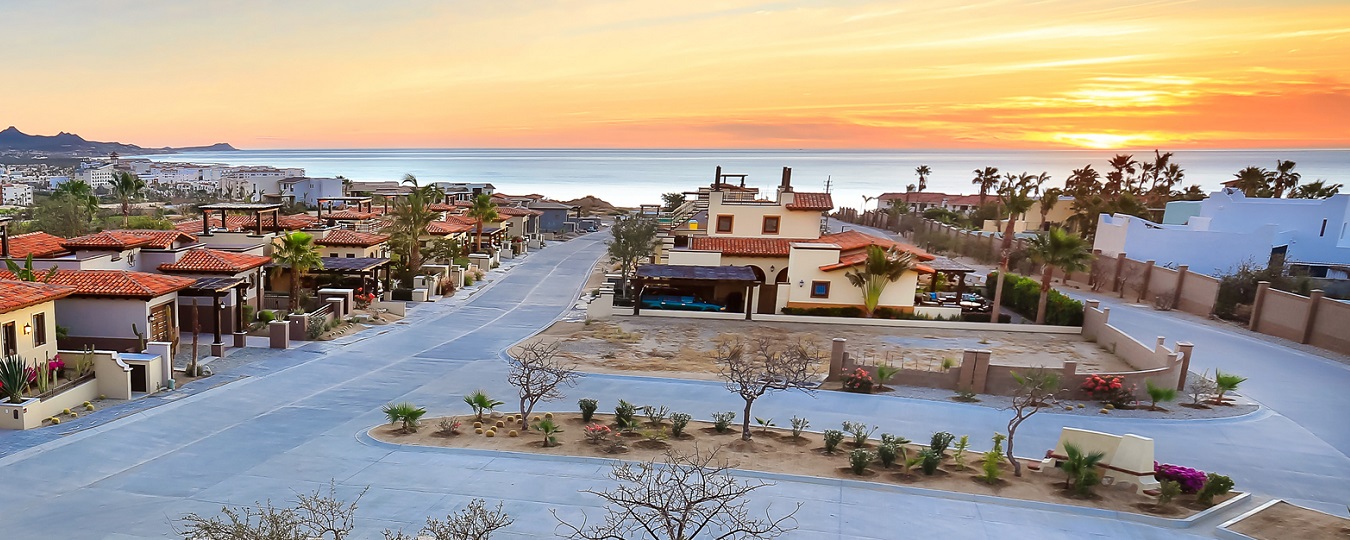
Canadian buyers tend to cluster in a handful of communities based on lifestyle priorities:
- Pedregal de Cabo San Lucas — gated, walkable to downtown Cabo, dramatic Pacific cliff views, strong rental yields, entry around $495K for a condo. Popular with Vancouver and Toronto buyers.
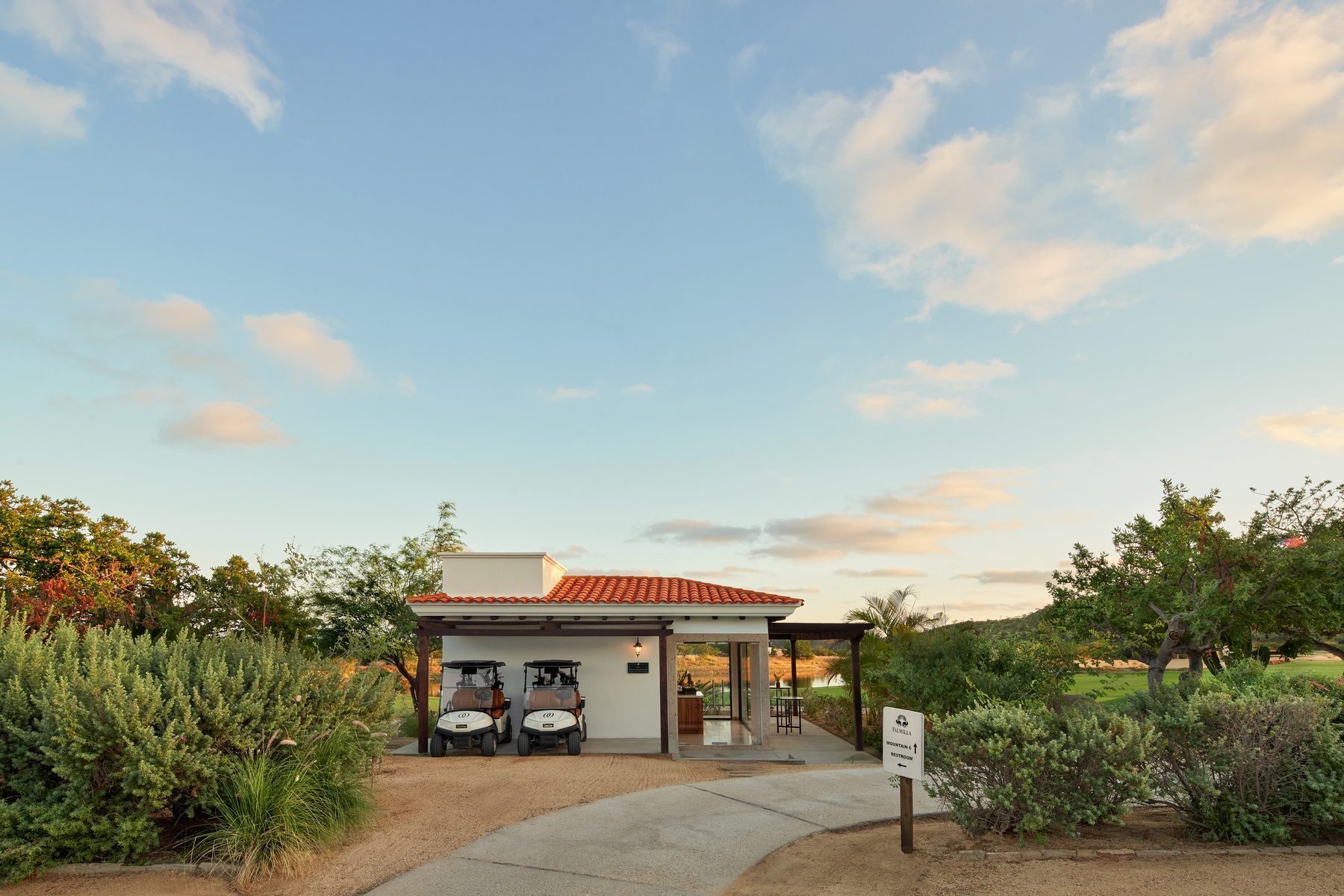
- Palmilla — Corridor location, Jack Nicklaus golf, beachfront, white-glove HOA. Calgary oil-and-gas money is heavy here.
- Club Campestre San Jose — Jack Nicklaus golf community in San Jose with mountain views and easier price points than Palmilla. Strong for retired Ontario and BC buyers.
- Downtown Cabo San Lucas / El Tezal — best for buyers who want walkability, restaurants, and short-term rental income. Lower entry prices for first-time Cabo Canadians.
For the full community comparison, explore our community guides.
10. Your Next Steps as a Canadian Buyer
The Canadian path to a Cabo closing is well-worn. Most buyers follow this sequence:
- Visit Cabo for 5-7 days — see Pedregal, Palmilla, San Jose, and the Corridor in person. Day-of-week and season matter; visit in both peak and shoulder if possible.
- Engage a cross-border CPA — get a written opinion on T1135 and T1141 before you sign anything.
- Open a USD account — RBC, TD, or BMO US-dollar accounts, plus a Wise or OFX account for the wire.
- Get pre-approved for any financing — HELOC, cross-border mortgage, or confirm cash sources.
- Engage a Cabo agent who has closed Canadian deals — fideicomiso paperwork, SRE permit, and notario coordination all run smoother with someone who knows the Canadian side.
- Make an offer with 1-3% earnest money, sign the purchase agreement, then 40-45 days to closing.
For context on the buying process itself, read our complete Mexico buying guide — the legal mechanics are identical for Canadians.
A few final cautions worth absorbing before you commit. First, do not buy on your first trip. Even if you find a property you love on day three of your initial visit, the cost of a second confirmatory trip — typically $2,000-$4,000 CAD all-in — is trivial against a $500,000-plus purchase. Second, ignore aggressive "pre-construction" pitches that promise developer-financed payment plans with no due diligence period. The strongest Cabo developers offer reasonable payment schedules, but a few have left foreign buyers stranded mid-construction. Stick to delivered or near-delivered inventory unless you know the developer's track record. Third, when comparing rental income projections, ask for actual STR platform statements rather than agent estimates — Cabo nightly rates vary 3x between high and low season and "average" numbers often hide the gap.
Ready to Talk to a Cabo Specialist?
We work with Canadian buyers from Vancouver to Halifax. Cross-border tax referrals, fideicomiso coordination, and on-the-ground Cabo expertise — at no cost to you.
Contact Us TodayFrequently Asked Questions
Can Canadians legally buy property in Cabo San Lucas?+
Yes. Canadians can buy and fully own coastal Mexican property through a fideicomiso — a 50-year, renewable bank trust held by a Mexican bank on your behalf. You get every practical right of ownership: live, rent, remodel, sell, and bequeath. The process is identical to what Americans use. Setup runs $2,000 to $3,000 USD with $550 to $1,000 in annual bank trustee fees, and a notario publico supervises closing for legal protection.
Do Canadians have to report a fideicomiso to the CRA?+
Yes if cost exceeds CAD $100,000. Form T1135 (Foreign Income Verification Statement) is required annually for any specified foreign property over CAD $100,000 in cost — this clearly includes Cabo real estate. Whether the fideicomiso also triggers T1141 (foreign trust reporting) is debated; CRA has historically taken the view it can, but most cross-border specialists treat the fideicomiso as a bare trust that does not require T1141. Get a written opinion from a cross-border CPA before filing.
How many direct flights are there from Canada to Los Cabos in 2026?+
Eight Canadian cities already offer nonstop service: Vancouver, Calgary, Toronto, Montreal, Edmonton, Kelowna, Victoria, and Winnipeg. Four additional new nonstop routes launch in the 2026-27 winter season: Porter Airlines from Toronto (3x weekly), Edmonton (4x weekly), and Ottawa (2x weekly starting December 18), plus Air Transat from Montreal (weekly, starting December 10). Los Cabos projected 240,000 Canadian arrivals in 2025, a 20% year-over-year jump.
Should I withdraw from my RRSP to buy property in Cabo?+
Usually no. RRSP withdrawals are fully taxable as income in the year you take them and the Home Buyers Plan does not apply to foreign property. A $400,000 CAD withdrawal could push you into the top marginal bracket and cost you $180,000+ in tax. TFSA withdrawals are tax-free and a better source. Most Canadian buyers in Cabo use non-registered cash, a HELOC against a Canadian property, or a US-dollar cross-border mortgage. Talk to a cross-border financial planner before touching registered accounts.
How long can a Canadian snowbird stay in Cabo before becoming a Mexican tax resident?+
Mexico considers you a tax resident if your 'center of vital interests' is in Mexico — typically triggered by spending more than 183 days a year in Mexico, having your home there, or earning more than half your income there. Most snowbirds who stay four to five months are not at risk. On the Canadian side, leaving Canada for more than 183 days a year does not automatically end your Canadian tax residency — provincial healthcare and severing residential ties matter more. Track your days in both countries.
Does provincial health insurance cover me in Mexico?+
No. Provincial plans (OHIP, MSP, RAMQ, AHCIP) do not cover medical care abroad beyond emergency stabilization at very low reimbursement rates. You need private travel medical insurance for short stays or expat health insurance for longer ones. CAA, Manulife, Blue Cross, and TuGo all offer snowbird plans. Cabo has two private hospitals — H+ and Blue Net — both with English-speaking doctors and modern facilities. A doctor visit runs $30 to $60 USD out of pocket if you choose to pay cash.
Can I use my Canadian driver's license in Cabo?+
Yes. Mexico recognizes valid provincial driver's licenses from all Canadian provinces for the duration of your tourist permit (up to 180 days). An International Driving Permit (IDP) is not legally required but is helpful in rural areas and traffic stops because it includes a Spanish translation. Critical: foreign auto insurance is not valid in Mexico — you must buy a Mexican policy from a licensed insurer before driving.
What is the best way to wire funds from Canada to close on a Cabo property?+
Most closings happen in USD, so you will wire CAD-to-USD first (or CAD-to-MXN if the contract is in pesos). Canadian banks charge 2.5%-4% spreads on FX conversions. Specialist services like Wise, OFX, and Knightsbridge FX cut that to 0.4%-0.8% — on a $500,000 CAD closing that saves $10,000 to $15,000. Set up the receiving account before you sign and confirm your Canadian bank's daily wire limit. RBC, TD, and BMO all offer cross-border desks for clients with US-dollar accounts.

Aaron Cuha
Real Estate Advisor & Los Cabos Market Expert
Real estate advisor and founder of Living In Cabo. 15+ years helping families navigate complex real estate decisions. Strategic partner with Ronival — Baja's largest brokerage.