When I talk to prospective expats about moving to Los Cabos, healthcare is consistently in the top three concerns — right alongside property ownership and taxes. And that is a reasonable priority. Getting sick or injured far from home without a clear plan for medical care is a genuinely stressful prospect.
The good news: healthcare in Los Cabos has improved enormously in the past decade. The infrastructure, the physician quality, and the insurance options available to foreign residents today are genuinely competitive — not with Houston or Toronto, but well beyond what most people expect when they imagine medical care in a beach resort town in Mexico.
- Los Cabos has 3 major private hospitals with 24/7 emergency care, surgery, and ICU capability.
- IMSS voluntary enrollment costs approximately $600–$700/year for foreign residents with valid residency visas.
- Dental care costs 40%–70% less than equivalent work in the United States — a major financial benefit for full-time residents.
- Most expats carry Mexican private insurance (GNP, AXA) or an international plan (Cigna Global, Allianz) for comprehensive coverage.
- For specialized sub-specialty care, La Paz, Guadalajara, and Mexico City are accessible and offer world-class tertiary hospitals.
Planning a move to Los Cabos?
Healthcare is one piece of a larger relocation puzzle. I help buyers and relocating families think through all of it — from neighborhood selection to local resources and community connections.
Get Relocation GuidancePrivate Hospitals: Your Day-to-Day Medical Backbone
The private hospital system is what most expats will rely on for the vast majority of their healthcare needs. Three institutions anchor this system in Los Cabos.
BlueNet Hospital Los Cabos (formerly H+ Cabo San Lucas) is the largest private hospital in the region, located in Cabo San Lucas near the marina district. BlueNet is part of a national chain that has standardized quality, equipment, and protocols across its facilities. The Cabo San Lucas location has a full emergency department, operating suites, ICU, laboratory, imaging (CT, MRI, ultrasound), and a growing roster of resident specialists including cardiology, orthopedics, and gastroenterology. English-speaking staff are available around the clock.
H+ Los Cabos operates a second facility in San José del Cabo, serving the eastern corridor and communities like San José, Puerto Los Cabos, and Palmilla. This hospital is newer construction and has earned strong reviews for its surgical team and post-operative care. For buyers considering the East Cape or San José area, this is typically the closest facility with full acute care capability.
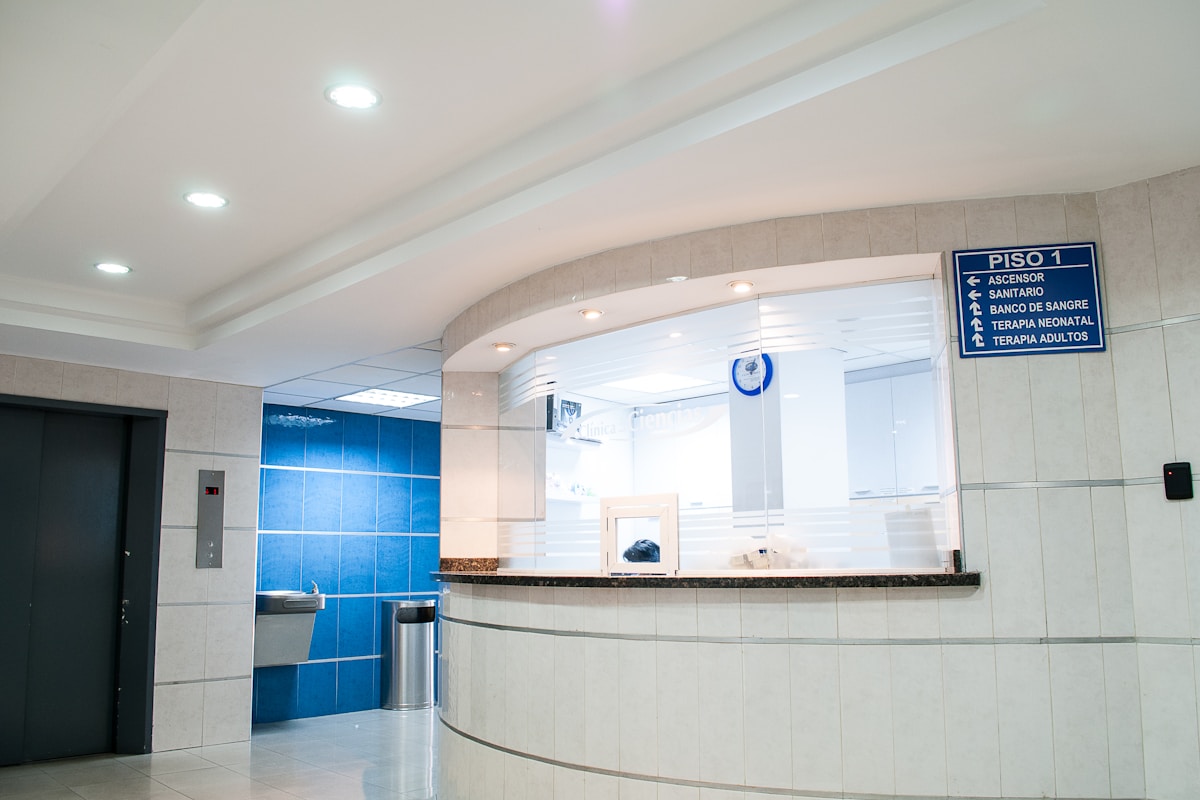
St. Luke's Medical Center is a smaller private facility in Cabo San Lucas with a strong reputation for patient-centered care and English-language communication. St. Luke's does not have the ICU and surgical depth of BlueNet, but it excels in primary care, outpatient services, and lower-acuity urgent care. Many expat residents use St. Luke's as their primary care home base and BlueNet for anything requiring hospitalization or imaging.
Beyond these three, there are a number of specialized clinics, outpatient surgery centers, and diagnostic facilities spread across the corridor. The medical landscape is meaningfully denser than it was even five years ago, driven by the rapid growth of the expat and luxury tourism population.
IMSS: Mexico's Public Health System for Residents
IMSS — Instituto Mexicano del Seguro Social — is Mexico's national social security and public health system. Foreign nationals who hold a valid Mexican residency visa (temporary or permanent) can voluntarily enroll in IMSS and access its healthcare coverage.
The cost is remarkably low: approximately $600–$700 USD per year for a single adult in 2026, with family add-ons available. Given that a single hospitalization at a private facility can run $10,000–$50,000 depending on the situation, IMSS provides a meaningful safety net even for expats who primarily use private facilities.
The practical reality of IMSS is that wait times are longer, facilities are more basic, and English-speaking staff are rare. Most expats who enroll in IMSS do so as a backstop — either for long-term or catastrophic care scenarios where private coverage is exhausted, or to access specific services (like dialysis or chemotherapy) that IMSS covers comprehensively.
Enrollment in IMSS requires your temporary or permanent resident visa. For those who have not yet obtained residency, my guide to the Mexico temporary resident visa walks through the process step by step.
The official IMSS website (imss.gob.mx) provides enrollment information in Spanish, and any immigration attorney in Los Cabos can assist with the process as part of a residency package.
Private Health Insurance Options
For most expat residents, private health insurance is the cornerstone of their healthcare strategy in Los Cabos. There are three main pathways to consider.
Mexican Private Insurance — GNP Seguros and AXA Mexico: GNP Seguros (Grupo Nacional Provincial) and AXA Mexico are the two largest private health insurers in Mexico. Both offer comprehensive plans designed for Mexican residents, including foreigners with residency visas. Coverage is denominated in Mexican pesos, premiums are significantly lower than international plans, and the plans cover treatment at all major private hospitals in Los Cabos and throughout Mexico.
Annual premiums for a healthy 50-year-old on a GNP plan with reasonable deductibles run approximately $2,500–$4,500 USD equivalent. These plans make the most sense for expats who intend to receive the bulk of their care in Mexico and do not need repatriation coverage to the United States.
International Expat Plans: Cigna Global, Allianz Care, Aetna International, and Bupa Global all offer international health plans designed specifically for expats. These plans are more expensive — $4,000–$12,000 per year depending on age, deductible, and coverage area — but they provide coverage in both Mexico and the United States (and worldwide), include medical evacuation, and are administered in English with international claims processes.
For expats who split time between Los Cabos and the U.S., or who want the option to receive care at American hospitals for serious conditions, an international plan is generally worth the premium differential.
Supplemental Medicare Considerations: Medicare does not cover medical care received outside the United States (with very limited exceptions). Americans who retire to Los Cabos and give up their U.S. primary residence face a genuine gap — they often opt for an international expat plan as their primary coverage and maintain a Medigap or Medicare Advantage plan for the time they spend in the U.S.
The Medicare.gov coverage page and SSA.gov are authoritative resources for understanding these interactions. For more on the financial dimensions of relocating, see my guide on the cost of living in Cabo San Lucas in 2026.
Thinking about retiring or relocating to Los Cabos?
Healthcare planning is one part of a complete relocation strategy. I connect clients with trusted insurance brokers, immigration attorneys, and local medical resources as part of my buyer services.
Let's Plan Your MoveDental Care: A Major Financial Benefit
Dental care in Los Cabos is one of the strongest financial arguments for the expat lifestyle — and it deserves its own section because it is genuinely transformative for many residents.
Los Cabos has a deep bench of excellent dentists, many of whom trained in the United States, Europe, or at top Mexican dental schools like UNAM or the Universidad Autónoma de Baja California Sur. They use the same materials, the same techniques, and often the same equipment as their U.S. counterparts — at 40%–70% lower cost.
A porcelain crown: $350–$500 USD in Los Cabos versus $1,200–$2,000 in the United States. A dental implant (implant, abutment, and crown): $1,200–$1,800 USD versus $3,500–$6,000 stateside. A full mouth reconstruction that would cost $80,000 in New York can often be accomplished in Los Cabos for $20,000–$30,000 — and the quality, in the hands of the right dentist, is indistinguishable.

The best Los Cabos dentists maintain full digital imaging (cone beam CT, digital X-rays), CAD/CAM same-day crown fabrication, and patient communication in English. I recommend asking for referrals from established expat residents rather than relying on hotel concierge recommendations, which tend to favor practices that pay referral fees.
Medical tourism focused specifically on dental work is a growing industry in Los Cabos. The combination of excellent dentists, transparent pricing, and the ability to recover with a view of the Sea of Cortez has made the destination a preferred choice for Americans considering significant dental work.
Specialist Care and What Is Available Locally
The specialist landscape in Los Cabos has matured considerably. Residents can access the following specialties locally with reasonable appointment availability:
Consistently available locally: Cardiology (including stress testing and echocardiography), orthopedic surgery (including knee and hip replacement), ophthalmology (cataract surgery, LASIK), dermatology, OB/GYN, gastroenterology (including endoscopy), internal medicine, and general surgery.
Available but with longer lead times: Neurology, oncology (medical oncology — radiation oncology requires travel to La Paz or Guadalajara), urology, and rheumatology. These specialists typically maintain regular clinic schedules in Los Cabos but may only visit 2–3 days per week.
Best accessed via travel to La Paz, Guadalajara, or Mexico City: Radiation oncology, advanced cardiac interventional procedures, complex neurosurgery, and organ transplantation. La Paz, the state capital, is 100 miles north and has the Hospital General de Baja California Sur, which is the tertiary referral center for the region.

Mexico City deserves special mention. Hospital Ángeles, ABC Medical Center (affiliated with the American British Cowdray Hospital), and Instituto Nacional de Ciencias Médicas y Nutrición are world-class institutions with sub-specialty depth comparable to major U.S. academic medical centers. Flight time from Los Cabos to Mexico City is approximately 2 hours.
The Joint Commission International accredits hospitals in Mexico that meet international quality standards — it is a useful filter when evaluating facilities in La Paz or Mexico City for a specific procedure.
The Pharmacy System: Convenient and Affordable
Pharmacies are genuinely abundant throughout Los Cabos. Farmacia Similares (the largest chain in Mexico), Farmacia Benavides, Farmacias del Ahorro, and numerous independent farmaciacias are scattered throughout the corridor. You will not struggle to find a pharmacy within 10 minutes of most residential areas.
A few things American expats should understand about the Mexican pharmacy system:
First, many medications that require a prescription in the United States are available over the counter in Mexico. This includes certain antibiotics, blood pressure medications, and various other drugs. This can be genuinely useful for managing chronic conditions but requires some caution — self-prescribing is not a substitute for medical evaluation.
Second, brand-name medication prices are significantly lower than in the United States. Generic equivalents are even more affordable. Many American expats deliberately manage their prescriptions through Mexican pharmacies for the savings alone — even for medications they could theoretically fill in the U.S.
Third, Farmacia Similares operates small attached clinics (Médico Similar) where physicians provide basic consultations for approximately $2–$5 USD. For minor issues — upper respiratory infections, urinary tract infections, minor injuries — these walk-in clinics are fast, accessible, and affordable.
Emergency Services and What to Know
Emergency medical response in Los Cabos has improved significantly in the past five years. The primary options are:
Private hospital emergency departments: BlueNet and H+ both operate 24/7 emergency departments with physician-staffed triage. For most situations that are not immediately life-threatening, driving to the nearest private hospital ER is faster than waiting for an ambulance. BlueNet in Cabo San Lucas and H+ in San José del Cabo are typically 15–25 minutes from most corridor communities.
Cruz Roja (Red Cross): The Mexican Red Cross operates ambulance and emergency response services in Los Cabos. Response times vary but have improved substantially. Cruz Roja accepts donations, which is the standard community funding model in Mexico.
Private ambulance services: Several private EMS companies operate in Los Cabos offering contracted response with faster guaranteed times for subscribers. For full-time residents in more remote communities (East Cape, Todos Santos corridor), a private EMS subscription is worth considering.
Medical evacuation: If you are carrying an international health insurance policy, medical evacuation (medevac) is typically included. For serious trauma or conditions requiring care beyond Los Cabos's capabilities, medevac to San Diego, Phoenix, or another U.S. border city is an option — typical flight time to San Diego is approximately 2 hours. This is why evacuation coverage in your insurance plan matters.
Mental Health and Telehealth
Mental health services have expanded meaningfully in Los Cabos, driven in part by the growing expat community and in part by broader cultural shifts in Mexico toward mental health awareness. Several licensed psychologists and therapists work with English-speaking clients, and the expat community has informal referral networks for practitioners.
Telehealth has transformed the landscape for expats who need ongoing mental health care. Platforms like MDLive, Teladoc, and various U.S.-licensed telehealth providers are accessible from Mexico with a reliable internet connection. For clients who want to maintain continuity with a U.S.-based therapist or psychiatrist, video sessions are a practical and effective option.
For a full picture of what the expat lifestyle looks like in Los Cabos — including community, social life, and daily practicalities — my comprehensive guide to living in Cabo San Lucas covers the territory in depth.
Building Your Healthcare Strategy Before You Move
The expats who navigate Los Cabos healthcare most successfully are those who build a plan before they arrive, not after a health event forces the issue. Here is the framework I recommend to my relocation clients:
First, establish your insurance foundation. Decide between a Mexican domestic plan (GNP, AXA), an international expat plan (Cigna Global, Allianz), or a combination approach — IMSS as a backstop plus a private plan for acute care. A licensed insurance broker who specializes in expat plans can model the tradeoffs in about an hour.
Second, identify your medical home. Visit St. Luke's or BlueNet for a primary care consultation in your first month. Get established as a patient, have your records transferred, and get local prescriptions for any maintenance medications. Do not wait until you need care to figure out where you are going.
Third, complete your dental needs proactively. If you have been deferring dental work because of cost, Los Cabos is where you catch up. Get a comprehensive evaluation and a treatment plan in your first 90 days — you will save money and avoid dental emergencies later.

Fourth, know your nearest emergency room and have the phone number in your contacts. Seconds matter in a real emergency, and knowing exactly where to drive or who to call removes friction when it matters most.
The U.S. Embassy in Mexico's physician list is a reliable starting point for finding English-speaking medical providers vetted by the consular section.
Healthcare is not a reason to avoid Los Cabos. With the right preparation and insurance in place, the medical environment here is genuinely workable for most expats — and for elective care like dentistry and wellness, it is a significant upgrade over what most Americans experience at home.
Ready to make the move to Los Cabos?
I connect relocating buyers with the full network of resources they need — from real estate to insurance brokers, immigration attorneys, and community introductions. Let's build your plan.
Book a Relocation CallFrequently Asked Questions
What are the best private hospitals in Los Cabos?+
The three main private hospitals are BlueNet Hospital (formerly H+ Cabo), Hospital H+ Los Cabos, and St. Luke's Medical Center. BlueNet and H+ are the largest, offering 24/7 emergency care, ICU, surgery suites, and a growing roster of specialists. St. Luke's has a strong reputation for patient experience and English-speaking staff.
How much does IMSS health coverage cost in Los Cabos?+
As of 2026, voluntary IMSS enrollment for foreign residents costs approximately $600–$700 USD per year for a single adult. Enrollment requires a valid Mexican residency visa (temporary or permanent). IMSS covers a wide range of services but involves longer wait times and fewer English-speaking staff than private options.
Do I need international health insurance as an expat in Los Cabos?+
Most full-time expat residents carry either a Mexican private health insurance plan (such as GNP Seguros or AXA Mexico) or an international expat plan (such as Cigna Global, Allianz Care, or Aetna International). These plans give you access to private hospitals without large out-of-pocket bills, which is the most important protection given that even private hospital stays can run $5,000–$30,000 for serious conditions.
How much does dental care cost in Los Cabos compared to the United States?+
Dental costs in Los Cabos run 40%–70% less than comparable work in the United States. A porcelain crown costs approximately $350–$500 USD versus $1,200–$2,000 in the U.S. Dental implants run $1,200–$1,800 per implant versus $3,500–$6,000 stateside. Quality is high — many Los Cabos dentists trained in the U.S. or Europe and use the same materials and equipment.
Is emergency medical care available 24/7 in Los Cabos?+
Yes. Both BlueNet Hospital and H+ Los Cabos operate 24/7 emergency departments with trauma capability. Response times for ambulance service in the Cabo San Lucas and San José del Cabo corridors are generally 10–20 minutes. Cruz Roja (Red Cross) also operates emergency services. Remote East Cape communities have longer response windows and should be factored into relocation planning.
What specialists are available in Los Cabos?+
Los Cabos now has a solid base of specialists including cardiologists, orthopedic surgeons, gastroenterologists, oncologists, neurologists, ophthalmologists, and dermatologists. For highly specialized sub-specialties, residents typically travel to La Paz (45 minutes by air) or Guadalajara and Mexico City, where world-class tertiary care hospitals operate.
Can I get prescriptions filled easily in Los Cabos?+
Yes. Pharmacies are abundant in Los Cabos — Farmacia Similares, Farmacia Benavides, and numerous independent pharmacies are located throughout the corridor. Many medications that require a prescription in the U.S. are available over the counter in Mexico, and prices are significantly lower. Bring a 3-month supply of specialized medications when you relocate as a buffer while establishing local sourcing.
What is the quality of mental health care in Los Cabos?+
Mental health services have expanded in Los Cabos, with licensed psychologists and therapists practicing both in-person and via telehealth. Several English-speaking therapists serve the expat community. For psychiatry and medication management, services are more limited locally — telehealth with U.S.-licensed providers is a popular option for expats who need ongoing psychiatric care.

Aaron Cuha
Real Estate Advisor & Los Cabos Market Expert
Real estate advisor and founder of Living In Cabo. 15+ years helping families navigate complex real estate decisions. Strategic partner with Ronival — Baja's largest brokerage.