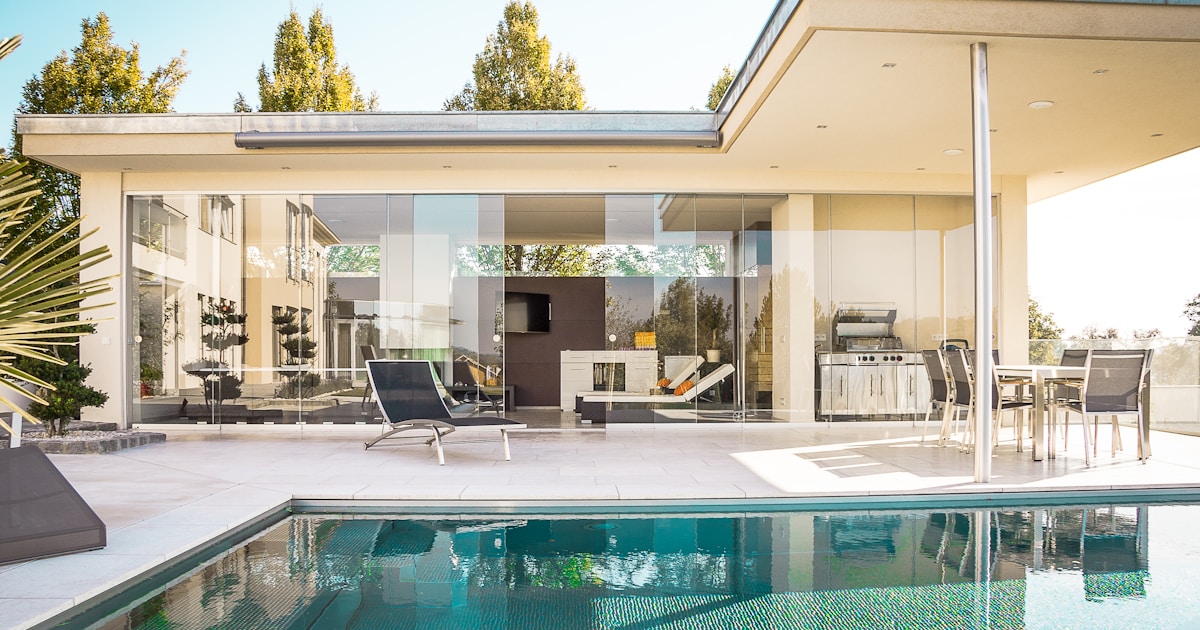
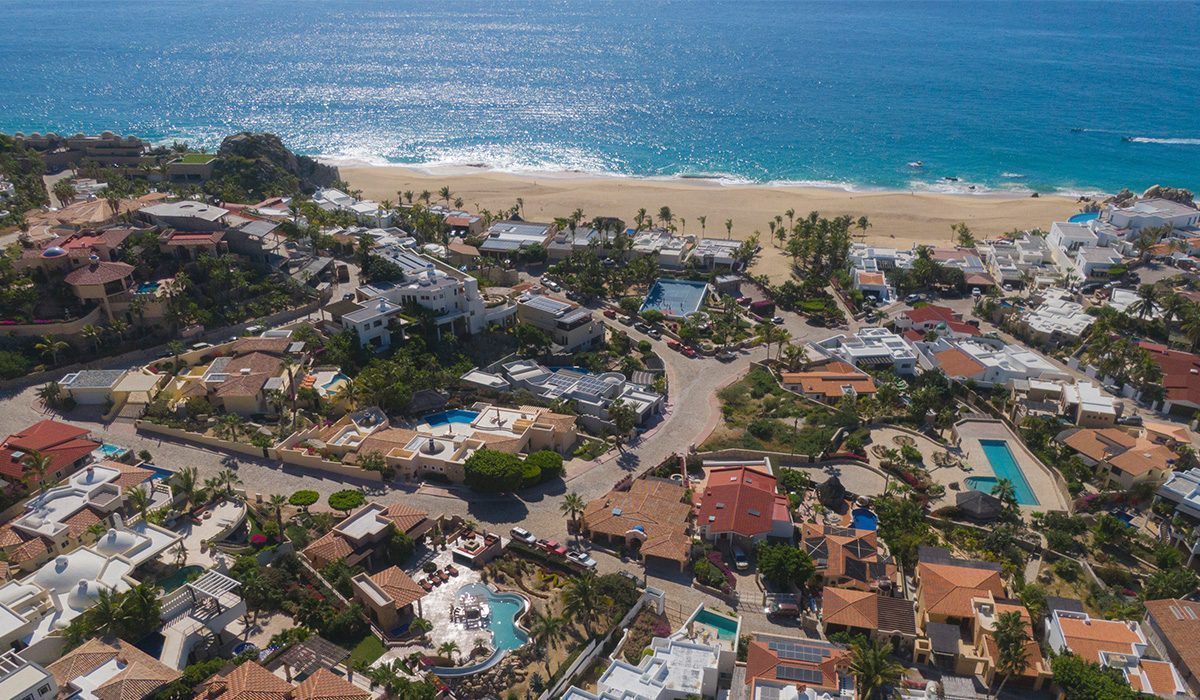
Two desert coastlines. Two luxury real estate markets that attract global wealth. One question I keep hearing from high-net-worth buyers: should I look at Cabo or Dubai? I have walked both markets — the Palm Jumeirah and Pedregal, the DIFC towers and Palmilla villas — and here is the honest Cabo vs Dubai real estate comparison nobody in either market wants to write. Both have strengths. Both have traps. The right answer depends entirely on who you are and what you need.
Key Takeaways
- • Dubai average price: $422–$531/sqft citywide, up to $1,218/sqft in prime areas (Palm Jumeirah). Cabo luxury Corridor: $550–$750/sqft, ultra-luxury: $1,100–$1,800/sqft
- • Dubai charges zero annual property tax and zero income tax on rental income. Cabo charges 0.1–0.3% predial annually plus ISR on rental income (25% for non-residents)
- • Dubai offers a 10-year Golden Visa at AED 2M (~$545K) property investment. Mexico has no golden visa — property supports residency applications but does not guarantee them
- • Dubai gross rental yields: 6–9%. Cabo gross yields: 5–8%. Both markets are competitive globally
- • Dubai is 16 hours from Los Angeles. Cabo is 2.5 hours. For US-based buyers, proximity is Cabo's most underrated advantage
Considering International Luxury Real Estate?
We help US and Canadian buyers navigate the Cabo market with honest data and no sales pressure.
Talk to Our TeamCabo vs Dubai: Price Per Square Foot
Let me cut straight to numbers. Dubai's citywide average sits at approximately $422–$531 per square foot as of 2026, with prime areas like Palm Jumeirah reaching $1,218 per square foot. Dubai apartments average around $490–$546/sqft while villas command $620–$638/sqft.
Cabo's Corridor luxury market runs $550–$750/sqft in the current correction environment (down from $650–$850/sqft at the 2024 peak). Ultra-luxury communities like Querencia, Chileno Bay, and Palmilla range from $1,100–$1,800/sqft for premium villas and oceanfront units.
| Metric | Los Cabos | Dubai |
|---|---|---|
| Entry-level luxury (/sqft) | $280–$380 | $422–$531 |
| Prime luxury (/sqft) | $550–$750 | $600–$900 |
| Ultra-luxury (/sqft) | $1,100–$1,800 | $1,000–$1,500+ |
| Closing costs | 5–7% | 7–10% |
| Annual property tax | 0.1–0.3% | 0% |
| Rental income tax | 25% (non-resident) | 0% |
| Gross rental yield | 5–8% | 6–9% |
| Flight from LAX | 2.5 hours | 16 hours |
Ownership Rules: Fideicomiso vs Freehold
This is where the comparison gets interesting. Dubai allows foreigners to buy freehold in approximately 50–60 designated zones — Downtown Dubai, Dubai Marina, Palm Jumeirah, Jumeirah Village, and dozens more. No nationality restrictions, no trust structures, no annual renewal fees. You own it outright.
Mexico requires foreign buyers in the restricted zone (within 50 km of the coast) to hold property through a fideicomiso — a bank trust. You are the beneficiary with full use, control, and sale rights, but a Mexican bank is the legal trustee. Setup costs $1,500–$2,000, with annual fees of $500–$800. The trust renews every 50 years. It works, and it is well-established, but it adds a layer of complexity and cost that Dubai simply does not have.
Advantage: Dubai, clearly. But the fideicomiso system has functioned reliably for decades, and the proposed reforms may eventually allow direct foreign ownership in the restricted zone.
Tax Burden: Dubai Wins on Paper, Cabo Wins on Proximity
Dubai's tax structure is extraordinary. Zero annual property tax. Zero income tax on rental income. Zero capital gains tax. The only significant transaction cost is the 4% Dubai Land Department (DLD) transfer fee at purchase, plus administrative fees that bring total closing costs to 7–10%.
Cabo charges a predial (property tax) of roughly 0.1–0.3% of the catastral value annually — very low by global standards but not zero. Rental income for non-residents is taxed at a flat 25% ISR on gross income (or you can elect net taxation with an RFC — see our digital platform tax guide). Capital gains on property sales face ISR as well, though the structure allows deductions that reduce the effective rate.
On paper, Dubai is the clear tax winner. But tax is not the only cost. For a US-based buyer, the 16-hour flight to Dubai means every property visit costs 2–3 days of travel each way. Cabo is a 2.5-hour direct flight from dozens of US cities. Over ten years of ownership, the travel cost difference — in time, flights, and jet lag — can easily exceed the tax savings.
Lifestyle: Choose Your Desert
Both markets sit where the desert meets the sea. But the experiences are fundamentally different.
Dubai is a vertical, urban, air-conditioned city. The architecture is spectacular. The dining scene is world-class. The shopping is extraordinary. But summer temperatures hit 115°F (46°C) with brutal humidity, and outdoor life effectively stops from June through September. The beach culture exists but is secondary to the mall-and-tower culture. Dubai is a city that happens to be near the ocean.
Cabo is a horizontal, outdoor, barefoot destination. The architecture is low-rise and desert-integrated. Temperatures rarely exceed 95°F (35°C) even in summer, and the Sea of Cortez provides ocean breezes that make outdoor living comfortable year-round. The food scene is growing rapidly (two Michelin stars and counting), but it is not Dubai-level. Cabo is an ocean that happens to have a town next to it.
If you want nightlife, fashion, and a cosmopolitan urban experience: Dubai.
If you want outdoor living, fishing, golf, and quiet mornings on a terrace: Cabo.
Curious Which Cabo Community Fits Your Lifestyle?
We match buyers with the right community based on how they actually want to live — not just what they can afford.
Book a Community Match CallResidency and Visa: Dubai's Golden Visa Advantage
Dubai offers one of the world's most straightforward residency-by-investment pathways. Invest AED 2 million (~$545,000 USD) in property and you qualify for a 10-year Golden Visa — renewable, includes family members, and provides the right to live and work in the UAE. It is a genuine second residency with real utility for global mobility.
Mexico has no equivalent. Property ownership supports a Residente Temporal or Permanente application, but it does not guarantee approval. You still need to meet income or savings thresholds. The process takes 6–10 weeks, involves a consular interview, and requires renewal every 1–4 years for Temporal status. Mexico's residency pathway works, but it is not a golden visa.
Rental Market Comparison
Both markets offer strong rental yields relative to other luxury destinations. Dubai's gross yields run 6–9%, driven by the tax-free environment and massive expatriate rental demand. Cabo's gross yields run 5–8%, driven by vacation rental demand with heavy seasonality.
The key difference is the rental model. Dubai rentals are predominantly long-term (annual leases to expatriate professionals). Cabo rentals are predominantly short-term vacation (weekly bookings through Airbnb, Vrbo, and direct). This creates different risk profiles:
- Dubai: Steady, predictable cash flow. Lower management burden. But capped upside — annual rents adjust slowly
- Cabo: Higher peak income potential. More management required. Seasonal volatility (60–70% of annual income comes in December–April). Revenue is sensitive to tourism trends, airline capacity, and guest experience quality
Who Should Buy Where
After looking at both markets, here is my honest assessment:
Buy in Cabo if:
- You live in the US or Canada and want a second home you will actually use regularly (the 2.5-hour flight makes spontaneous weekends possible)
- You prioritize outdoor lifestyle — golf, fishing, surfing, hiking, whale watching
- You want the emotional connection of a destination with natural beauty, not engineered spectacle
- You plan to vacation-rent the property and are willing to manage it actively or hire a strong PM
- You value being in the same or adjacent time zones as your primary residence
Buy in Dubai if:
- You want a tax-free investment environment with zero annual property tax and zero rental income tax
- You want straightforward freehold ownership with no trust structures
- You need or want the Golden Visa for global mobility and residency diversification
- You prefer urban luxury — restaurants, nightlife, shopping — over outdoor adventure
- You are diversifying geographically and already have North American real estate exposure
Many of my high-net-worth clients own in both markets. They are not mutually exclusive. But if I am being honest with a US-based buyer who can only pick one, Cabo wins on lifestyle and proximity nine times out of ten. You will actually use a property that is 2.5 hours away. The gorgeous Dubai apartment you visit once a year is an investment, not a home.
Ready to Explore Cabo's Luxury Market?
We help international investors compare opportunities and find the right Cabo property for their goals.
Start the ConversationFrequently Asked Questions
Is Dubai or Cabo cheaper for luxury real estate?+
At the entry-level luxury tier, Dubai is slightly more expensive ($422–$531/sqft citywide average vs $280–$380/sqft for Cabo entry-level). At the prime luxury tier, the markets overlap: Dubai prime runs $600–$900/sqft while Cabo Corridor runs $550–$750/sqft. Ultra-luxury is comparable in both markets ($1,000–$1,800/sqft). The key cost difference is transaction and ongoing costs: Dubai closing costs run 7–10% (driven by the 4% DLD fee) but charges zero annual property tax and zero rental income tax. Cabo closing costs run 5–7% but charges predial (0.1–0.3% annually) and ISR on rental income (25% for non-residents). Over a 10-year hold, Dubai's lower ongoing costs offset its higher purchase costs for most investment scenarios.
Can Americans buy property in Dubai?+
Yes, with no restrictions. Dubai allows foreigners of any nationality to purchase freehold property in approximately 50–60 designated zones, including the most desirable areas: Downtown Dubai, Dubai Marina, Palm Jumeirah, Jumeirah Village Circle, and more. No trust structures, no government approvals, no nationality-based limitations. This is simpler than Cabo, where American buyers must use a fideicomiso (bank trust) for properties within 50 km of the coast. Dubai's freehold ownership is genuine, permanent ownership registered in your name at the Dubai Land Department.
What is Dubai's Golden Visa for property investors?+
Dubai's Golden Visa grants a 10-year renewable residency visa to property investors who purchase real estate worth at least AED 2 million (~$545,000 USD). The visa covers you and your family, grants the right to live and work in the UAE, and does not require physical presence to maintain. As of 2026, the equity requirement has been relaxed for mortgaged properties. Mexico has no equivalent program — property ownership supports a residency application but does not guarantee approval, and you must meet separate income or savings thresholds.
Which has better rental yields, Cabo or Dubai?+
Dubai edges ahead with gross rental yields of 6–9% compared to Cabo's 5–8%. The bigger difference is net yield: Dubai charges zero income tax on rental income, while Mexico charges 25% ISR on gross rental income for non-residents (or lower effective rates if you set up an RFC and file net taxation). However, Cabo vacation rentals can dramatically outperform in peak season — a well-managed Corridor condo generating $400–$700/night in December–March can achieve gross yields of 8–10% on a seasonal basis, though the annual average is lower due to low-season vacancy.
How far is Cabo from major US cities compared to Dubai?+
Cabo (SJD airport) is a 2.5-hour nonstop flight from Los Angeles, 3 hours from Dallas, 3.5 hours from Denver, 4 hours from Chicago, and 5 hours from New York — all in the same or adjacent time zones. Dubai (DXB) is approximately 16 hours from Los Angeles, 14 hours from New York, and 13 hours from London, with a 12-hour time difference from US Pacific Time. For US-based buyers, this is Cabo's single biggest advantage: you can leave LA on Friday afternoon and be sitting on your terrace with a drink by sunset. A Dubai trip requires a full day of travel each way.
Is it safe to invest in Dubai real estate?+
Dubai's real estate regulatory framework is well-established. The Dubai Land Department (RERA division) regulates transactions, escrow accounts protect buyer deposits for off-plan purchases, and the legal system has dedicated courts for property disputes. However, Dubai experienced a significant property crash in 2008–2010 (values dropped 50%+) and another correction in 2014–2019. The market is cyclical and heavily dependent on global capital flows. Both Cabo and Dubai have experienced booms and corrections — neither is risk-free. The key difference: Cabo's value is anchored to geographic scarcity and US proximity, while Dubai's value is anchored to infrastructure, tax efficiency, and global connectivity.

Aaron Cuha
Real Estate Advisor & Los Cabos Market Expert
Real estate advisor and founder of Living In Cabo. 15+ years helping families navigate complex real estate decisions. Strategic partner with Ronival — Baja's largest brokerage.