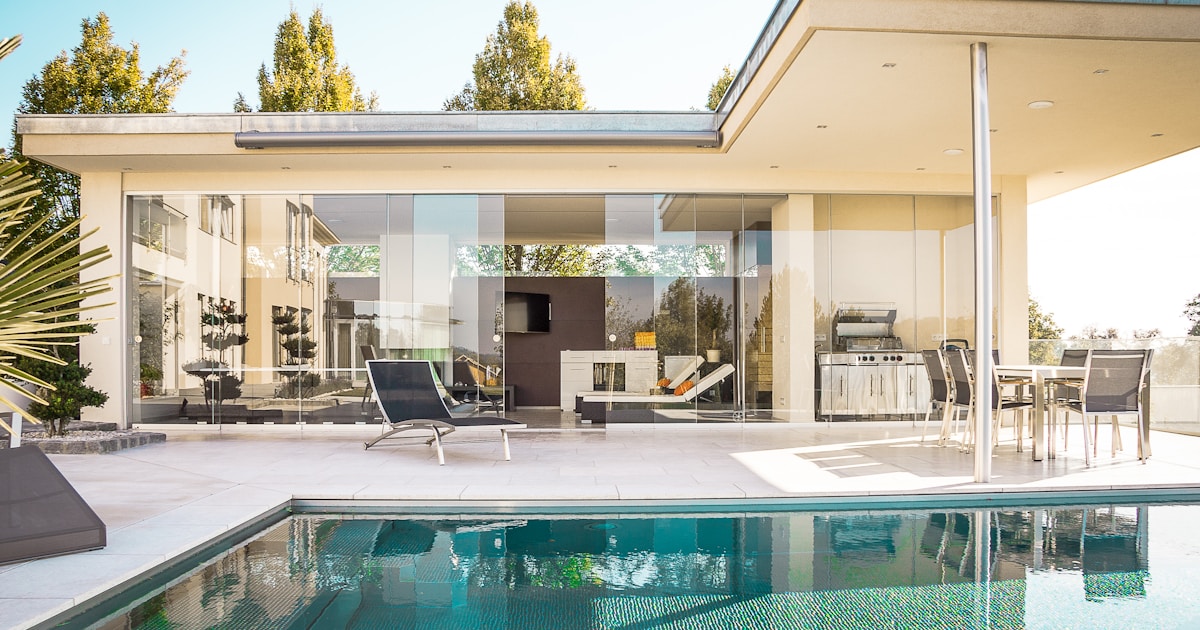
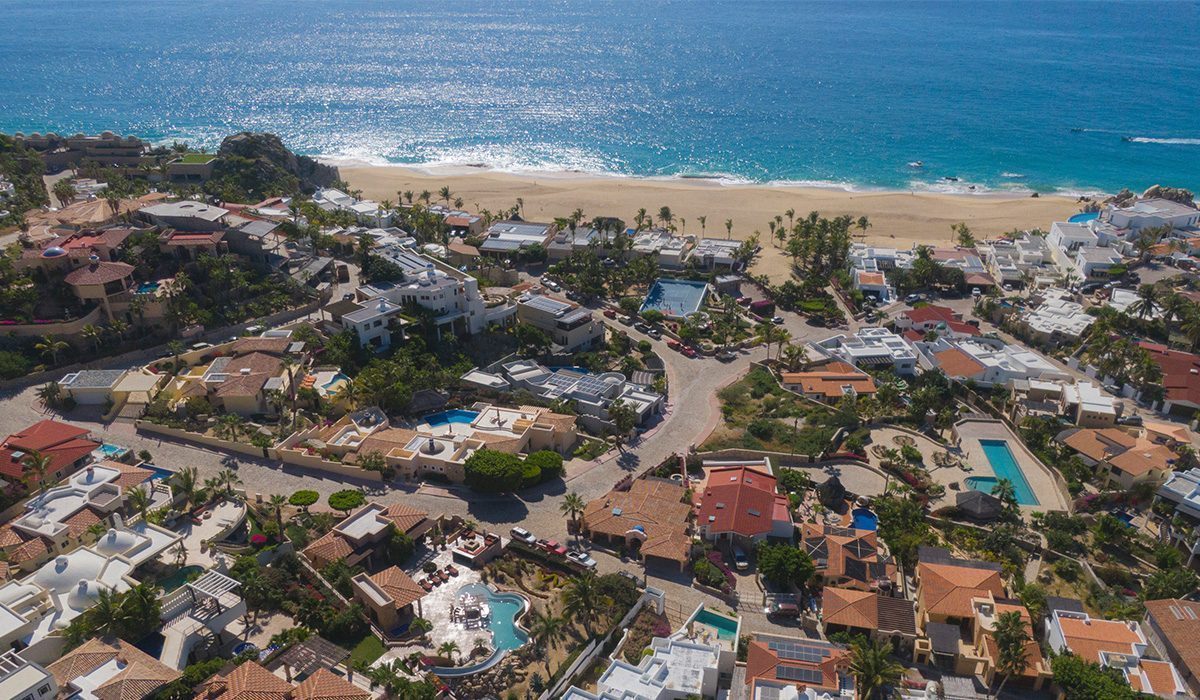
I get this question weekly from buyers in Texas, California, and Arizona: should I buy in Florida or Cabo? Five years ago, Florida was the default. Today, the math has shifted — and it is not even close on carrying costs.
Key Takeaways
- Florida homeowners insurance averages $8,200/year in 2026 — 10x what you pay in Cabo ($600–$1,200/year)
- Property taxes in Cabo run 0.1% vs Florida's 0.86% — saving $3,700+/year on a $500K property
- Cabo vacation rental gross yields average 6–12% vs Florida's 4–7%
- Florida median home price: $425K. Comparable Cabo waterfront: $350K–$500K with ocean views
- Total annual carrying costs in Cabo run 40–60% lower than coastal Florida
Considering Cabo Over Florida?
We help American buyers compare the numbers side by side. Real properties, real costs, no surprises.
Get a Custom ComparisonFlorida's Insurance Crisis Changed the Math
Here is the number that rewrote every vacation-home spreadsheet in America: $8,200 per year. That is the average Florida homeowners insurance premium in 2026, according to the Florida Office of Insurance Regulation — roughly three times the national average and the highest of any US state.
For coastal properties — the ones people actually want as vacation homes — it is worse. South Florida coastal counties average $5,800–$7,300/year, and waterfront properties in Miami-Dade, Broward, or Lee County routinely see premiums of $10,000–$15,000. Some condo buildings in Miami Beach have seen insurance assessments add $1,000+/month to HOA fees.
Meanwhile, insuring a comparable property in Los Cabos through a Mexican carrier like GNP Seguros, Qualitas, or AXA Mexico costs $600–$1,200/year with coverage that includes hurricane, earthquake, and flood. That is not a typo. The annual insurance cost of a $500K Florida waterfront home frequently exceeds the total five-year insurance cost of a $500K Cabo property.
The 2026 Florida legislative reforms brought some relief — Citizens Property Insurance approved an 8.8% statewide rate cut, and 51 of 67 counties saw some decreases. But "less catastrophic" is not "affordable." Even with the cuts, Florida insurance runs 7–10x what you pay in Cabo.
Purchase Price: What Your Dollar Buys
Florida's statewide median single-family home price sits at roughly $425,000 as of mid-2026 — up 3.7% year-over-year, according to Florida Realtors. But that statewide number is misleading for vacation-home buyers. The areas Americans actually want — Naples, Sarasota, Miami Beach, the Keys, St. Pete Beach — carry medians of $550K–$1.2M.
In Cabo San Lucas and San Jose del Cabo, comparable properties run 15–30% less. A two-bedroom condo with ocean views in a resort community like Cabo del Sol or Quivira starts at $350K–$500K. A luxury three-bedroom villa in Pedregal or Palmilla runs $800K–$1.5M — comparable to Longboat Key or Marco Island pricing, but with resort-level amenities, a private beach club, and no Florida-grade insurance bill.
| Category | Coastal Florida | Los Cabos |
|---|---|---|
| 2BR Ocean-View Condo | $450K–$750K | $350K–$550K |
| 3BR Luxury Villa | $900K–$2M | $800K–$1.5M |
| Annual Property Tax | $3,800–$8,600 | $200–$600 |
| Annual Insurance | $5,500–$15,000 | $600–$1,200 |
| HOA Fees (monthly) | $400–$1,500 | $300–$900 |
| Gross Rental Yield | 4–7% | 6–12% |
Property Taxes: Where Cabo Wins by a Landslide
Florida's effective property tax rate averages 0.86% of assessed value — and unlike Texas, Florida's "no state income tax" selling point comes with a property tax bill that international buyers find shocking. On a $500K vacation home, you are paying $4,300/year in property taxes alone.
Mexico's predial (property tax) is assessed on the catastral value, which is typically 20–40% of market value. The rate runs 0.1–0.2%. On a $500K market-value property with a catastral value of $200K, your annual predial is $200–$400. I have owned property where the annual property tax bill was less than a dinner for two at Flora Farms.
For a deeper breakdown, see our complete guide to Cabo property taxes.
Vacation Rental Income: The ROI Story
Both markets are strong vacation-rental destinations. But the yield math favors Cabo for three reasons:
- Lower purchase price means your denominator is smaller — same revenue, higher percentage yield
- Lower carrying costs mean more of your gross revenue hits the bottom line
- Fewer regulatory headwinds — Florida's short-term rental restrictions have tightened significantly since 2023
A well-managed two-bedroom condo in Cabo del Sol or Diamante can generate $40,000–$65,000/year in gross rental income. After management fees (20–25%), maintenance, and HOA, net yields of 6–8% are typical. See our detailed rental ROI analysis.
The same property class in Naples or Sarasota generates comparable gross revenue, but after Florida's insurance ($8K+), property taxes ($4K+), and higher HOA fees, net yields compress to 3–5%.
Want the Numbers for a Specific Property?
We run side-by-side rental projections for Cabo vs your current market — including all carrying costs. Real data, no wishful math.
Book a Comparison CallFlorida's Condo Reserve Crisis
Florida's condo market has a problem Cabo does not share. The Surfside-inspired SB 4-D legislation, which took full effect January 1, 2026, requires condo associations to fund structural reserves based on engineering studies. Buildings that deferred maintenance for decades are now hitting owners with special assessments of $20,000–$100,000+ per unit.
This is driving a wave of "forced sellers" in South Florida — owners who cannot afford the assessment and must sell at a loss. It is also making older Florida condos nearly unlendable, as banks will not finance units in buildings with underfunded reserves.
Cabo condo developments, by contrast, are overwhelmingly newer construction (post-2005) with modern building codes and active HOA management. Reserve funds exist but the assessment crisis playing out in Florida has no parallel here.
Lifestyle: What Money Cannot Quantify
Numbers aside, the lifestyle gap matters to buyers making this decision.
Climate: Both are warm, but Cabo has 350 days of sunshine per year and virtually no humidity. Florida's summer humidity — 80%+ from June through September — drives most vacation homeowners away during exactly the months they are paying carrying costs.
Travel: Cabo is a 2.5-hour nonstop flight from Dallas, 2.5 hours from LA, 3 hours from Denver. Florida requires a cross-country flight for anyone west of the Mississippi. For the growing Texas buyer cohort, Cabo is closer than Miami.
Culture: Florida beach towns offer chain restaurants and strip malls. Cabo offers the Art District in San Jose del Cabo, private chef experiences, world-class golf at courses designed by Jack Nicklaus, Tiger Woods, and Greg Norman, and a food scene that puts most Florida beach towns to shame.
Safety: Both have crime — Miami's property crime rate exceeds Cabo's. The gated resort communities that most buyers purchase in (see our security guide) have 24/7 security, controlled access, and incident rates comparable to any US gated community.
Legal and Structural Differences
The one structural disadvantage of Cabo vs Florida is the fideicomiso requirement. As a foreigner buying within 50km of Mexico's coast, you must purchase through a bank trust. Setup costs about $1,500, and annual maintenance runs $500–$650/year. It gives you full ownership rights — you can sell, rent, modify, and bequeath the property freely.
Against that, Florida's structural advantages — direct ownership, US-court jurisdiction, US-dollar transactions — are real but increasingly offset by the state's insurance crisis, condo reserve mandates, and tightening rental regulations.
For a complete breakdown of Mexico closing costs vs Florida closing costs, the gap has narrowed considerably. Mexico closing costs run 4–7% of purchase price. Florida closing costs run 2–5% but add the mandatory insurance and reserve assessments, and the first-year total cost of ownership tips toward Cabo.
Who Should Buy Where
Florida makes more sense if:
- You live in the eastern US and want a 2-hour flight
- You plan to live full-time and need US healthcare, schooling, and banking convenience
- You want to finance with a conventional US mortgage (Cabo requires cash, HELOC, or Mexican financing)
- You are uncomfortable with the fideicomiso structure
Cabo makes more sense if:
- You live in the western or central US (Texas, California, Arizona, Colorado)
- You want a vacation home or investment property, not a primary residence
- Carrying costs matter — you want maximum net rental income
- You value resort-level amenities, golf, and a vibrant food scene over suburban convenience
- You are tired of watching insurance costs eat your returns
The Trend Is Undeniable
Five years ago, "should I buy in Florida or Cabo?" was a niche question. Today it is mainstream. The demographic data shows it: direct flights from DFW, Houston, Phoenix, and Denver to SJD have doubled since 2019. Buyer inquiries from Texas — historically Florida's biggest feeder state — have shifted 30%+ toward Cabo.
Florida is not a bad market. But the value proposition has eroded. Insurance, taxes, condo assessments, and regulatory uncertainty have made the "easy" choice less easy. Cabo offers better net returns, lower carrying costs, a superior lifestyle for most vacation-home use cases, and a growing infrastructure that closes the convenience gap every year.
The smart money is already here.
Ready to See What Cabo Offers?
We help Florida-curious buyers find the right community, the right property, and the right numbers. No pressure, just data.
Start Your SearchFrequently Asked Questions
Is Cabo cheaper than Florida for a vacation home?+
At the entry level, yes. You can buy a two-bedroom Cabo condo with ocean views for $350K–$500K. A comparable waterfront property in coastal Florida — Miami, Naples, or Sarasota — starts at $500K–$800K. Once you add Florida's insurance ($5,500–$11,000/year) and property taxes (0.86% average vs Cabo's 0.1%), Cabo's annual carrying costs run 40–60% lower.
How do property taxes compare between Cabo and Florida?+
Florida's effective property tax rate averages 0.86% of assessed value. On a $500K home, that is $4,300/year. Mexico's predial tax on the same value home runs 0.1–0.2% of the catastral (assessed) value, which is typically 20–40% below market — so you pay $200–$600/year. The difference is roughly $3,700–$4,100/year.
Is homeowners insurance cheaper in Cabo than Florida?+
Dramatically. Florida homeowners insurance averages $8,200/year in 2026 — the highest in the US and 3x the national average. Cabo homeowners insurance through a Mexican provider like GNP, Qualitas, or AXA runs $600–$1,200/year for comparable coverage including hurricane and earthquake protection.
Can I rent out my Cabo property more easily than a Florida property?+
In many cases, yes. Florida has faced a wave of short-term rental restrictions, HOA bans, and local ordinances limiting Airbnb usage. While Los Cabos does regulate short-term rentals, enforcement is lighter and most resort-zoned developments explicitly allow vacation rentals. Occupancy rates in peak season (November–April) reach 70–85%.
What about hurricane risk — isn't Cabo exposed too?+
Both face hurricane risk, but Cabo's is statistically lower. Los Cabos averages one significant hurricane impact every 8–10 years. Florida's Gulf Coast and Atlantic shoreline see multiple threats annually. More importantly, Cabo insurance premiums reflect the lower risk — $800/year vs $8,200/year tells the story.
How do rental yields compare between Cabo and Florida?+
Cabo vacation rental yields typically run 6–12% gross, depending on location and management. Florida coastal vacation rentals yield 4–7% gross, compressed by higher purchase prices, insurance costs, and property taxes. Net yields in Cabo are often 2–4 percentage points higher than comparable Florida properties.
Do I need a trust to buy in Cabo like foreigners need in Florida?+
Foreigners can buy directly in Florida with no special structure. In Cabo (and anywhere within 50km of Mexico's coast), you need a fideicomiso — a bank trust that costs about $1,500 to set up and $500–$650/year to maintain. It gives you full ownership rights, and the 50-year term is renewable. The annual cost is trivial compared to the savings on taxes and insurance.

Aaron Cuha
Real Estate Advisor & Los Cabos Market Expert
Real estate advisor and founder of Living In Cabo. 15+ years helping families navigate complex real estate decisions. Strategic partner with Ronival — Baja's largest brokerage.