Jackson Hole and Los Cabos attract the same buyer — someone with the means for a world-class second home who values privacy, outdoor lifestyle, and a small-town feel backed by luxury infrastructure. I know both markets well, having lived in Park City for years and spent extensive time walking properties in Cabo. The numbers tell a dramatic story: Jackson Hole's median sale price hit $2.995 million in H1 2026 while Los Cabos sits at $487,000. But price is only the beginning of the comparison.
Key Takeaways
- ✓ Jackson Hole median: $2.995M — Los Cabos median: $487K (6x price gap)
- ✓ Cabo rental yields: 6-10% gross — Jackson Hole: 3-5% gross
- ✓ Cabo property tax: ~0.1% — Jackson Hole: ~0.6% of assessed value
- ✓ Both offer no state income tax; Cabo adds no wildfire insurance risk
- ✓ Many mountain-town buyers add Cabo as a complementary winter property
Mountain Home + Beach Home Strategy
We specialize in helping mountain-town buyers find the right Cabo property to complement their existing portfolio. Let us show you what your budget buys here.
Get a Cabo Market BriefingPrice: The $2.5 Million Gap
The numbers are stark. In the first half of 2026, Jackson Hole's median sale price reached $2.995 million, a 27% increase over the same period in 2025. The average single-family home price hit a record $7.4 million. Meanwhile, Los Cabos posted a median of $487,000 and an average of $809,000 across all property types.
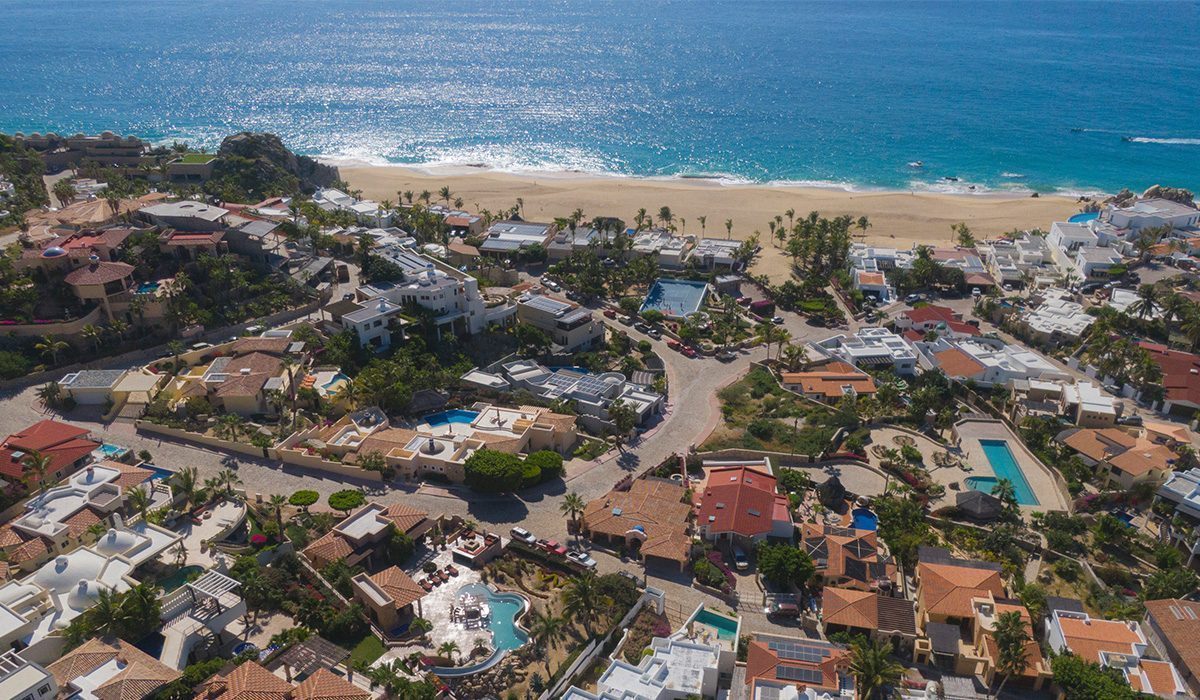
What does that mean in practical terms? The entry price for a luxury community in Jackson Hole — a ski-access condo in Teton Village or a home in the Bar B Bar ranch area — starts at $3 million and climbs quickly. In Cabo, you can buy into Diamante, Quivira, or Rancho San Lucas for $600,000 to $1.5 million. At the ultra-luxury end — Chileno Bay, Querencia, Palmilla — you are still often under $5 million for a residence that would cost $10-15 million in Jackson Hole's equivalent tier.
Why Jackson Hole Is So Expensive
The answer is simple: 97% of Teton County is public land (Grand Teton National Park, Bridger-Teton National Forest, the National Elk Refuge). Only 3% is privately held and available for development. That supply constraint is permanent and absolute — no amount of market demand will create new buildable land in Jackson Hole. It is the most supply-constrained luxury market in the United States.
Cabo has no equivalent constraint. While beachfront land is finite, the broader Los Cabos region — from the Pacific Side near Todos Santos through the Tourist Corridor to the East Cape — still has significant developable acreage. Developers are actively building new communities, which creates ongoing inventory and moderates price growth compared to Jackson Hole's artificial scarcity.
Carrying Costs: Where Cabo Destroys Jackson Hole
The purchase price gap is significant, but the annual carrying cost difference is even more dramatic.
Property Taxes
Mexico's property tax (predial) runs approximately 0.1% of assessed value. A $1 million Cabo property costs roughly $1,000 per year in property tax. Jackson Hole property taxes average 0.6% — a $3 million home costs about $18,000 annually. At comparable luxury levels, a Jackson Hole owner pays 10-18x more in property tax than a Cabo owner. For a deeper dive on Mexico's tax system, see our property tax guide.
Insurance
This is where the comparison gets interesting. Cabo hurricane insurance for a well-constructed property in a gated community runs $800 to $2,000 per year. Jackson Hole homeowners insurance, increasingly affected by the Western US wildfire insurance crisis, runs $3,000 to $8,000+ per year — with some mountain properties facing non-renewal entirely. Colorado mountain communities have seen a 77% increase in non-renewals since 2018, and the trend is pushing into Wyoming. See our full Cabo insurance guide for details on coverage options.
HOA and Maintenance
Both markets have significant HOA fees in luxury developments. Jackson Hole HOAs range from $500 to $2,000+ per month. Cabo HOAs range from $200 to $1,500 per month depending on the community. Labor costs for maintenance, housekeeping, and property management are dramatically lower in Cabo — a full-time housekeeper in Cabo costs $800-$1,200 per month versus $4,000+ in Jackson Hole.
Want the Full Cost Comparison?
We build custom cost analyses comparing your current mountain-town carrying costs with equivalent Cabo properties. Real numbers, not marketing fluff.
Book a CallRental Income: Cabo's Clear Win
Both markets support strong vacation rental programs, but the math works differently.
A $1 million Cabo condo in a well-managed community can generate $60,000 to $100,000 annually in vacation rental income — a gross yield of 6-10%. Peak season nightly rates for a quality two-bedroom in Cabo del Sol or Pedregal run $400-$800 per night, with 60-70% occupancy during November through April.
A $3 million Jackson Hole property might generate $90,000 to $150,000 annually — a gross yield of 3-5%. Ski season rates are high ($500-$1,500+ per night for a quality home), but the season is shorter (December through March), and summer rental demand, while growing, does not match ski season pricing. For more on Cabo rental income, see our rental income guide.
The bottom line: Cabo delivers more return per dollar invested, and the rental season is longer (six months of high season versus four months of ski season).
Lifestyle: Mountains vs Ocean
This is the one dimension where the comparison is purely subjective. If you ski 50+ days a year, Jackson Hole is irreplaceable — the mountain has 4,139 feet of vertical drop, arguably the best expert terrain in North America, and a small-town atmosphere that Vail and Aspen have lost. The summer hiking, fly fishing, and wildlife viewing are world-class.
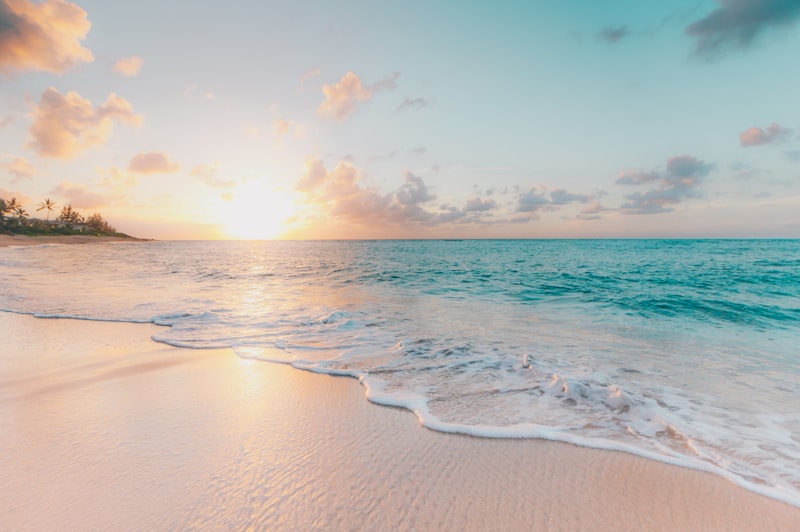
But if your ideal day involves 80-degree weather, ocean water, sportfishing, golf on championship courses, and dinner at an open-air restaurant overlooking the Pacific — Cabo delivers that 300 days a year. The outdoor lifestyle is less seasonal and more accessible. You do not need specialized equipment or physical conditioning to enjoy a morning paddleboard session or an afternoon at Palmilla Beach.
Dining and Culture
Jackson Hole has a surprisingly strong restaurant scene for a town of 11,000 — Snake River Grill, The Handle Bar, Persephone — but options are inherently limited by size. Cabo's dining scene has exploded in recent years, with celebrity chef restaurants, authentic Mexican cuisine ranging from $3 street tacos to $300 omakase, and a farm-to-table movement anchored by Flora Farms and the San Jose food scene.
Climate and Insurance Risk: Cabo's Structural Advantage
The Western US is facing an existential insurance crisis driven by wildfire risk. Nearly 400,000 California homeowners policies have been canceled since 2021. Colorado mountain communities have seen non-renewal rates 5-10x higher than state averages. Premiums that were $2,000 three years ago are now $6,000-$12,000 — if you can get coverage at all. Wyoming has been less affected than California or Colorado, but the trend is migrating north as catastrophe models reclassify risk zones.
Cabo faces hurricane risk — that is real. But the comparison is instructive: modern construction in Los Cabos gated communities is engineered for Category 3+ winds, hurricane insurance is readily available and affordable ($800-$2,000/year), and a major hurricane directly hitting Los Cabos has historically occurred approximately once every 10-15 years. Compare that to the annual wildfire threat cycle in the Western US, where a single bad fire season can render entire communities uninsurable.
Getting There: Both Are Closer Than You Think
From Los Angeles — the metro area that feeds both markets — Jackson Hole is a 3.5-hour flight (or 13-hour drive). Cabo is a 2.5-hour flight with direct nonstops from 40+ US and Canadian cities. From Dallas, both are roughly 3-hour flights. From the Northeast, Jackson Hole requires a connection through Salt Lake City or Denver; Cabo has expanding direct service.
One practical note: Cabo's airport (SJD) is straightforward to fly in and out of. Jackson Hole's airport (JAC) — the only commercial airport inside a national park — is notorious for weather-related delays and closures during ski season. I have been stranded at both, but the Jackson Hole cancellation was more painful because it happened during a Christmas week travel crunch.
The Dual-Market Strategy
The smartest play I see from high-net-worth buyers is not choosing between the two — it is owning both. A $1.5 million Cabo villa paired with a $3 million Jackson Hole property gives you year-round coverage: Cabo from November through April when the desert is perfect, Jackson Hole from June through September for summer and December through March for ski season. Both properties rent well during your absence, offsetting carrying costs.
The combined $4.5 million portfolio delivers a lifestyle that would cost $8-12 million if concentrated in a single US coastal market like Malibu, La Jolla, or Miami Beach — and you would still only have one season of ideal weather. For more on building a multi-property portfolio, see our dual homeownership cost analysis.
The Bottom Line
If money is no object and you live on skis, Jackson Hole is in a class by itself. But if you are making a purely financial decision — where does my capital work hardest, where are carrying costs lowest, where is rental income strongest, and where is long-term risk lowest — Cabo wins on every metric except supply-driven appreciation. The 6x price gap, the 10-18x property tax gap, and the insurance risk gap are not small differences. They are structural advantages.
The market is telling you something when the same buyer profile — tech executives, finance professionals, successful entrepreneurs — increasingly adds Cabo to their portfolio alongside or instead of a second mountain-town property. The value equation is that clear.
Ready to Compare Properties?
We work with mountain-town buyers every week. Tell us what you own now, what you are looking for, and we will show you exactly what your budget buys in Cabo.
Contact Us TodayFrequently Asked Questions
How does Jackson Hole real estate compare to Cabo in 2026?+
Jackson Hole's median sale price reached $2.995 million in H1 2026, roughly six times higher than Los Cabos' median of $487,000. Both are luxury resort markets, but Cabo offers significantly lower entry prices, lower property taxes (0.1% vs 0.6%), higher rental yields (6-10% vs 3-5%), and no wildfire insurance risk. Jackson Hole's advantage is US-based ownership simplicity and dual-season appeal (ski and summer).
Which has better rental income — Cabo or Jackson Hole?+
Cabo generally produces higher rental yields as a percentage of property value. A $1 million Cabo condo can generate $60,000-$100,000 annually in vacation rental income (6-10% gross yield), while a comparable Jackson Hole property at $3 million might generate $90,000-$150,000 (3-5% gross yield). The absolute dollars can be similar, but the return on capital invested favors Cabo significantly.
Is Jackson Hole or Cabo better for appreciation?+
Jackson Hole has appreciated faster in recent years — the average single-family home hit a record $7.4 million in 2025, driven by extremely limited supply (97% of Teton County is public land). Cabo appreciation has been strong at 5-8% annually but more measured. The key difference: Jackson Hole's supply constraint is permanent (you cannot build on national park land), while Cabo still has developable land creating new inventory.
What are the tax advantages of Cabo vs Jackson Hole?+
Both locations offer no state income tax (Wyoming has none; Mexico does not tax foreign residents on worldwide income). Property taxes in Cabo average 0.1% of assessed value versus 0.6% in Teton County. A $2 million property costs roughly $2,000 per year in Cabo property tax versus $12,000 in Jackson Hole. Insurance costs are also significantly lower in Cabo, where wildfire risk does not exist and hurricane insurance for a well-built property runs $800-$2,000 annually.
Can I own property in both Jackson Hole and Cabo?+
Yes. Many buyers in the $2-5 million range who already own in Jackson Hole, Park City, Aspen, or other mountain towns add a Cabo property for winter warmth. The strategy works well: use the mountain home December-March for ski season and July-August for summer, use the Cabo property November-April for beach season, and rent both during their respective off-seasons. The combined carrying costs are often lower than a single property in a high-cost US coastal market.

Aaron Cuha
Real Estate Advisor & Los Cabos Market Expert
Real estate advisor and founder of Living In Cabo. 15+ years helping families navigate complex real estate decisions. Strategic partner with Ronival — Baja's largest brokerage.