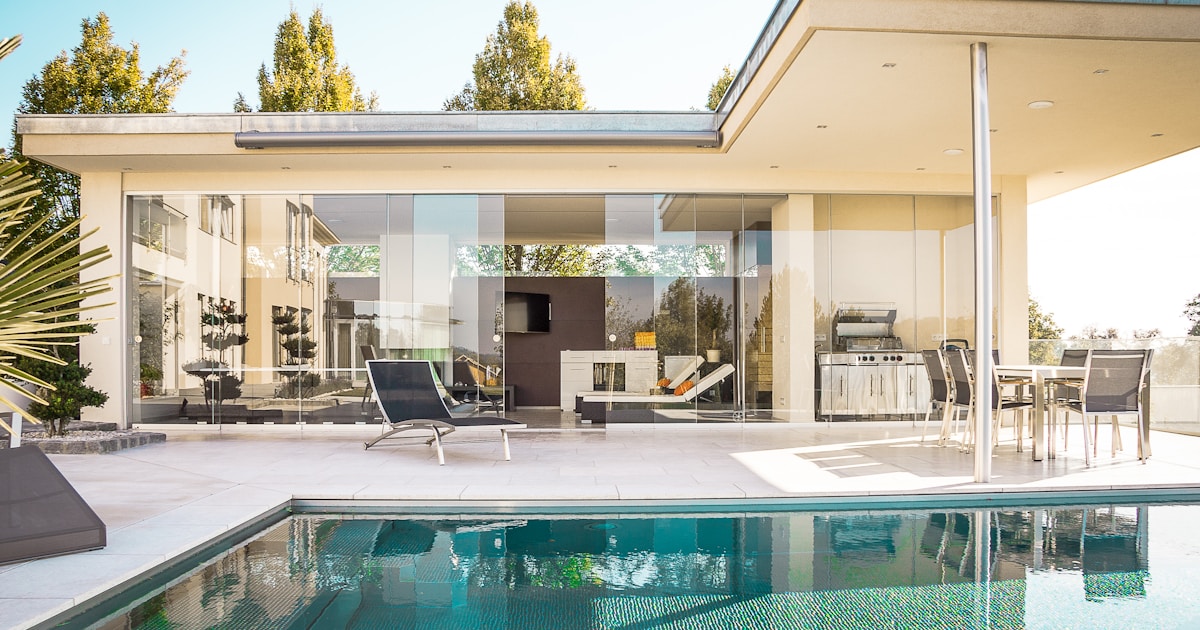
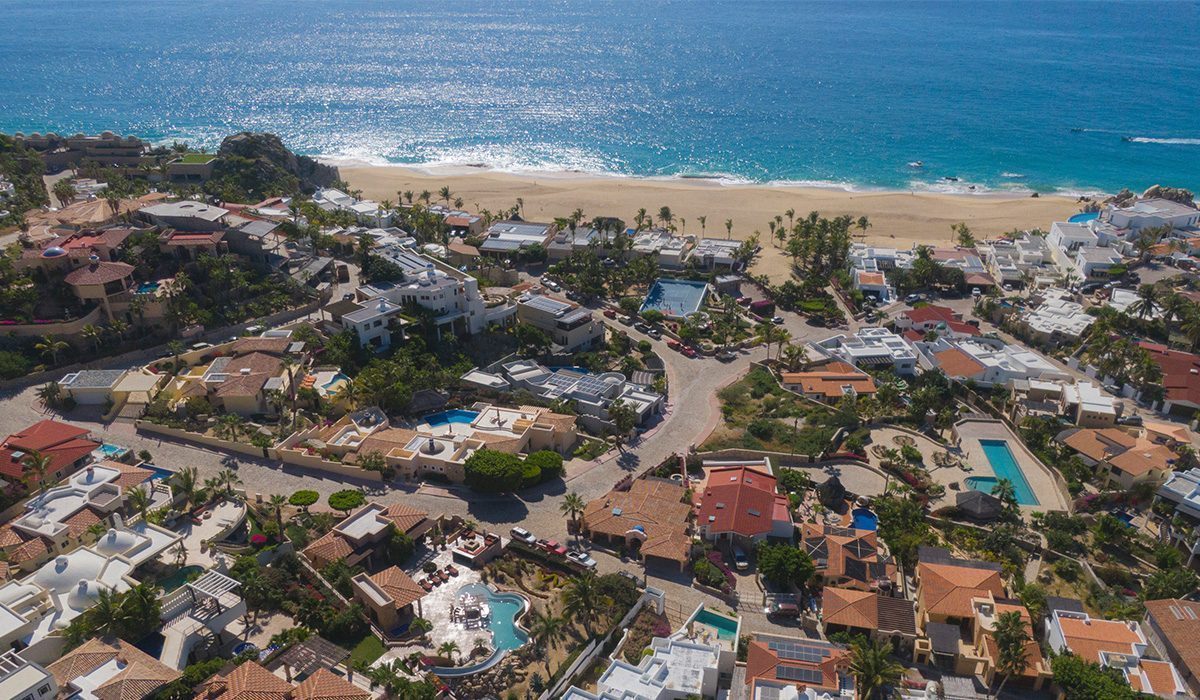
Medellín is cheaper per square foot. Cabo is easier to reach, easier to finance from the US, and backed by an ownership structure American courts already understand. Neither city is objectively "better" — they solve different problems.
Key Takeaways
- Medellín median price runs ~$140/sq ft citywide, $140-$225/sq ft in premium El Poblado — well below Cabo's $500-$1,200+/sq ft luxury range
- Colombia's real estate investor visa requires ~$130,000 (350x current SMMLV); Mexico has no purchase-based visa equivalent
- Closing costs: Colombia 4-7% of price vs. Mexico 5-8% — closer than most people assume
- SJD has 25+ direct US/Canada routes at 2-3.5 hours; Medellín's MDE requires connections for most North American travelers
- Cabo real estate is dollar-denominated at sale; Colombian peso volatility can erode nominal Medellín gains for USD buyers
Comparing Markets Before You Commit?
We'll walk you through what your budget actually buys in Los Cabos — by community, by view, by proximity to the airport — so you can compare it apples-to-apples against any other market you're considering.
Get a Straight AnswerPrice Per Square Foot: The Real Numbers
Let's deal with the headline number first, because it's the one everyone leads with. Medellín's citywide median housing price sits around $140 per square foot. In El Poblado — the neighborhood where basically every foreign buyer ends up — resale apartments close closer to $225 per square foot. That is a real, meaningful discount against Los Cabos luxury pricing.
In Los Cabos, entry-level luxury condos start around $350,000, and per-square-foot pricing across the Corridor and Cabo San Lucas commonly runs $500 to $1,200-plus depending on the development, proximity to the beach, and whether it's branded. A comparable unit in Palmilla or Diamante is going to cost you multiples of what a similar-sized apartment costs in El Poblado. If you want the raw pricing data on Medellín, Properstar's Medellín market page tracks median price-per-square-foot by neighborhood and updates regularly.
But "per square foot" is a misleading way to compare two entirely different products. A $400,000 Medellín apartment and a $400,000 Cabo condo are not competing for the same buyer, because they're not delivering the same thing. Medellín is selling urban density, walkability, and a lower cost basis in a city of 2.5 million people at 5,000 feet elevation in the Andes. Cabo is selling beachfront, resort infrastructure, and proximity to a major US-facing airport. You're not choosing between two versions of the same asset — you're choosing between two different lifestyles wearing a real estate price tag.
Ownership Structure: Fideicomiso vs. Fee Simple
This is where the two markets actually diverge in ways that matter for the paperwork, not just the price.
Mexico restricts direct foreign ownership within 50 kilometers of the coast or 100 kilometers of any international border — the "restricted zone," which covers all of Los Cabos. Foreign buyers don't take title directly. Instead, a Mexican bank holds title in a fideicomiso, a renewable 50-year trust, while you retain full beneficial rights: you can use it, rent it, renovate it, sell it, and pass it to your heirs. It's a well-worn legal mechanism — millions of foreign-owned properties in Mexico operate this way — but it is a structure Colombia simply doesn't require.
Colombia lets foreigners hold real estate in fee simple, identical to a Colombian citizen's ownership. No trust, no bank intermediary, no 50-year renewal clock. On paper, that's simpler.
Mexico's Secretaría de Relaciones Exteriores is the federal authority that grants the foreign-ownership permit underlying every fideicomiso, for anyone who wants to read the source rules rather than take a blog's word for it. In practice, the fideicomiso is not the obstacle it sounds like on a first pass. Annual trustee fees run roughly $500-$1,000, the trust is renewable indefinitely, and title insurance is readily available in Los Cabos to back it up. Our fideicomiso cheat sheet breaks down exactly what the trust does and doesn't restrict. I've closed clients through this structure more times than I can count, and the actual friction is minor. It's a line item, not a landmine.
Closing Costs and Ongoing Taxes
Closing costs in Colombia typically run 4-7% of the purchase price, covering notary fees, a registration tax, and a municipal beneficencia tax. In Los Cabos, expect 5-8%, covering the fideicomiso setup, notary fees, the acquisition tax (generally 2-3% of assessed value), and registration. See our full Mexico closing costs breakdown for the line-item math, and our closing costs calculator to run your own numbers.
The gap between the two ranges is smaller than the marketing around "cheap Colombia" implies. Where Mexico pulls ahead is predictability — annual property taxes (predial) in Los Cabos are notoriously low, often a few hundred dollars a year on a multi-million-dollar home, because assessed values lag market values significantly. Colombia's property tax (predial unificado) is generally higher as a percentage of assessed value, though assessed values there also tend to run below market.
What this means for your annual carry cost
- Los Cabos: Low annual property tax, moderate HOA/club dues in gated developments, fideicomiso renewal fee
- Medellín: Moderate-to-higher predial, building admin fees (administración) that can run several hundred dollars a month in premium towers
- Currency exposure: Cabo luxury listings are frequently priced and transacted in USD; Colombian listings are priced in COP, adding a currency conversion step and exposure to peso volatility
Visa and Residency Pathways
Colombia has a real advantage here for buyers who want residency attached to the purchase: the Visa M real estate investor category ties residency to a property investment of roughly 350 times the current SMMLV (Colombia's monthly minimum wage), which lands around $130,000 USD depending on the exchange rate.
Mexico has no direct equivalent — you can't buy your way into residency. Mexican temporary residency is based on demonstrated income or savings thresholds set by each consulate, not on a property purchase. Plenty of Cabo buyers never bother with residency at all and simply use the 180-day tourist entry (FMM) for seasonal ownership, which is legally sufficient if you're not trying to live there full time. If residency is a priority for you specifically — not just the property — that's a genuine point in Medellín's favor and worth factoring into the decision.
Lifestyle, Climate, and Access
Medellín sits at roughly 5,000 feet in the Aburrá Valley of the Colombian Andes — the "City of Eternal Spring," with daytime highs typically in the high 60s to mid-70s Fahrenheit year-round. No ocean. No beach. What you get instead is walkable urban density, a genuinely strong restaurant and coworking scene, and a lower cost of living for day-to-day expenses.
Cabo is the opposite bet entirely: Sea of Cortez and Pacific coastline, a desert climate with hot summers and mild winters, and a built environment designed almost entirely around resort living, golf, and water. If your mental image of the second home involves a pool deck and a sunset over the water, Medellín cannot deliver that regardless of price.
Flight access is not a close comparison. San José del Cabo's airport runs direct service from more than 25 US and Canadian cities, with flight times of 2 to 3.5 hours from most West Coast and Midwest hubs. Medellín's José María Córdova airport has a much thinner US network — Miami being the most consistent direct option — and most North American travelers are routing through Bogotá or a US connecting hub, which stretches door-to-door travel time to 6-9 hours. For a property you intend to actually use on long weekends, that difference compounds every single trip.
Not Sure What Your Budget Actually Gets You in Cabo?
Book a 20-minute call. We'll map your budget against the communities that fit — Pedregal, Costa Palmas, or somewhere in between — no pressure, no pitch deck.
Book a CallThe Rental Income and Investment Case
If you're evaluating this purely as an investment, the two markets serve different strategies. Medellín's rental market leans toward mid-term corporate and digital-nomad tenants at monthly rates that are low in absolute dollar terms but reasonable relative to purchase price. Los Cabos runs on a short-term vacation rental economy tied to tourism volume — Airbnb and VRBO nightly rates in the Corridor and downtown Cabo San Lucas can generate meaningfully higher gross yields during peak season (roughly November through April), offset by more seasonal vacancy and stricter HOA/development rental rules in some communities.
Cabo's advantage as an investment is liquidity and a buyer pool that already understands the fideicomiso structure — US and Canadian buyers make up the overwhelming majority of Los Cabos luxury transactions, which means your eventual exit buyer is speaking the same legal and cultural language you are. Medellín's foreign buyer pool is smaller and newer, which can mean less resale liquidity when you're ready to sell, even if the entry price was lower.
Worth noting for either market: always check the current US State Department travel information for Mexico and the equivalent travel information for Colombia before finalizing any purchase decision — both are region-specific and updated regularly, and neither country should be evaluated on outdated headlines.
Healthcare and Safety: A Fair Comparison
Neither city gets to claim uncontested superiority here, and I'd be doing you a disservice if I pretended otherwise.
Los Cabos has a growing private healthcare corridor between San José del Cabo and the Corridor, with hospitals that cater specifically to the American and Canadian buyer base, plus the option to fly home quickly given the airport's direct US routes — a serious advantage if something goes wrong and you want US-standard follow-up care fast. Medellín has its own well-regarded private hospital network, including facilities that draw international medical tourism for elective procedures, but repatriating to the US for a serious issue takes longer given the thinner direct flight network.
On safety, both cities carry country-level travel advisory language that deserves an honest read rather than a headline-driven assumption. El Poblado, Laureles, and Envigado in Medellín are established, low-crime neighborhoods by any standard measure, and the city's transformation since the early 2000s is real. Los Cabos, similarly, has specific safe corridors — the tourist zone, the Corridor, and gated residential communities — that carry a very different risk profile than headline coverage of Mexico as a whole would suggest. Check the current State Department guidance for both before you commit, and talk to people who actually live in the specific neighborhood you're considering, not just the country.
Currency, Banking, and How You Actually Pay
This is a detail buyers underweight until it costs them money. Los Cabos luxury listings are frequently priced and transacted in US dollars, and many Cabo developments accept USD wire transfers directly, which means a US-based buyer's exposure to currency swings is minimal at the point of purchase — you're not converting a dollar budget into pesos and hoping the exchange rate holds.
Medellín listings are priced in Colombian pesos. A USD-based buyer is exposed to COP/USD exchange rate movement between the day you agree on a price and the day you close, and again every time you receive rental income or eventually sell — Colombian peso volatility against the dollar has been a real factor for foreign investors there over the past several market cycles. Neither risk is unmanageable, but Cabo's dollar-denominated market removes an entire layer of financial planning that Medellín requires.
Banking practicalities
- Los Cabos: US-based banks and a mature Mexican banking sector both work with the fideicomiso structure; opening a peso account is optional, not required, for many buyers
- Medellín: opening a Colombian bank account is generally necessary for day-to-day property expenses and easier resale later, adding a step most first-time foreign buyers underestimate
Two Sample Buyers, Two Different Answers
It helps to make this concrete. Here's how the decision actually plays out for two different buyer profiles I see regularly.
Buyer A is a couple in their late 50s planning to retire in 8-10 years, wants a beach lifestyle they can use 4-6 weeks a year until then, values a legal structure their US attorney already understands, and wants to be able to fly down for a long weekend without burning a full vacation day on travel. That buyer is looking at Cabo, full stop — probably somewhere in Palmilla or along the Corridor, where resale liquidity and rental demand are both strong in the off years.
Buyer B is in their early 40s, working remotely, wants a lower cost of living, values walkable urban density and a coworking-cafe culture over beach access, and is actively pursuing residency as part of the purchase. That buyer's math points toward Medellín — the investor visa pathway alone changes the calculus, and the day-to-day cost of living difference compounds meaningfully over years of actually living there full time.
Neither buyer is wrong. They're solving different problems, and the "which market is better" question only makes sense once you know which buyer you actually are.
Which Is Right for You?
Here's the honest breakdown, no hedging:
- Choose Medellín if: your priority is residency-by-investment at a lower entry cost, you want urban walkability over beach access, and you're comfortable with a thinner US flight network and more currency exposure
- Choose Cabo if: you want a beach-and-resort lifestyle, fast flight access from the US or Canada, a well-established fideicomiso legal framework, and a deep, liquid resale market of American and Canadian buyers
- Choose neither if: you haven't actually visited both in the season you'd use the property — a week in each market will tell you more than any price-per-square-foot spreadsheet
I've had clients look seriously at both and land on Cabo every time it came down to actually using the place, not just owning it on paper. That's not a knock on Medellín — it's a genuinely interesting market for the right buyer. But "cheaper" and "right for you" are two different questions, and conflating them is how people end up with a property they visit once a year.
Ready to See What Cabo Actually Offers?
We'll walk you through fideicomiso setup, real closing costs, and the communities that match how you actually plan to use the property.
Talk to Our TeamFrequently Asked Questions
Is real estate actually cheaper in Medellín than in Cabo?+
Per square foot, yes, in most segments. Medellín's citywide median runs around $140 per square foot, with premium El Poblado resale apartments trading closer to $225 per square foot. Los Cabos luxury inventory — Pedregal, Palmilla, Diamante, Costa Palmas — starts around $350,000 for entry-level units and runs well past $2 million for oceanfront villas, with per-square-foot pricing in the $500-$1,200+ range depending on the development. Cabo is the more expensive market on a pure price basis. Whether that makes Medellín the better buy depends entirely on what you are trying to accomplish with the purchase.
Can foreigners get residency in Colombia by buying property in Medellín?+
Yes. Colombia offers an investor visa (Visa M) tied to a real estate purchase equal to roughly 350 times the current SMMLV (Colombia's monthly minimum wage), which works out to approximately $130,000 USD depending on the exchange rate in effect. Mexico has no equivalent buy-a-house-get-a-visa program. Mexican temporary residency is income- or savings-based, not purchase-based — see our breakdown of the temporary resident visa requirements for the actual thresholds.
What is a fideicomiso and do I need one to buy in Cabo?+
A fideicomiso is a bank trust required for any foreigner buying property within Mexico's restricted zone — inside 50 kilometers of the coast or 100 kilometers of a border, which covers essentially all of Los Cabos. A Mexican bank holds legal title as trustee while you hold full beneficial rights to use, lease, sell, renovate, and will the property to your heirs. It renews every 50 years and costs roughly $500-$1,000 per year in bank trustee fees. Colombia has no equivalent structure — foreigners can own property in fee simple, same as citizens, including in Medellín.
How do closing costs compare between the two markets?+
Colombian closing costs run roughly 4-7% of purchase price, covering notary fees, registration tax, and a beneficencia (municipal) tax. Mexican closing costs on a Los Cabos property typically run 5-8% of purchase price, covering the fideicomiso setup, notary fees, acquisition tax (impuesto sobre adquisición de inmuebles, generally 2-3%), and registration. The ranges overlap more than people expect — Cabo is not dramatically more expensive to close on a percentage basis, even though the fideicomiso adds a step Colombia does not require.
Which city has better flight access from the US and Canada?+
Cabo, decisively. San José del Cabo International Airport (SJD) runs direct flights from more than 25 US and Canadian gateway cities with flight times of 2-3.5 hours from most West Coast and Midwest hubs. Medellín's José María Córdova International Airport (MDE) has far fewer direct US routes — Miami and a handful of others — and most North American travelers connect through Bogotá or a US hub, pushing total travel time to 6-9 hours. If you are buying a second home you intend to actually use on weekends, this is not a minor detail.
Is Medellín safe for foreign property buyers in 2026?+
El Poblado, Laureles, and Envigado — the neighborhoods where nearly all foreign buyers concentrate — are established, low-crime areas by any reasonable standard, and Medellín's transformation over the past 15 years is real and well documented. That said, always check the current U.S. State Department travel advisory for Colombia before finalizing plans, since advisories are issued region by region and change over time. Los Cabos carries its own advisory language as well — read both with the same level of scrutiny rather than assuming one country is simply "safe" and the other "unsafe."
Which market appreciates faster — Cabo or Medellín?+
Los Cabos has posted consistent mid-to-high single digit annual appreciation across most corridor and marina-adjacent developments over the past several years, driven by scarce coastal land, direct US flight growth, and branded-residence development. Medellín is earlier in its foreign-buyer cycle, with 2026 price growth estimated around 8-10% in nominal peso terms, driven by falling Colombian interest rates and a construction permit surge — but Colombian peso volatility against the dollar can erase nominal gains for a USD-based buyer in a way that peso-pegged Cabo pricing, which is largely dollar-denominated at the point of sale, does not.

Aaron Cuha
Real Estate Advisor & Los Cabos Market Expert
Real estate advisor and founder of Living In Cabo. 15+ years helping families navigate complex real estate decisions. Strategic partner with Ronival — Baja's largest brokerage.