Californians make up the single largest buyer demographic in Los Cabos, and the most common comparison I hear from Bay Area and LA clients isn't Cabo vs. Florida or Cabo vs. Hawaii — it's Cabo vs. Napa. Both are lifestyle-first luxury markets within striking distance of the California population centers. Both attract buyers who value food, wine, outdoor living, and a slower pace. And both are overpriced relative to fundamentals if you're buying purely on investment math. The question is which kind of overpriced delivers more for your money.
Key Takeaways
- Napa Valley's median home price sits around $915,000 in mid-2026 — nearly double Cabo's $487,000 median — and the luxury tier ($2M+) gap widens further in Cabo's favor on a square-footage basis.
- California's 13.3% top marginal income tax rate and Napa County's 1.1% effective property tax rate create a combined tax burden that far exceeds Cabo's predial + fideicomiso structure.
- Napa rental yields of 3-5% reflect both the high purchase price denominator and strict short-term rental regulations that limit Airbnb-style income. Cabo yields of 6-8% reflect lower basis and year-round demand.
- Both markets have softened in 2026 — Napa values are down roughly 2.5% year-over-year and Cabo is in a buyer's market — creating negotiation opportunities in both.
- The lifestyle trade-off is genuine: Napa is wine, food, and pastoral countryside; Cabo is ocean, golf, and desert-coast adventure. Neither substitutes for the other.
Comparing Your Second-Home Options?
We help California buyers make the international vs. domestic decision with real numbers, not sales pitches.
Get the Full ComparisonPrice: what your money actually buys
Napa's median of $915,000 reflects a market where even modest homes on small lots command seven figures. A three-bedroom ranch house on a half-acre in American Canyon — the most affordable corner of Napa County — lists at $650,000-$800,000. In St. Helena or Yountville, the postcard towns that draw most second-home buyers, entry points start at $1.5M for a cottage and run $3-$8M for estate properties with vineyard views.
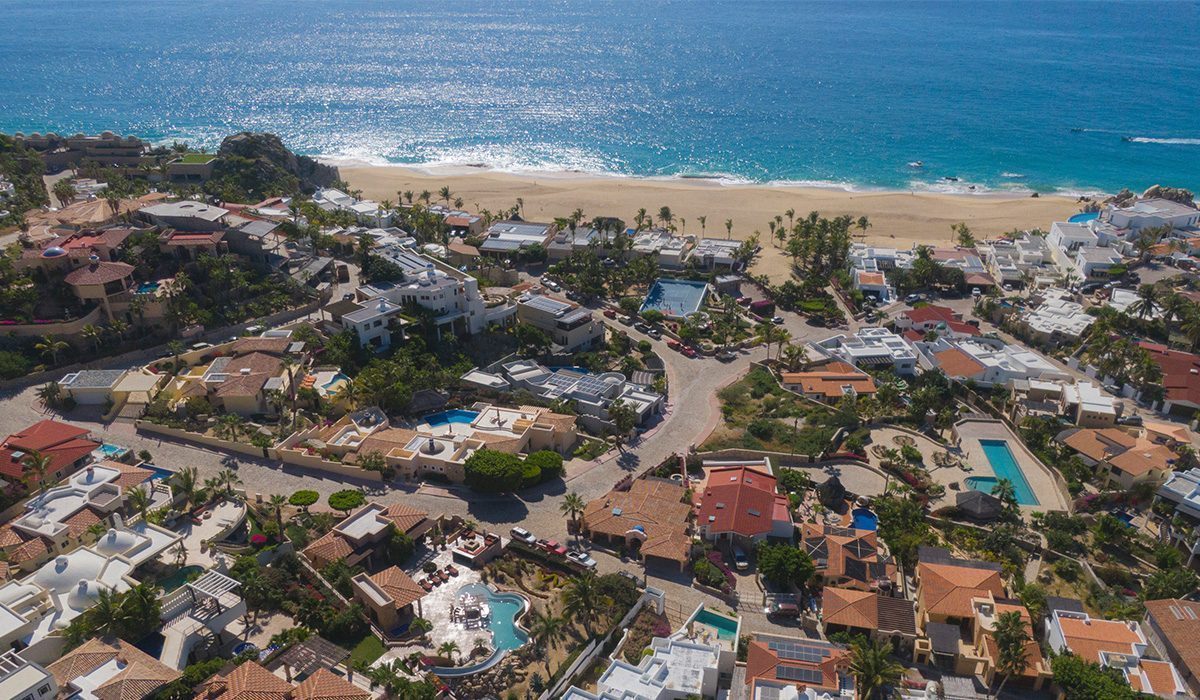
In Cabo, $915,000 — the Napa median — buys a three-bedroom condo with ocean views in Cabo del Sol, a homesite at Diamante, or a finished villa with a pool at Rancho San Lucas. You're in the luxury tier of the market, not the entry point. At $1.5M, you're looking at Palmilla or Querencia — communities that are the peer equivalent of St. Helena or Yountville in terms of lifestyle positioning.
The tax gap: California's weight
This is where the comparison tilts dramatically. California's tax burden on a second home is among the highest in the US:
- State income tax: Up to 13.3% on the highest bracket — the highest state rate in the nation. Rental income from a Napa property is taxed at your marginal California rate.
- Property tax: Napa County's effective rate is approximately 1.1% of assessed value. On a $2M property, that's $22,000/year.
- Capital gains: California taxes capital gains as ordinary income — so selling a Napa property that's appreciated $500,000 triggers both federal capital gains tax and California's 13.3% state tax on the gain.
In Cabo, annual predial tax runs $300-$1,500, the fideicomiso costs $500-$700/year, and Mexico doesn't tax your worldwide income unless you're a Mexican tax resident. The US-Mexico tax treaty prevents double taxation on rental income and capital gains. On a $2M property, the annual property tax difference alone — $22,000 Napa vs. $1,500 Cabo — covers the entire year of Cabo HOA fees in many communities.
Rental income: the yield math
Napa's short-term rental landscape has tightened significantly. The county's 2023 ordinance limits vacation rentals in unincorporated areas, requires permits, and enforces occupancy and noise standards. Several Napa municipalities have imposed additional restrictions or moratoriums. The result: rental yields on compliant properties run 3-5% gross, with net yields of 2-3% after management, cleaning, and the county's transient occupancy tax (12%).
In Los Cabos, short-term rentals face lighter regulation, and the year-round international demand — with no equivalent of Napa's foggy, quiet winter season — supports higher occupancy rates. Gross yields of 6-8% are achievable in managed resort communities, with net yields of 4-5% after property management (20-30%), Mexican income tax, and maintenance. The denominator (purchase price) is also lower, so the absolute dollars of rental income may be similar, but the yield as a percentage of your investment is materially better in Cabo.
Lifestyle: wine country versus coast
I won't pretend these are interchangeable. Napa is rolling vineyards, Michelin-starred restaurants, morning fog burning off to reveal oak-studded hillsides, and a culture built around wine. It's one of the most beautiful and food-forward places in America. If wine, cuisine, and pastoral landscape are your primary lifestyle drivers, Cabo doesn't compete — it offers a completely different set of pleasures.
Cabo is ocean. It's watching whales breach from your terrace in January, sport-fishing for marlin in August, playing world-class golf in weather that never cancels a tee time, and eating fish tacos on the beach between sets of pickleball. The dining scene is increasingly excellent — Flora Farms, Acre, Nobu — but it's built around a different aesthetic than Napa's farmhouse-chic.
Both places slow you down. Both give you permission to live at a different pace. The texture of that slower pace is just different.
Ready to See What Cabo Offers at Napa Prices?
We'll show you exactly what your Napa budget buys in Los Cabos — the gap might surprise you.
Book a Comparison CallAccess and convenience
From San Francisco, Napa is a 75-minute drive — close enough for a Friday-night departure and a Sunday-return weekend trip. From LA, it's a 6-hour drive or a short flight to SFO or OAK plus the drive. The proximity advantage is real and meaningful for Bay Area residents who want a place they can get to without a flight.
Cabo is a 2.5-3 hour nonstop flight from SFO, LAX, or SAN, with multiple daily flights from each. From the Bay Area, door-to-door travel time is roughly 5-6 hours — longer than the Napa drive but still same-day accessible. From LA or San Diego, the flight is under 3 hours, making Cabo arguably more accessible than Napa for Southern California buyers.
Natural hazards: fire versus storms
Napa's existential risk is wildfire. The Glass Fire (2020) destroyed hundreds of structures and came within blocks of downtown St. Helena. Fire insurance in Napa has become expensive and, in some zones, difficult to obtain at all — the FAIR Plan (California's insurer of last resort) is now the only option for some properties, with premiums running $5,000-$15,000/year for a $2M home. The risk is structural and worsening with climate change.
Cabo's natural hazard is hurricane season (June-November), but the Baja peninsula is hit infrequently compared to the Gulf Coast or Caribbean — Hurricane Odile in 2014 was the most recent major impact, and construction standards have improved significantly since. Hurricane insurance is available and reasonable ($1,500-$3,000/year for a $1M property), and the risk mitigation infrastructure in modern developments is strong.
The verdict: who buys where
Buy Napa if: you live in the Bay Area and want a drivable weekend retreat. You're a serious food-and-wine person whose ideal Saturday is a private tasting at a boutique winery followed by dinner at The French Laundry. You want domestic simplicity and your social circle already rotates through wine country. You're less concerned with rental income than with personal enjoyment.
Buy Cabo if: you want more property per dollar, lower carrying costs, higher rental yields, and a lifestyle centered on ocean and outdoor activity. You're comfortable with international ownership and don't need to drive to your second home. You plan to use the property 4-12 weeks per year and want it to generate income the rest of the time.
Both: A meaningful number of my Bay Area clients own in both markets. Napa for spring and fall weekends, Cabo for winter and holiday escapes. The two properties serve different emotional needs and together provide year-round access to the good life — without either one sitting empty for long stretches.
Ready to Explore What Cabo Can Offer?
If the numbers make sense, we'll help you find the community and property that matches how you live.
Start Your SearchFrequently Asked Questions
Is Cabo or Napa Valley cheaper for a second home?+
Cabo is significantly cheaper. Napa's median home price is approximately $915,000 versus Cabo's $487,000, and the gap widens at the luxury tier. Annual carrying costs (property taxes, insurance, HOA) are also lower in Cabo — Napa County's $22,000/year property tax on a $2M home dwarfs Cabo's $300-$1,500 predial tax.
What are the rental yields in Napa versus Cabo?+
Napa short-term rental yields run 3-5% gross (2-3% net) due to high purchase prices, seasonal demand, and tightening regulations. Cabo yields run 6-8% gross (4-5% net) with year-round demand and lighter regulation — roughly double the yield for a lower purchase price.
How do California taxes affect Napa property ownership?+
California's 13.3% top marginal income tax rate applies to rental income and capital gains on Napa property. Combined with Napa County's 1.1% effective property tax rate, the total tax burden significantly exceeds Cabo's structure — where annual predial tax runs $300-$1,500 and Mexico doesn't tax non-resident worldwide income.
Is fire risk in Napa worse than hurricane risk in Cabo?+
Both are real but different. Napa's wildfire risk is structural and worsening — fire insurance runs $5,000-$15,000/year and is difficult to obtain in some zones. Cabo's hurricane risk is lower frequency (the Baja peninsula is hit infrequently versus Gulf/Atlantic coasts), insurance is available at $1,500-$3,000/year, and modern construction standards have improved significantly since Hurricane Odile (2014).
How far is Cabo from San Francisco versus Napa?+
Napa is a 75-minute drive from San Francisco — drivable for weekends. Cabo is a 2.5-3 hour nonstop flight from SFO, with door-to-door travel time of approximately 5-6 hours. From LA or San Diego, Cabo is under 3 hours by air, making it arguably more accessible than Napa for Southern California buyers.
Can I buy in both Napa and Cabo?+
Yes, and many Bay Area buyers do. The two properties serve different purposes — Napa for drivable spring and fall weekends centered on food and wine, Cabo for winter and holiday escapes centered on ocean and outdoor activity. Together they provide year-round second-home access with minimal overlap.

Aaron Cuha
Real Estate Advisor & Los Cabos Market Expert
Real estate advisor and founder of Living In Cabo. 15+ years helping families navigate complex real estate decisions. Strategic partner with Ronival — Baja's largest brokerage.