I get this question more than you'd expect: "We love Savannah, and we love Cabo — which one should we buy in?" The comparison makes sense on the surface. Both are warm-weather coastal markets with strong second-home demand, walkable cores, great food scenes, and an emotional pull that makes people open their wallets. But the financial profiles, tax structures, and lifestyle realities are so different that picking the wrong one can cost you six figures over a decade. Here's how they actually compare in 2026.
Key Takeaways
- Savannah's median home price sits around $360,000 in mid-2026; Los Cabos' median is roughly $487,000, but Cabo's luxury tier ($1M+) delivers significantly more square footage and amenities per dollar.
- Georgia's state income tax rate of 5.49% and Savannah's rising property taxes contrast with Mexico's lower predial tax and no state-level income tax on foreign owners' worldwide income.
- Cabo short-term rentals yield 6-8% gross in established communities versus Savannah's 4-6%, driven by Cabo's higher average nightly rates and year-round international demand.
- Savannah offers domestic simplicity — no fideicomiso, no currency risk, no visa logistics — but Cabo offers geographic diversification and a fundamentally different cost-of-living equation.
- Both markets have shifted toward buyers in 2026, with days on market stretching and sellers entertaining below-ask offers in both locations.
Deciding Between Cabo and the U.S.?
We help buyers who are weighing international versus domestic second homes. No pressure, just data.
Talk to Our TeamPrice per dollar: what each market actually delivers
At the median level, Savannah looks cheaper — $360,000 versus Cabo's $487,000. But medians are misleading when the buyer profiles diverge this sharply. In Savannah, $360,000 buys a renovated Victorian in Midtown or a suburban ranch in Pooler — nice, but not the postcard version of the city. In Cabo, $487,000 lands you a two-bedroom condo in a managed resort community with pool, gym, and often a beach club membership — a turnkey second home.
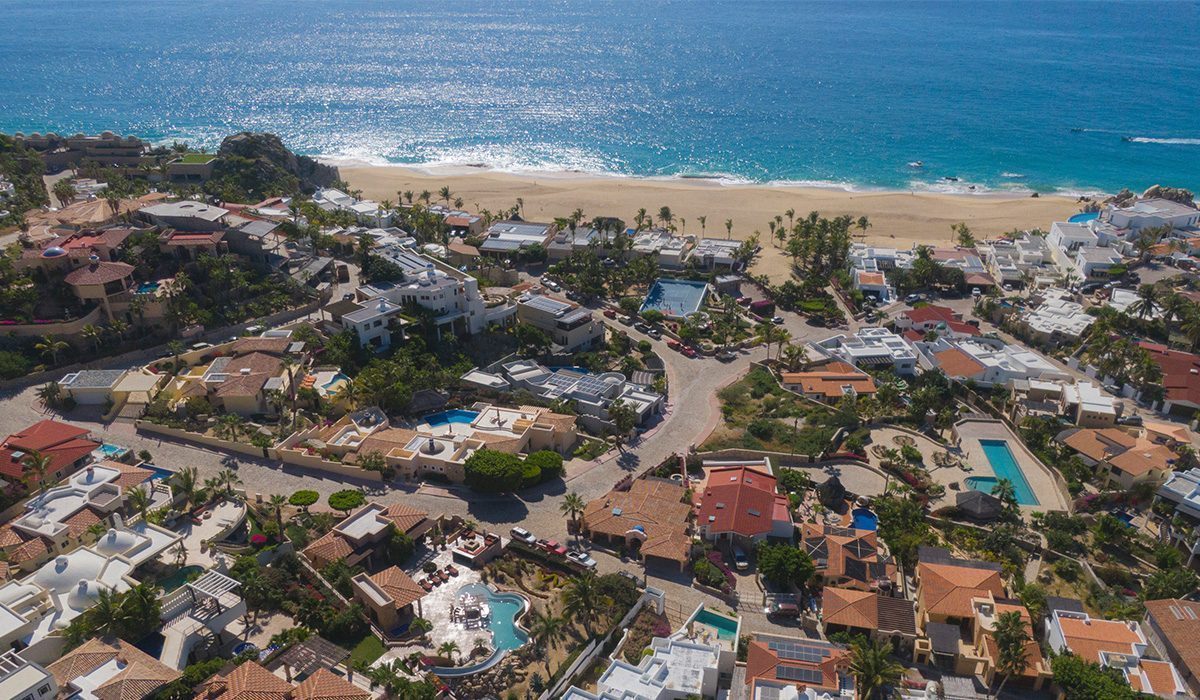
At the $1M+ tier where most second-home buyers in both markets are actually shopping, the gap widens in Cabo's favor. A million dollars in Savannah gets you a beautifully restored home on one of the historic squares — stunning, but without resort infrastructure. The same million in Cabo gets you a three-bedroom villa in Quivira or Rancho San Lucas with ocean views, a Jack Nicklaus or Greg Norman golf course out the back door, and a full-service rental program ready to generate income the day you leave.
Tax comparison: the numbers nobody talks about
Georgia levies a flat 5.49% state income tax, and Chatham County's property tax millage rate translates to effective rates of roughly 1.0-1.2% of assessed value. Savannah's historic district properties often carry higher assessed values precisely because of their desirability, so annual property tax bills of $5,000-$12,000 on a $500K-$1M home are standard.
In Los Cabos, annual predial (property tax) typically runs $300-$1,500 for a comparable property — sometimes one-tenth of the Georgia bill. Mexico doesn't tax foreign owners' worldwide income, and the US-Mexico tax treaty provides foreign tax credit mechanisms that prevent double taxation on rental income and capital gains. There's a fideicomiso annual fee of $500-$700, but even stacking that on top of predial, the total carrying cost is a fraction of what Savannah charges.
Rental income: where the yield gap lives
Savannah's short-term rental market is mature and regulated. The city requires a short-term vacation rental (STVR) permit, caps density in certain zones, and enforces noise and parking ordinances. Yields run 4-6% gross on well-managed properties in the historic district, with peak season running March through June and again in October-November. Summer (July-August) is brutally hot and humid, creating a seasonal dip that Cabo's year-round climate doesn't face.
In Los Cabos, gross rental yields of 6-8% are achievable in communities like Cabo del Sol, Diamante, and Palmilla, driven by average nightly rates of $300-$800 and occupancy rates that hold above 70% year-round in managed programs. There's no seasonal dead zone — Cabo's summer green season sees lower rates but strong demand from Mexican domestic travelers and budget-conscious Americans.
Want the Rental Income Numbers for a Specific Community?
We can pull actual occupancy rates and ADR data for any development in Los Cabos.
Book a Data CallLifestyle: what daily life actually looks like
Savannah's charm is rooted in history — moss-draped oaks, 22 original town squares, a compact walkable grid, and one of the best-preserved 18th-century cityscapes in the Americas. The food scene punches above its weight (Mrs. Wilkes, The Grey, Fox & Fig), and the art scene around SCAD has given the city a creative energy it didn't have 20 years ago. River Street and Broughton Street offer genuine downtown retail and nightlife. It's a real place where real people live full-time.
Cabo's lifestyle is built around the outdoors — ocean, desert, golf, fishing, and 350 days of sunshine. The dining scene has exploded over the past five years with outposts like Nobu, Flora Farms, and Acre. But the daily texture is different: you're more likely to spend Tuesday morning on a paddleboard or at a beach club than walking to a coffee shop on a tree-lined street. Cabo is aspirational-resort living; Savannah is historic-city living. Neither is better — but they scratch fundamentally different itches.
Getting there: flights, drive times, and convenience
Savannah wins on domestic convenience. SAV airport has direct flights from most major East Coast hubs (Atlanta, New York, DC, Charlotte, Boston) with sub-3-hour flight times. It's also a 4-hour drive from Atlanta, making weekend trips feasible. No passport, no customs, no visa. You land and you're home.
Cabo requires a passport and a 3-5 hour flight from most US cities, but SJD airport now has over 40 nonstop routes from North American cities, and immigration is typically 15 minutes. The trade-off is real: Savannah is easier to pop into for a long weekend, while Cabo trips tend to be week-long or longer, which actually suits the short-term rental calendar better for owner-use planning.
Appreciation history and 2026 outlook
Savannah appreciated roughly 40% from 2019-2024, driven by remote work migration and domestic relocation from the Northeast. That surge has cooled — 2026 values are roughly flat to down 0.5% year over year, and days on market have stretched from under 20 in the peak to 35-45 now.
Los Cabos appreciated similarly over the same period, particularly in the Corridor and Cabo San Lucas proper. The 2026 market has also shifted toward buyers, with the median hovering around $487,000 and negotiation leverage that hasn't existed since 2019. Both markets are in a correction that favors patient buyers with cash or pre-approval in hand.
Unique risks in each market
Savannah: Hurricane exposure is real — the city sits at sea level and storm surge is the primary threat, as Hurricanes Matthew (2016) and Irma (2017) demonstrated. Flood insurance is mandatory in many zones and runs $1,500-$4,000/year depending on elevation and construction. The historic district's preservation requirements can make renovations expensive and slow. And Georgia's property tax reassessments can create surprise increases.
Cabo: The fideicomiso structure adds an administrative layer that doesn't exist in US transactions. Currency fluctuation between USD and MXN affects operating costs (though most luxury purchases are priced in dollars). Hurricane season runs June through November, though the Baja peninsula is hit far less frequently than the Gulf Coast or Atlantic seaboard. And the distance factor means you need a reliable property manager if you're not there regularly — a problem Savannah's proximity largely eliminates.
Who should buy where
Buy Savannah if: you want domestic simplicity, walkable urban charm, proximity to the East Coast, and a property you can drive to for weekends. You value historic architecture and don't need resort amenities. You plan to be there 8+ months per year or want a full-time residence that also rents well.
Buy Cabo if: you want higher rental yields, lower carrying costs, geographic diversification, and a lifestyle centered on ocean, golf, and outdoor living. You're comfortable with international ownership structures and plan to use the property 2-4 months per year while it earns income the rest of the time. You're buying a vacation asset, not a primary home.
The honest answer for many buyers? Both. I know clients who own a historic row house in Savannah and a Pedregal condo, and the two properties serve completely different purposes in their lives. If you have to pick one, the decision usually comes down to whether you want to walk to dinner on cobblestones or watch the sun set over the Pacific from an infinity pool.
Ready to Explore Los Cabos?
If the numbers point south, let's find the community that fits your lifestyle and budget.
Get StartedFrequently Asked Questions
Is Savannah or Cabo cheaper to buy property in 2026?+
Savannah's median home price of roughly $360,000 is lower than Cabo's $487,000 median, but at the luxury tier ($1M+), Cabo generally delivers more square footage, resort amenities, and rental infrastructure per dollar. Annual carrying costs (property taxes, insurance) tend to be significantly lower in Cabo than in Savannah's Chatham County.
Which has better rental income — Savannah or Cabo?+
Cabo typically outperforms with gross rental yields of 6-8% versus Savannah's 4-6%, driven by higher average nightly rates ($300-$800 in Cabo resort communities), year-round demand, and no seasonal dead zone comparable to Savannah's July-August heat slump.
How do property taxes compare between Savannah and Cabo?+
Savannah's effective property tax rate of 1.0-1.2% translates to $5,000-$12,000 annually on a $500K-$1M property. Cabo's predial tax typically runs $300-$1,500 for a comparable property, plus a fideicomiso annual fee of $500-$700 — often one-fifth to one-tenth of the Georgia bill.
What are the hurricane risks in Savannah versus Cabo?+
Both face hurricane exposure, but Savannah's sea-level elevation and Gulf Stream-warmed Atlantic waters create higher storm-surge risk — mandatory flood insurance runs $1,500-$4,000/year. Cabo sits on the Baja peninsula, which is hit far less frequently than the US Gulf or Atlantic coast, though it's not immune (Hurricane Odile in 2014 was the most recent major impact).
Can I own property in both Savannah and Cabo?+
Yes, and many buyers do. The two markets serve different purposes — Savannah as a drivable domestic getaway with historic charm, Cabo as an international vacation asset with higher rental yields. Owning both provides geographic diversification and lifestyle variety.
Is it easier to buy in Savannah than Cabo?+
Savannah is simpler for American buyers — no fideicomiso, no currency conversion, no visa requirements, and standard US financing options. Cabo involves an international ownership structure (fideicomiso bank trust), typically cash-based purchases, and a notario-based closing process, though experienced agents and attorneys make it routine.
Aaron Cuha
Real Estate Advisor & Los Cabos Market Expert
Real estate advisor and founder of Living In Cabo. 15+ years helping families navigate complex real estate decisions. Strategic partner with Ronival — Baja's largest brokerage.