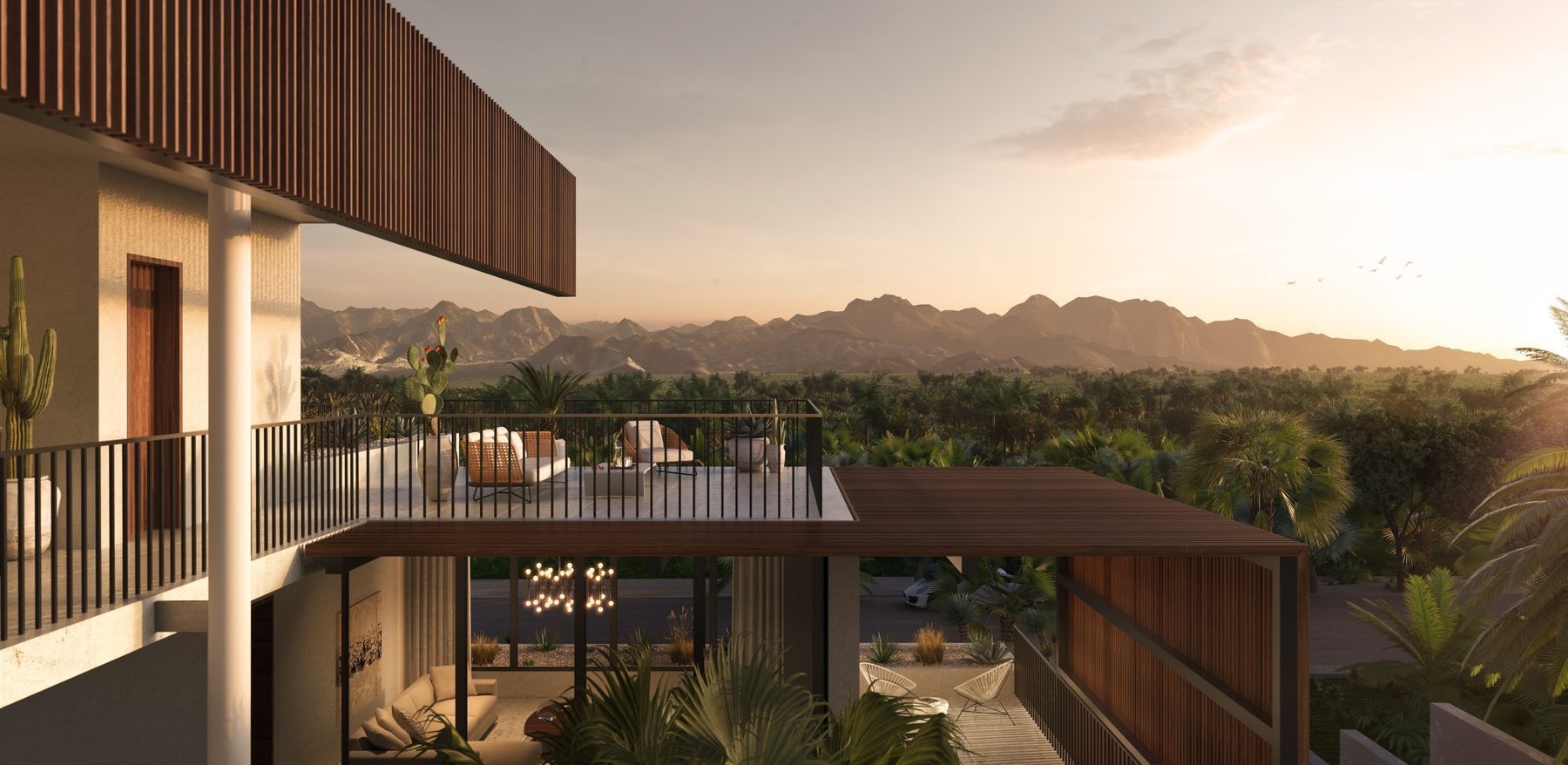
About 60 to 70 percent of resale condos in Cabo sell furnished, commanding a 10 to 15 percent premium — but that premium should reflect real, climate-appropriate furniture, not staged junk. Here's how to evaluate the actual dollar value of what's included.
Key Takeaways
- 60-70% of Cabo resale condos sell furnished; furnished units command a 10-15% price premium
- Salt air destroys standard furniture in 3-5 years — furniture age matters more here than almost anywhere else
- Developer furniture packages run 30-50% above local-sourced equivalents
- Full furnishing from scratch runs $30K-$150K+ depending on property size
- Always demand an itemized inventory list — never accept "fully furnished" as a description alone
Evaluating a Furnished Listing?
Send me the listing and the inventory sheet (or lack of one) and I'll tell you if the furniture premium is real value or a markup.
Contact MeThe Numbers Behind "Furnished" in Cabo
Somewhere between 60 and 70 percent of resale condos in Los Cabos sell furnished. That's higher than most US resale markets, and there's a simple reason: a huge share of Cabo condo inventory was bought as a vacation home or rental property in the first place, used seasonally, and never accumulated the kind of personal, sentimental furniture a full-time primary residence does. When those owners sell, shipping the furniture home or paying to store it rarely makes financial sense — it's easier to leave it and roll it into the sale price.
Furnished units, when the furniture is genuinely good, command a 10 to 15 percent premium over a comparable unfurnished unit. I want to be precise about the word "when" in that sentence, because it's doing a lot of work — I've negotiated deals on both sides of that premium being fair and being a straight overcharge for depreciated goods.
Why I Always Negotiate the Furniture Question Separately From the Real Estate
I've closed enough of these deals to have a rule: never let the furniture question get baked silently into the purchase price. I treat it as its own line item, with its own negotiation, every time.
I've pulled six-figure furniture packages out of deals entirely — buyers who had their own design vision and didn't want to pay a premium for someone else's taste, where we negotiated the price down to reflect an unfurnished sale and the seller kept or sold the furniture separately. I've also watched other buyers, working with less careful agents, pay a full furnished premium for furniture that had been sitting through five Cabo summers of salt air and humidity and had maybe two good years left in it. Same market, same season, wildly different outcomes — the difference was entirely in whether anyone actually inspected and priced the furniture on its own merits.

Why Salt Air Changes the Math Entirely
This is the single biggest factor that makes Cabo furniture valuation different from a comparable negotiation in Scottsdale or Austin. Standard furniture in a coastal, humid, salt-heavy environment shows real wear in 3 to 5 years, regardless of how gently it was used. Untreated metal rusts. Standard leather grows mold. Cotton and linen upholstery degrades faster than in a dry climate. Even good furniture ages faster here than the same piece would inland.
That means a "6-year-old, like-new" sofa in a Cabo listing photo needs a different mental discount than the same claim in a Denver listing. Ask for actual purchase dates on major pieces — sofas, mattresses, outdoor furniture, appliances — not just a visual assessment from photos. Our full furnishing guide covers exactly which materials hold up here and which don't, and that same list is your inspection checklist when you're evaluating what a seller is trying to include in the price.
Developer Furniture Packages: Convenient, Not Cheap
If you're buying pre-construction at a development like Quivira, Diamante, or Cabo del Sol, you'll likely be offered a turn-key developer furniture package. These are genuinely convenient — professionally designed, rental-ready from day one, and they skip the 3-to-6-month furnishing timeline entirely.
They're also marked up, typically 30 to 50 percent above what the same or comparable furniture would cost sourced locally or through an independent designer. That markup buys you convenience and speed, which has real value if your plan is to list the unit for rental the moment you close. But it's not free money — if you have flexibility on timeline, negotiating the developer's furniture package price down (often possible, especially during slower sales periods) or sourcing independently can save meaningfully.
| Property Size | Furnish From Scratch (Local) | Developer Package Markup |
|---|---|---|
| 1-2 BR condo | $30,000-$50,000 | +30-50% |
| 3-4 BR villa | $50,000-$80,000 | +30-50% |
| 5-6 BR estate | $80,000-$150,000+ | +30-50% |
Not Sure What to Negotiate?
Book a call before you sign anything. I'll help you figure out what the furniture is actually worth to you.
Book a CallThe Inventory List Is Non-Negotiable
Never accept "fully furnished" as a listing description and move forward without a real inventory. I require an itemized list before any offer that includes furniture in the price, covering:
- Every major furniture piece by room, with approximate purchase date or age
- Appliances (make, model, and age if available — a 4-year-old Cabo refrigerator has lived a harder life than a 4-year-old one in Seattle)
- Outdoor furniture and equipment specifically — this degrades fastest and is often the biggest hidden cost if it needs replacing
- Explicit exclusions — personal art, certain heirloom pieces, electronics the seller is keeping
- Photos of every room including closets and storage, not just the staged shots from the listing
Then walk the property in person and physically inspect item by item before you close — cushion firmness, hardware corrosion, mattress condition, whether the "outdoor sectional" has actually been living outdoors uncovered for three years. Photos taken for a listing and the actual condition at closing can diverge meaningfully in a market with this kind of climate.
Furnished for Rental Income vs. Furnished for You
The furnished-vs-unfurnished calculus shifts depending on what you're buying for. If your plan is short-term vacation rental income, furnished is close to mandatory — nobody books a week at Pedregal or Palmilla and expects to bring their own bed, and a rental-ready property at closing gets to your first booking faster than an empty one you have to furnish over several months.
If you're buying primarily for personal use, the calculus flips. You have far less reason to pay a premium for someone else's taste in furniture, and every reason to negotiate it out and furnish to your own standard. I've had personal-use buyers save $15,000 to $40,000 simply by telling a seller upfront "we're bringing our own vision, we don't want your furniture" and getting the price adjusted to reflect an unfurnished sale.
How This Fits Into the Broader Cabo Market
Turn-key, furnished properties in Cabo San Lucas and the Corridor consistently draw the strongest buyer interest, particularly from out-of-state buyers who want to walk in with a suitcase and start renting or living immediately — a pattern that shows up throughout our Los Cabos market report. That demand is exactly why the furnished premium exists and persists. It's also exactly why sellers and their agents have every incentive to describe tired furniture as "beautifully appointed" — the incentive to oversell condition is real, and the burden is on you to verify it.
The Bottom Line
Furnished isn't automatically a better or worse deal than unfurnished — it's a separate negotiation hiding inside your real estate purchase, and it deserves the same scrutiny you'd apply to the property itself. Get the inventory list, price the furniture on its actual condition and age (accounting for what salt air does to it here), compare it against what furnishing from scratch would cost you, and negotiate accordingly. Buyers who skip this step are the ones who end up overpaying for junk with a nice throw pillow on top.
For the deeper dive on sourcing, materials, and designers if you decide to furnish independently, our complete furnishing guide picks up exactly where this one leaves off.
The Two Items Buyers Underrate: Mattresses and Appliances
When I walk a furnished property with a client, everyone fixates on the sofa and the dining table because those are the pieces you see in listing photos. The two items that actually matter more for both livability and resale are mattresses and major appliances, and they're the two items sellers are least likely to volunteer honest information about.
Mattress quality and age matters enormously for rental reviews — guests judge a stay heavily on sleep quality, and a sagging, humidity-degraded mattress that looked fine in a photo tanks reviews fast. Ask directly how old every mattress in the property is; if the seller doesn't know or won't say, assume it needs replacing and price that into your offer. Major appliances — refrigerators, washers, dryers, AC units — face the same accelerated wear from heat and humidity as furniture, and a "recently serviced" appliance claim means far less here than in a mild inland climate. Get appliance model numbers and ages in writing as part of your inventory list, not just a verbal assurance during the walkthrough.
How Furniture Affects Financing and Future Resale
If you're using any form of financing — a US-based portfolio loan, a HELOC, or developer financing — be aware that furniture value generally does not count toward the appraised value of the real property itself in a standard valuation. That means a seller who inflates the purchase price to reflect a generous furniture package may be asking you to finance furniture through a real estate loan, at real estate interest rates, for depreciating assets. It's not necessarily a bad trade, but you should understand that's what's happening rather than assuming the entire purchase price maps cleanly to real estate value.
The same logic applies in reverse when you eventually sell. Buyers three, five, or ten years from now will apply the exact same skepticism to your furniture that you should be applying to your seller's furniture today. Keep your own inventory list updated with purchase dates as you buy replacement pieces over the years — it makes your own eventual sale faster and gives you leverage to actually capture value for furniture that's genuinely still in good condition rather than having a future buyer discount it reflexively.
What Furniture Packages Look Like at Specific Developments
Buyers evaluating pre-construction at communities like Quivira, Diamante, and Cabo del Sol should ask each developer for their furniture package's full spec sheet — brand names, material specifications, and whether the package includes outdoor furniture (often sold as a separate, additional line item even when the base package sounds comprehensive). I've seen buyers assume "fully furnished" from a developer includes the pool deck and terrace furniture, only to find that's a $15,000-$30,000 add-on disclosed in fine print. Get the complete scope in writing before you compare one developer's furniture pricing against another's — an apples-to-oranges comparison on incomplete scope is how buyers end up thinking one developer is dramatically cheaper when they've simply excluded more from the base price.
Staging Furniture Is Not the Same as Living Furniture
One more distinction that trips up buyers: some resale listings are staged specifically for sale, with furniture rented or borrowed for photography and showings, not actually included in the purchase. Always confirm explicitly, in writing, whether what you're looking at during a showing is the furniture you'd actually receive at closing or a staging setup that leaves with the stager the day the sale closes. I've had clients tour a beautifully staged Pedregal home assuming the furniture came with it, only to learn during due diligence that the entire interior was a rented staging package and the actual sale was unfurnished. That's not a scam — it's standard practice in higher-end listings — but it's a detail that needs to be nailed down early, not discovered during your final walkthrough.
Three Negotiating Tactics That Actually Work
- Get a third-party furniture valuation. For anything over roughly $50,000 in claimed furniture value, a local designer or appraiser can give you an honest replacement-cost-minus-depreciation number in a day or two — cheap insurance against overpaying for a bundled price.
- Separate the two contracts where possible. Some sellers will agree to a real estate purchase agreement plus a separate bill of sale for furniture at an explicitly stated price. This creates a paper trail that protects you if items are missing or substituted before closing, and it clarifies exactly what you're paying for each component.
- Use the "we'll furnish it ourselves" card even if you won't. Simply raising the option that you might decline the furniture and negotiate the price down as unfurnished often prompts a seller to get more realistic about condition and pricing on what they're including, even if you ultimately decide to keep it.
Get an Honest Read Before You Offer
I'll help you separate the real estate value from the furniture markup on any listing you're considering.
Get In TouchFrequently Asked Questions
Do most resale properties in Cabo sell furnished?+
Yes. Roughly 60 to 70 percent of resale condos in Los Cabos sell furnished, largely because so much of the inventory is bought as vacation rentals or second homes, and sellers who used a property seasonally often prefer to sell it turn-key rather than deal with shipping or storing furniture. Standalone villas and land are more of a mixed bag — luxury estate sellers sometimes keep custom furniture for their next home.
How much premium should I expect to pay for a furnished property?+
Furnished properties in Los Cabos typically command a 10 to 15 percent premium over an otherwise comparable unfurnished unit — but that premium should track the actual condition and quality of what's included, not just the presence of furniture. A well-documented, recently purchased, climate-appropriate furniture package justifies the premium. A vague 'furnished' listing with no inventory list and ten-year-old rattan does not.
How much does it cost to furnish a Cabo property from scratch?+
For context on the alternative, furnishing packages run $30,000 to $50,000 for a 1-2 bedroom condo, $50,000 to $80,000 for a 3-4 bedroom villa, and $80,000 to $150,000-plus for a 5-6 bedroom estate, per our full furnishing guide. Knowing these numbers is your leverage in a furnished-property negotiation — if a seller's furniture premium exceeds what it would cost you to furnish it yourself with better-quality, better-suited pieces, that's a signal to push back or walk.
Why does salt air matter so much for furniture value?+
Cabo's coastal salt air and humidity are genuinely brutal on standard furniture — untreated metal rusts within months, standard leather grows mold, and most conventional upholstered pieces show real wear within 3 to 5 years regardless of how gently they were used. This means a furniture package's age matters enormously: a 'like new' 6-year-old sofa in Cabo is not comparable to a 6-year-old sofa in a dry inland climate. Ask for purchase dates, not just visual condition.
Are developer furniture packages a good deal?+
They're convenient, but they're marked up — often 30 to 50 percent above what the same or comparable furniture would cost sourced locally or through an independent designer. Developer packages save you the 3-6 month furnishing timeline and guarantee a rental-ready property at closing, which has real value if your goal is immediate rental income. But if you have time and want better value, sourcing independently (or negotiating the developer package price down, which is often possible) beats accepting the sticker price.
Can I negotiate furniture out of a purchase price?+
Yes, and you should if the furniture doesn't add value to you. If a seller is including furniture you don't want — wrong style, poor condition, wrong size for your family — ask for it to be excluded and the price reduced accordingly, or negotiate a credit instead of accepting a bundled 'furnished' price that doesn't reflect what you're actually getting. I've had sellers agree to knock $15,000 to $40,000 off asking price when a buyer simply said 'we're bringing our own furniture, we don't want yours.'
What should I ask for before agreeing to buy a property 'furnished'?+
A complete, itemized inventory list — not just 'fully furnished' in the listing description. Ask for purchase dates or approximate ages of major pieces (sofas, mattresses, appliances), photos of every room including closets and storage, and confirmation of what's explicitly excluded (personal art, certain heirloom pieces, electronics). Walk the property in person and physically inspect item by item before closing — furniture condition can change meaningfully between when photos were taken and your final walkthrough.
Is furnished better for rental income than unfurnished?+
For short-term vacation rentals, furnished is essentially mandatory — nobody books a week in Cabo and brings their own bed. Furnished, rental-ready properties see faster time-to-first-booking and typically better realized ROI than an unfurnished unit sitting empty while the new owner sources furniture over several months. The caveat is quality: furniture that photographs well and holds up to guest turnover matters more for rental performance than furniture that simply exists.

Aaron Cuha
Real Estate Advisor & Los Cabos Market Expert
Real estate advisor and founder of Living In Cabo. 15+ years helping families navigate complex real estate decisions. Strategic partner with Ronival — Baja's largest brokerage.