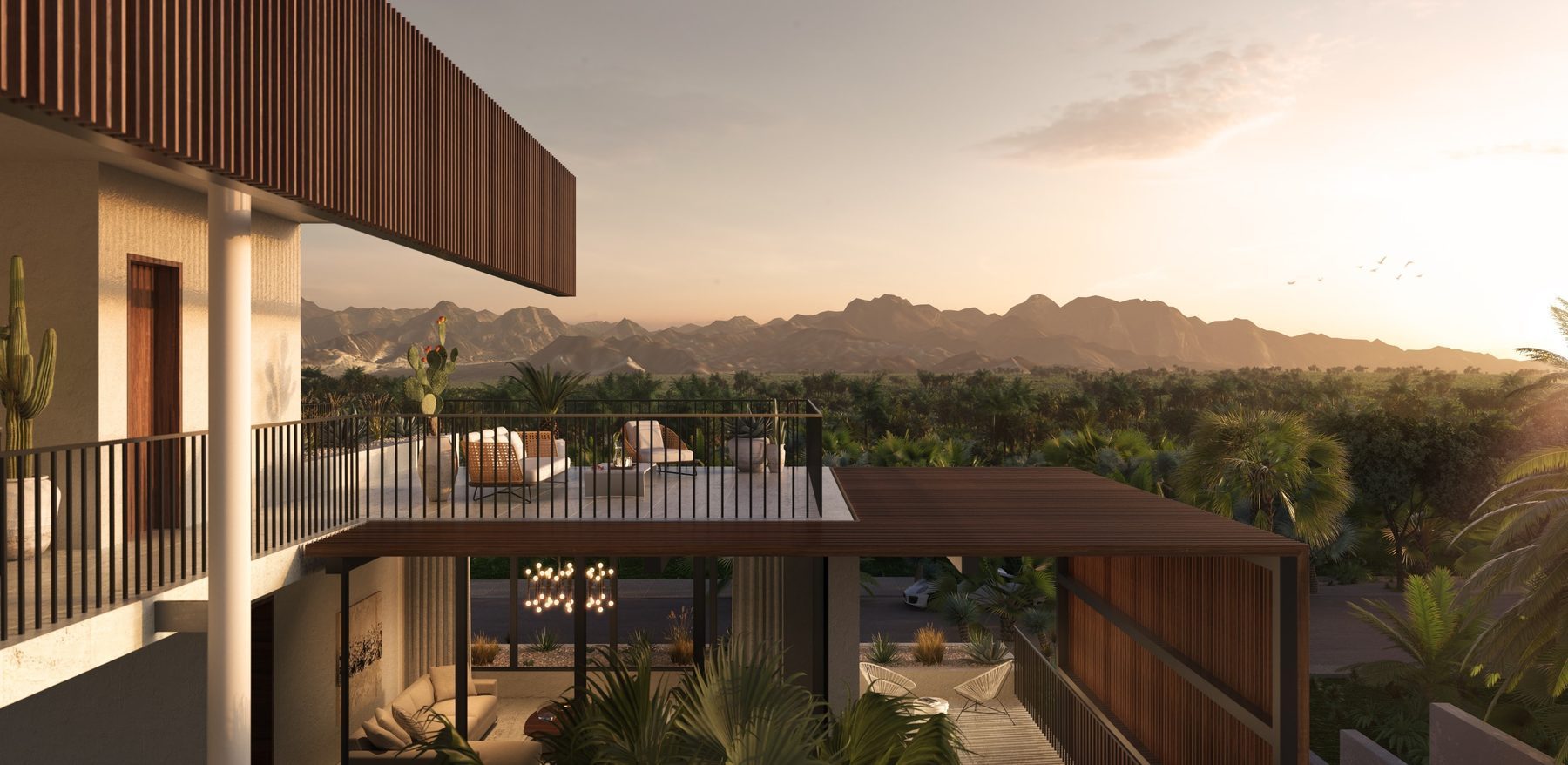
About 70% of the resale condos I walk through in Cabo are sold furnished. Half the time, the furniture is worth the premium. The other half, you are paying $40,000 for someone else's taste from 2019. The difference between a smart furnished purchase and an expensive mistake comes down to knowing what you are actually buying, what it is actually worth, and whether it serves your specific use case.
KEY TAKEAWAYS
- The typical turnkey premium in Los Cabos is 10–20% over comparable unfurnished units — on a $400K condo, that is $40,000–$80,000 baked into the price
- Furnishing a 2-bedroom Cabo rental from scratch costs $20,000–$45,000 and takes 6–12 weeks, during which time you lose rental income
- Always demand a detailed FF&E (Furniture, Fixtures & Equipment) inventory before closing — never accept "as furnished" without a room-by-room list
- Furniture can be depreciated separately from the property on your US taxes using a cost segregation approach, potentially accelerating your deductions
- The turnkey premium makes financial sense when you plan to rent immediately; it rarely makes sense for a personal-use property where you will want your own style
BUYING A CABO CONDO?
Furnished or Unfurnished — We Help You Decide
Our team evaluates the furnishing, the pricing, and the investment math before you make an offer.
Contact Us TodayWhy the Cabo Market Is Different
In most US resale markets, the house comes empty. You close, you move in with your stuff. Maybe the seller left the washer and dryer. In Los Cabos, the default for condos and many villas is to sell furnished, and there are good reasons for that:
- Most buyers are not local. They are flying in from the US or Canada. They do not have a truck full of furniture to bring. Shipping household goods from the US to Cabo costs $5,000–$15,000 and takes 4–8 weeks, plus customs hassle.
- Rental programs expect turnkey. If you are putting the unit into a rental pool or listing on Airbnb, it needs to be furnished on day one. Vacancy during furnishing equals lost revenue.
- The furniture was often bought specifically for Cabo. Indoor-outdoor pieces, salt-air-resistant finishes, tropical-weight fabrics. This is not random Midwest apartment furniture — it was selected for the climate and the context.
That said, "furnished" in a Cabo listing means wildly different things. I have seen units where "furnished" means a Restoration Hardware-quality interior with custom built-ins and imported Italian tile. I have also seen units where "furnished" means a Costco patio set and a mattress from 2017.
Understanding the Turnkey Premium
The turnkey premium — the amount you pay above what the same unit would sell for empty — varies by development, unit size, and furnishing quality:
| Furnishing Tier | What It Looks Like | Replacement Cost | Typical Premium Asked |
|---|---|---|---|
| Basic | Functional but dated. Costco, Home Depot, local market pieces. 3+ years old | $8,000–$15,000 | $15,000–$25,000 |
| Mid-range | Coordinated design, quality pieces, good condition. Pottery Barn / Crate & Barrel level | $20,000–$35,000 | $30,000–$50,000 |
| Designer | Interior designer selected, custom pieces, recent installation. Restoration Hardware / custom Mexican artisan | $40,000–$80,000+ | $50,000–$80,000+ |
Notice the pattern: sellers almost always ask more than the actual depreciated value of the furniture. A mid-range furnishing package that cost $30,000 new three years ago has a realistic resale value of $15,000–$20,000 (furniture depreciates roughly 20% per year in the first three years). But the seller is asking you to pay $30,000–$50,000 for it because they are pricing at replacement cost, not depreciated value.
This is where negotiation matters. And this is where most buyers leave money on the table.
When Turnkey Makes Financial Sense
Scenario 1: You Are Renting Immediately
If you plan to put the unit on Airbnb or VRBO within 30 days of closing, buying furnished is almost always the right call. Here is the math:
- Cost to furnish from scratch: $20,000–$45,000 for a 2-bedroom condo in Los Cabos (our furnishing ROI guide breaks down the costs by item)
- Time to furnish: 6–12 weeks, including ordering, shipping, customs clearance, and installation
- Lost rental revenue during furnishing: 2–3 months at average occupancy = $8,000–$15,000
- Total cost of buying unfurnished for rental: $28,000–$60,000 in furnishing plus lost income
If the turnkey premium is $30,000–$50,000 and the alternative is $28,000–$60,000 in costs plus two months of zero revenue, the furnished unit wins — provided the furniture is rental-appropriate and in good condition.
Scenario 2: Personal Use Only
If this is your personal vacation home and you plan to make it yours, buying furnished is usually a waste. You will spend $30,000–$50,000 on the turnkey premium and then spend another $15,000–$30,000 replacing the pieces you do not like. I have seen this pattern dozens of times. The buyer closes on a "beautifully furnished" unit, spends two weeks living in it, decides they hate the living room configuration, and guts half the furnishing within six months.
For personal-use buyers, negotiate the unit unfurnished (or negotiate a significant discount for removing the furniture) and invest that savings in pieces that reflect your taste.
The FF&E Inventory: What to Demand Before Closing
Never — and I mean never — close on a furnished property without a detailed FF&E (Furniture, Fixtures & Equipment) inventory. This is a room-by-room list of every item included in the sale, with:
- Description: "King platform bed, walnut frame, Restoration Hardware, model Rio"
- Condition: Excellent, good, fair, or needs replacement
- Approximate age: Purchased in 2023, 2021, etc.
- Replacement cost estimate: What it would cost to buy new today
- Photographs: Timestamped photos of each major item
The FF&E inventory serves multiple purposes:
- It prevents the seller from removing valuable pieces between the listing and closing (this happens more than you would think)
- It establishes the furniture's value for tax purposes if you plan to depreciate it separately
- It gives you a negotiating tool — if half the items are worn or outdated, you have documentation to justify a lower price
- It protects you if the seller substitutes inferior items before closing
Your real estate attorney should include FF&E inventory requirements in the purchase agreement. If the seller refuses to provide one, that is a red flag — they either do not know what is in the unit (bad property management) or they know and do not want you to know (worse).
NEED A SECOND OPINION?
We Evaluate the Furnishing — Not Just the Unit
Before you pay a turnkey premium, let us walk the unit and tell you what the furniture is actually worth.
Book a CallNegotiating the Furnished Price
Here is how I approach pricing negotiations on a furnished resale unit:
Step 1: Establish the Unfurnished Value
Look at recent comparable sales in the same development for unfurnished or newly furnished units. This gives you the baseline property value. If unfurnished comps in the development are selling at $380,000 and the furnished unit is listed at $450,000, you know the seller is pricing the furniture at $70,000.
Step 2: Calculate the Depreciated Furniture Value
Get the FF&E inventory and price each item at its current depreciated value — not what the seller paid, and not what a replacement would cost. Furniture depreciates approximately:
- Year 1: 20% depreciation from purchase price
- Year 2: 15% additional
- Year 3: 15% additional
- After year 3: 10% per year until reaching roughly 10–20% of original value
A $3,000 sofa purchased in 2023 has a 2026 value of roughly $1,500. The seller might call it a "$3,000 sofa" — but you should be paying $1,500 for it, at most.
Step 3: Present a Two-Price Offer
Submit your offer as two numbers: the property price and the furniture price, totaling your offer. This forces transparency and gives both parties clear terms. It also helps with the tax structure — furniture allocated separately from the real property can be depreciated on a different schedule for US tax purposes.
The Tax Angle: Separate Depreciation
For US taxpayers who rent their Cabo property, furniture and fixtures can be depreciated separately from the real property. Here is why this matters:
- Real property depreciation (Mexico): The building structure is typically depreciated over 27.5 years for US tax purposes (residential rental property)
- Furniture and fixtures: Personal property like furniture can be depreciated over 5–7 years under the US tax code
- Appliances: Major appliances typically depreciate over 5 years
On a $50,000 furniture package, the accelerated depreciation generates roughly $7,000–$10,000 per year in tax deductions for the first five years — significantly more than if the furniture value were lumped into the real property and spread over 27.5 years. Our US tax guide for Mexico rental income covers the details, but the key point is to structure the purchase with a separate furniture allocation from the start.
This is one more reason to insist on the FF&E inventory. Without it, you cannot document the furniture's value for the IRS.
What to Check in Cabo Specifically
Cabo's climate creates specific furniture issues that mainland US buyers often miss:
- Outdoor furniture quality: Marine-grade aluminum and Sunbrella-type fabrics survive. Anything with exposed steel or standard upholstery lasts 1–2 years before rust or UV damage destroys it. Check the outdoor pieces first — they are often the most expensive to replace.
- Mattresses: In Cabo's humidity, mattresses develop mold issues faster. Flip the mattress during your walkthrough. If there are stains or a musty smell, deduct replacement cost ($1,000–$3,000 per king mattress).
- Salt-air corrosion: Metal drawer pulls, light fixtures, and curtain rods corrode. Look closely at all metal hardware. Replacing corroded fixtures across a 2-bedroom condo runs $1,500–$3,000.
- Appliances: Check the manufacture date on the water heater, AC units, and refrigerator. If anything is over 5 years old, deduct replacement cost. In El Tezal and other close-to-ocean communities, salt exposure accelerates appliance aging by 30–50%.
The Bottom Line Decision
Here is my quick decision framework:
- Buying for rental income? Buy furnished if the furniture is rental-quality, in good condition, and the premium is within 10–15% of the unfurnished value. Negotiate hard on depreciated furniture value.
- Buying for personal use? Buy unfurnished or negotiate to remove the furniture and reduce the price. Invest in pieces you actually want to live with.
- Buying for mixed use (personal + rental)? Buy furnished if the furniture is neutral enough for guests and appeals to your taste. If you hate it, buy unfurnished.
The worst deal is paying a 20% turnkey premium for furniture you plan to replace within a year. The best deal is buying a well-furnished rental unit where the furniture saves you two months of vacancy and $30,000 in furnishing costs, and you negotiate the premium down to the furniture's actual depreciated value.
SMART BUYING STARTS HERE
Find the Right Cabo Property
Furnished or unfurnished, rental or personal — we help you evaluate the deal, not just the listing photos.
Get StartedFrequently Asked Questions
What is the typical turnkey premium for a furnished condo in Cabo?+
The turnkey premium in Los Cabos typically ranges from 10-20% above comparable unfurnished units. On a $400,000 condo, that means $40,000-$80,000 is built into the asking price for the furnishing. The premium varies by development, furnishing quality, and condition — designer-furnished units command higher premiums than basic packages.
How much does it cost to furnish a Cabo condo from scratch for rental?+
Furnishing a 2-bedroom Cabo condo from scratch for rental purposes costs $20,000-$45,000, depending on quality level. This includes furniture, linens, kitchenware, electronics, and decor. The process takes 6-12 weeks for ordering, shipping, customs clearance, and installation — during which time you lose an estimated $8,000-$15,000 in rental revenue.
What is an FF&E inventory and why do I need one?+
FF&E stands for Furniture, Fixtures & Equipment. It is a room-by-room list of every item included in a furnished property sale, with descriptions, condition ratings, approximate age, replacement cost estimates, and photographs. You need it to prevent the seller from removing items before closing, to negotiate the furnished price based on actual value rather than asking price, and to establish furniture value for separate tax depreciation.
Can I depreciate furniture separately from the property on my US taxes?+
Yes. For US taxpayers who rent their Cabo property, furniture and fixtures can be depreciated over 5-7 years, compared to 27.5 years for the building structure. On a $50,000 furniture package, this generates roughly $7,000-$10,000 per year in tax deductions for the first five years. To qualify, you need a documented FF&E inventory with allocated values established at purchase.
How fast does furniture depreciate in Cabo's climate?+
Standard furniture depreciates approximately 20% in the first year, 15% per year in years 2-3, and 10% per year after that until reaching 10-20% of original value. However, Cabo's salt air and humidity accelerate wear on specific items: outdoor furniture with exposed steel or standard upholstery lasts only 1-2 years, mattresses develop mold faster, and metal hardware corrodes. Marine-grade aluminum and UV-resistant fabrics last significantly longer.
Should I buy furnished or unfurnished if I plan to rent my Cabo condo?+
Buy furnished if the furniture is rental-quality, in good condition, and the premium is within 10-15% of the unfurnished value. The math works because furnishing from scratch costs $20,000-$45,000 plus 2-3 months of lost rental income ($8,000-$15,000), totaling $28,000-$60,000. If the turnkey premium is less than that combined cost, buying furnished saves money and gets you earning rental income faster.
How do I negotiate the price on a furnished condo in Cabo?+
First, establish the unfurnished value using comparable recent sales in the same development. Second, get the FF&E inventory and price each item at depreciated value, not original cost. Third, present a two-price offer — property price and furniture price stated separately. This forces transparency and creates better tax structuring. Sellers typically price furniture at replacement cost; buyers should pay depreciated value.

Aaron Cuha
Real Estate Advisor & Los Cabos Market Expert
Real estate advisor and founder of Living In Cabo. 15+ years helping families navigate complex real estate decisions. Strategic partner with Ronival — Baja's largest brokerage.