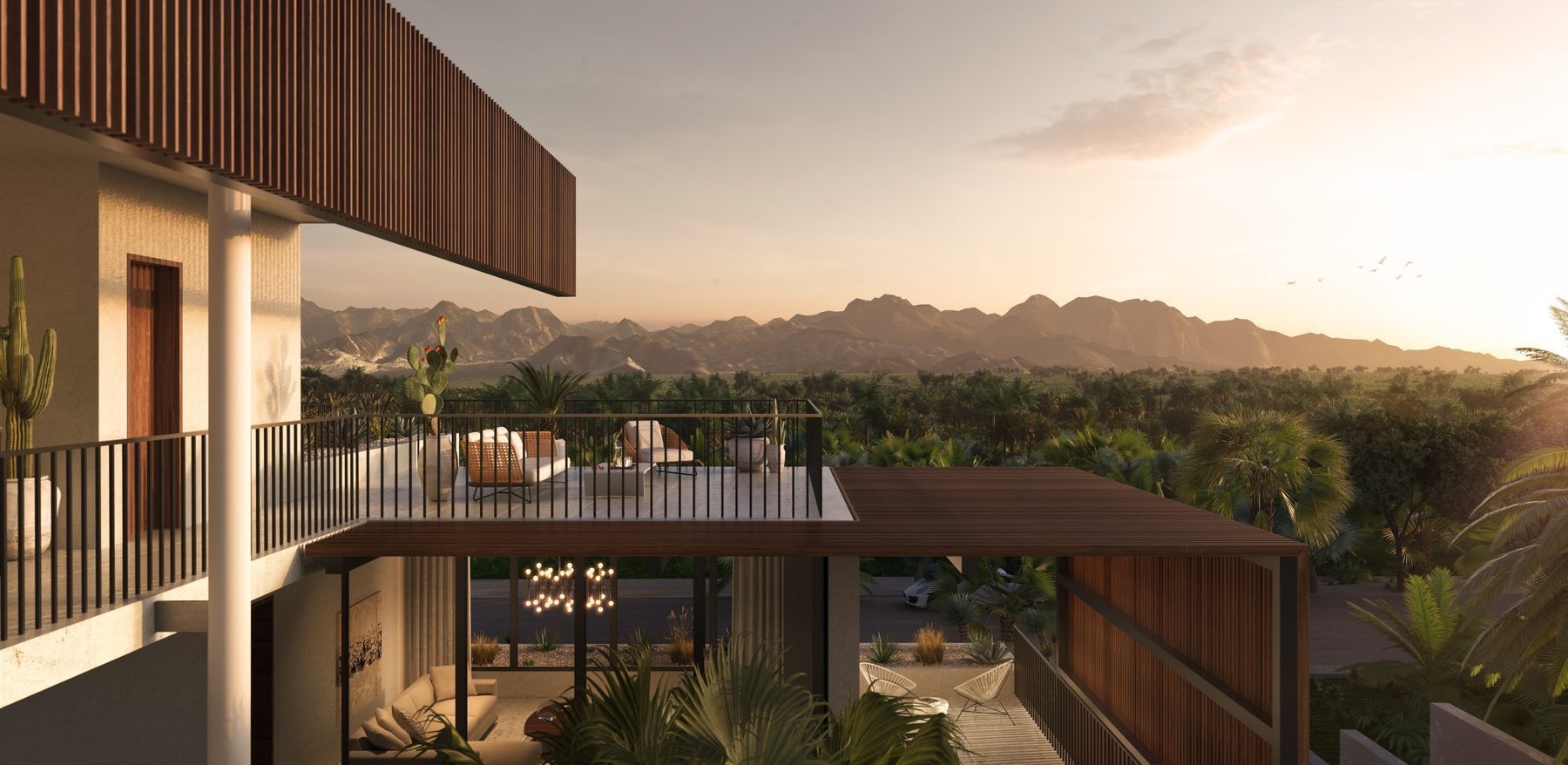
Most Los Cabos property owners split their time between Cabo and the US or Canada. That means your home sits empty for weeks or months at a time — sometimes half the year. Here is how to protect it, from the gated community perimeter down to the camera on your front door, and what the real costs look like for a comprehensive security setup.
Key Takeaways
- ✓ Gated communities provide the first and most important security layer — controlled access, patrols, and surveillance are standard at Pedregal, Palmilla, Diamante, and all major developments.
- ✓ Property management inspections cost $200–$500/month; a live-in caretaker runs $600–$1,200/month.
- ✓ WiFi cameras + cellular alarm + smart locks + UPS backup is the recommended tech stack for remote monitoring.
- ✓ Some insurance policies exclude theft coverage if a property is vacant 60–90+ days without documented inspections.
- ✓ Salt air degrades outdoor electronics — mount cameras under eaves and budget for replacement every 3–4 years.
Buying a Property You Will Not Always Be In?
We'll set you up with the security, management, and local contacts you need to own confidently from anywhere.
Contact MeSecurity in Layers
Effective property security in Los Cabos is not about any single measure — it is about layers that compound. Each layer reduces risk independently, and together they create a property that is simply not worth targeting when easier opportunities exist.
Layer 1: Community Security
The single biggest security decision you make in Los Cabos is where you buy. Gated communities with professional security infrastructure provide the most important layer of protection — one that you do not have to manage, maintain, or pay for separately (it is built into your HOA fees).
What the top communities provide:
- Pedregal: Single controlled-access gate with 24/7 guard station, vehicle registration, and visitor authorization. Interior patrol vehicles. CCTV throughout. This is a community where every vehicle entering is logged and every visitor is verified against an authorized list.
- Palmilla: Gated access with guard station, roving patrols, beach security, and access control for the One&Only resort guests versus residents.
- Querencia: Private club with strictly controlled membership access, perimeter security, and on-site security personnel. One of the most secure communities in Baja.
- Diamante: Multiple controlled access points, guard stations, patrol vehicles, and perimeter monitoring for the master-planned community.
- Cabo del Sol: Gated access with registration, interior patrols, and dedicated security for the resort and residential zones.
Communities like these reduce the security burden on individual homeowners to "lock your doors and do not leave valuables visible" — which is the same advice you would follow in any US neighborhood.
Layer 2: Technology
For remote monitoring when you are not in residence, here is the tech stack that works in the Los Cabos environment:
Security cameras: WiFi cameras (Ring, Reolink, Arlo, or Eufy) that connect to your home WiFi and store footage in the cloud. Key considerations for Cabo:
- Mount cameras under roof eaves or covered areas — direct sun and rain degrade them faster than in temperate climates
- Salt air corrodes outdoor electronics. Budget for camera replacement every 3-4 years for exterior units
- Choose cameras with local storage (SD card) as backup — WiFi outages happen, and you want footage during those gaps
- If you rent your property, do not install interior cameras. Guests have privacy expectations, and platforms like Airbnb prohibit indoor surveillance
Alarm system: A local alarm system with cellular backup (not WiFi-dependent) provides the most reliable alert capability. Several Los Cabos companies install and monitor alarm systems:
- ADT Mexico operates in Los Cabos — monthly monitoring runs approximately $30-50 USD
- Local companies offer similar monitoring at $20-35 USD per month
- Ensure the system has cellular (4G) backup — if someone cuts the WiFi or power, the alarm still reports
Smart locks: Keypad or Bluetooth locks (Yale, Schlage, August) eliminate the risk of lost keys and let you grant temporary access codes to property managers, housekeepers, and guests without distributing physical keys. Change codes after every guest stay and service visit.
UPS battery backup: A UPS on your router, modem, and alarm panel keeps your security system online during CFE power outages — which happen periodically, especially during chubasco season. A $100-200 UPS provides 30-60 minutes of backup, which covers most brief interruptions.
Layer 3: Human Presence
Technology monitors. Humans deter. Having someone regularly present at your property — even if only a few times per week — is the most effective deterrent against problems ranging from break-ins to water leaks to pest infestations.
Options:
- Full-time live-in caretaker (guardian): $600–$1,200/month including IMSS enrollment. The caretaker lives on the property (in a casita, guest quarters, or separate unit) and provides 24/7 presence. They handle daily tasks: garden watering, pool checking, mail collection, package receiving, and basic property monitoring. This is the gold standard for standalone villas that are unoccupied for extended periods.
- Part-time caretaker: $300–$600/month. Visits 2-3 times per week for inspections, light maintenance, and to maintain the appearance of occupancy (lights, car movement, general activity).
- Property management inspection service: $200–$500/month. The management company sends staff for scheduled inspections — typically weekly or biweekly. Each inspection includes running faucets (to prevent P-trap dry-out), checking for leaks, verifying AC operation, inspecting for pest activity, and documenting conditions with photos sent to you.
For a detailed breakdown of property management services and costs, see our absentee owner guide.
Need a Property Manager You Can Trust?
We work with the best management companies in Los Cabos. Let us make the introduction.
Book a CallInsurance and Vacancy
Your home insurance policy may have a vacancy clause that affects coverage when the property is unoccupied for extended periods. The specifics vary by carrier, but common provisions include:
- Vacancy exclusion: Some policies exclude theft, vandalism, and water damage claims if the property has been vacant for more than 60-90 consecutive days without documented inspections.
- Documentation requirement: To maintain coverage during extended vacancy, some carriers require written proof of regular property inspections — photos, inspection reports, or a signed property management agreement.
- Notification requirement: Some policies require you to notify the insurer if the property will be vacant for more than 30 days.
Check your policy before your first extended absence. If your current policy has restrictive vacancy provisions, discuss options with your insurance agent — some carriers offer "seasonal owner" endorsements specifically designed for snowbird and part-time owners. See our home insurance guide for the full picture.
What to Secure Before You Leave
Before departing for an extended absence, a checklist:
- Water: Turn off the main water supply if no one will be present. A burst pipe or failed water heater in an unoccupied home can cause catastrophic damage before anyone notices. If a caretaker will be checking the property, leave the water on but shut off the hot water heater.
- AC: Set the AC to 80°F (27°C) rather than turning it off completely. This maintains air circulation and prevents humidity buildup that can lead to mold and mildew — a real concern during summer months.
- Electronics: Unplug non-essential electronics. Power surges during electrical storms are common in Cabo during chubasco season and can damage TVs, computers, and appliances.
- Valuables: Secure passports, jewelry, and important documents in a home safe or take them with you. Do not leave anything irreplaceable in an unoccupied property.
- Vehicles: If leaving a car, park it in a garage. If no garage is available, use a car cover to protect from sun damage. Disconnect the battery if the absence will be more than 60 days. Ensure Mexican auto insurance remains current — an uninsured vehicle, even parked, creates liability.
- Pool: Maintain the pool on an automated timer and chemical feeder, with weekly visits from a pool service. An unmaintained pool turns green in days during summer heat and becomes a mosquito breeding ground.
- Landscaping: Maintain irrigation on automated timers. Dead landscaping signals an empty property. Budget $150–$300/month for gardening during absences.
Annual Security Budget
For a standard Los Cabos villa or large condo with part-time occupancy (4-6 months per year), here is the realistic annual security and maintenance budget for the months you are away:
| Item | Annual Cost (USD) |
|---|---|
| Property management / inspection service | $2,400–$6,000 |
| Security cameras and equipment | $300–$600 |
| Alarm monitoring | $240–$600 |
| Pool maintenance (year-round) | $1,200–$2,400 |
| Landscaping (year-round) | $1,800–$3,600 |
| Total Annual Security & Maintenance | $5,940–$13,200 |
These costs are in addition to HOA fees (which cover community-level security, common area maintenance, and shared infrastructure). For a complete picture, see our annual ownership cost breakdown.
Frequently Asked Questions
Own Confidently From Anywhere
The right property in the right community with the right team behind it. That is how absentee ownership works.
Contact MeFrequently Asked Questions
Is it safe to leave a property empty in Los Cabos?+
Yes, particularly in gated communities with 24/7 security, which is where the vast majority of foreign-owned properties are located. Communities like Pedregal, Palmilla, Querencia, Diamante, Cabo del Sol, and Puerto Los Cabos have multi-layered security with controlled access gates, perimeter patrols, surveillance cameras, and on-site security personnel. Combined with a property management company that conducts regular inspections, leaving a property unoccupied is standard practice — most foreign owners occupy their homes 2-6 months per year.
How much does a property caretaker cost in Los Cabos?+
A full-time live-in caretaker (guardian) typically costs $600 to $1,200 USD per month including IMSS social security enrollment. A part-time caretaker who visits 2-3 times per week for inspections and light maintenance runs $300 to $600 per month. Property management companies that include regular inspections in their service packages charge $200 to $500 per month depending on the scope of services and property size.
What security systems work best in Cabo?+
The most reliable setup for Los Cabos properties combines WiFi security cameras (Ring, Reolink, or Arlo — which handle salt air reasonably well when mounted under eaves), a local alarm system with cellular backup (not dependent on WiFi alone), smart locks on main entry points, and motion-activated exterior lighting. All equipment should be connected to a UPS battery backup to maintain operation during CFE power outages. Avoid systems that require monthly monitoring subscriptions from US-based companies — cellular service gaps and international connectivity issues make them unreliable.
Does home insurance in Mexico require security measures?+
Most Mexican home insurance policies do not mandate specific security measures for standard coverage, but some premium carriers offer discounts (5-15%) for homes with monitored alarm systems, security cameras, and deadbolt locks. More importantly, some policies exclude coverage for theft if the property was unoccupied for more than 60-90 consecutive days without a caretaker arrangement. Check your policy's vacancy clause — it may require documented property inspections during extended absences.
Should I hire a property manager or a caretaker?+
Both serve different functions. A property management company handles administrative tasks — bill payments, vendor coordination, rental management, HOA communication, and major maintenance. A caretaker handles physical presence — property inspections, pool maintenance, garden watering, receiving deliveries, and providing a human presence at the property. Most absentee owners use both: a management company for the business side and either a caretaker or the management company's inspection service for the physical side.

Aaron Cuha
Real Estate Advisor & Los Cabos Market Expert
Real estate advisor and founder of Living In Cabo. 15+ years helping families navigate complex real estate decisions. Strategic partner with Ronival — Baja's largest brokerage.