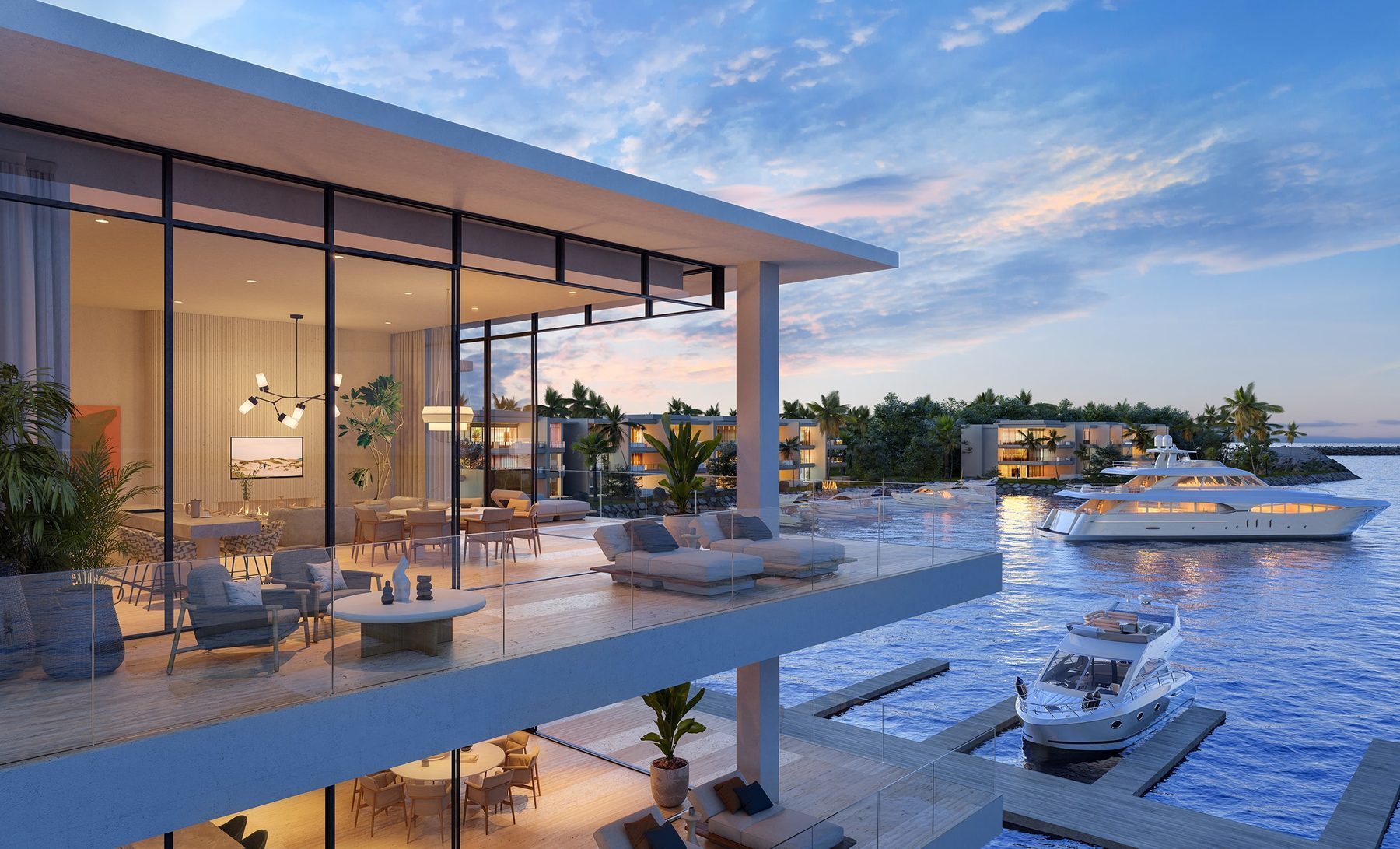
20 Miles, $10 Billion
Drive the 20 miles of Highway 1 between San Jose del Cabo and Cabo San Lucas today and you pass Palmilla, Cabo del Sol, Chileno Bay, Twin Dolphin, Las Ventanas, Montage, Zadún — a concentration of luxury hospitality and residential real estate that rivals any coastal stretch in the Americas.
Forty years ago, this was empty desert. No hotels. No golf courses. No paved side roads. Just a two-lane highway through cactus and scrub brush, connecting two small fishing towns that most Americans couldn't find on a map.
Understanding how the Corridor became what it is today isn't just a history lesson — it's the key to understanding where value is being created next. Because the transformation isn't over. It's accelerating.
Interested in Corridor Properties?
I'll walk you through current inventory along the Corridor and help you understand which communities and price points match your goals.
Get In TouchKey Takeaways
- The Corridor's total estimated real estate value exceeds $10 billion, making it the most valuable coastal strip in Mexico and one of the most valuable in Latin America.
- Three catalysts created the modern Corridor: Fonatur's infrastructure investment (1970s-80s), the Palmilla hotel opening (1956, reimagined 1996), and the arrival of international hotel brands (Four Seasons, Ritz-Carlton, Auberge) starting in the 2000s.
- The current development wave — Park Hyatt (2026), Ánima Village, Legacy Golf Club, St. Regis at Quivira — represents the third major investment cycle and the densest in terms of capital deployed.
- Corridor land values have increased approximately 8-12% annually over the last decade, outpacing both the broader Mexican market and most US resort markets.
- The remaining undeveloped Corridor parcels are finite. Once the current pipeline is built out, new supply along this stretch effectively ends — which is the fundamental driver of long-term value.
Phase One: Fonatur Builds the Foundation (1970s-1980s)
The modern Corridor begins with Fonatur — Mexico's National Tourism Trust. In the 1970s, Fonatur identified the southern tip of Baja California as a target for tourism development, just as it had done with Cancún and Huatulco.
Fonatur's contribution was infrastructure, not buildings:
- Highway 1 improvements connecting the two towns
- SJD airport expansion to handle international flights
- Water and electrical infrastructure along the Corridor route
- Land use planning that designated the coastal strip for tourism and residential development
Without Fonatur's infrastructure backbone, there would be no Corridor. The private sector built the resorts, but the government built the road, the airport, and the pipes. This public-private model is still operating — the current infrastructure boom includes highway widening, water desalination expansion, and the new Cabo San Lucas airport terminal.
Phase Two: The Hotel Brands Arrive (1990s-2010s)
The Corridor's identity shifted from "remote Mexican beach" to "international luxury destination" when the hotel brands arrived:
- 1996: One&Only Palmilla (reimagined from the original 1956 hotel) — the first true luxury resort on the Corridor. This single property changed the perception of Los Cabos from a fishing village to a world-class destination.
- 1997: Cabo del Sol opens with Jack Nicklaus Ocean Course — the first championship golf course on the Corridor.
- 2002: Las Ventanas al Paraíso (Rosewood) — introduced ultra-luxury to the Corridor at price points that competed with Aman and Four Seasons globally.
- 2010: Chileno Bay (Auberge) and the Discovery Land Company club — brought the US private club model to Los Cabos.
- 2014: Montage Los Cabos — the Corridor's first East Coast luxury brand, establishing Santa Maria Bay as a prime location.
- 2019: Zadún, a Ritz-Carlton Reserve — one of only four Ritz-Carlton Reserves in the world, signaling that the Corridor had arrived at the absolute top tier of global resort markets.
Each new brand validated the market for the next. When Ritz-Carlton places one of four global Reserves on the Corridor, it tells every other luxury brand that the market is proven. The result is a self-reinforcing cycle: brands attract buyers, buyers justify more brands, more brands attract more buyers.
Phase Three: The Current Boom (2020s)
The post-2020 development wave is the densest in Corridor history. Active projects include:
- Park Hyatt Los Cabos at Cabo del Sol (2026): Hyatt's ultra-luxury brand, with branded residences starting at $2M+.
- Ánima Village at Cabo del Sol: The Corridor's first walkable retail and dining district — 80+ brands.
- Legacy Golf Club at Diamante: Tiger Woods' third course, limited to 250 families. The most exclusive new development in the region.
- St. Regis at Quivira: Artist's rendering stage — Marriott's ultra-luxury brand entering the Pacific side of the Corridor.
- Twin Dolphin expansion: Fred Couples golf course, new residential phases, and enhanced club facilities across the 1,400-acre master plan.
The capital being deployed in this phase exceeds all previous phases combined. Conservative estimates put current Corridor development investment at $3-5 billion in active construction and committed projects.
Want to Understand Which Phase We're In?
I'll map out the Corridor development timeline and show you where value is being created right now — and where the next wave is heading.
Book a CallThe Scarcity Thesis: Why the Corridor Is Fundamentally Different
Here's the investment argument that drives the most sophisticated Corridor buyers: the land is finite.
The Corridor is bounded by the ocean on one side and the highway on the other. The total developable coastal frontage is approximately 20 miles. Of that, roughly 80% is already developed or committed. The remaining undeveloped parcels — a few hundred acres total — are either in late-stage planning or held by developers waiting for the right cycle to launch.
Once this pipeline is built out, there are no more Corridor development sites. You can't build more beachfront. You can't extend the highway through the mountains to create new coastline. The supply is fixed.
Compare this to Miami (hundreds of miles of coast), Cancún (the Riviera Maya extends 80+ miles south), or even Scottsdale (essentially unlimited desert expansion). The Corridor's scarcity is structural, not temporary.
Value Per Mile: The Numbers
Estimating the total real estate value along the Corridor requires aggregating residential, hospitality, and commercial values across all communities. Based on MLS data, developer pricing, and hotel valuations:
- Palmilla: Approximately $1.5-2B in total residential value (one of the highest concentrations of $5M+ homes in Latin America)
- Chileno Bay / Discovery Land: $1-1.5B (including the Auberge hotel and club)
- Twin Dolphin / Maravilla / Montage: $1-1.5B (1,400 acres of master-planned development)
- Cabo del Sol: $800M-1.2B (two golf courses, Park Hyatt, Ánima Village)
- Las Ventanas / Zadún: $500-800M (ultra-luxury hotel and residential)
- Other Corridor communities: $2-3B combined
Total: approximately $7-10B+ in current real estate value along 20 miles of coast. That's $350-500M per mile — a concentration that puts the Corridor alongside the Côte d'Azur, Maui's South Shore, and the Gold Coast of Australia in terms of value density.
What Comes Next
The Corridor's evolution isn't stopping. Three trends will define the next decade:
- Densification over expansion. With limited raw land remaining, the next wave is vertical and infill — more residences within existing communities, redevelopment of older properties, and mixed-use projects like Ánima Village. This means the Corridor gets more valuable per acre, not more acres.
- The walkability shift. Ánima Village is the leading indicator of a broader trend: buyers want more than a resort — they want a community they can walk around. Future developments will include more ground-level retail, dining, and services integrated into the residential plan.
- Pacific-side expansion. As the Corridor proper fills up, development energy is shifting to the Pacific side — Diamante, Quivira, Rancho San Lucas. This isn't the Corridor by geography, but it's the Corridor by market positioning: same buyer profile, same price points, same branded hospitality.
For buyers, the implication is clear: the Corridor isn't getting cheaper. The scarcity thesis works in one direction. If you're waiting for a dip, you're betting against the math of finite supply and growing demand.
Ready to Own a Piece of the Corridor?
I'll show you what's available today — from $500K entry points to $10M+ estates — and help you understand where each community sits in the Corridor's evolution.
Get In TouchFrequently Asked Questions
How much is the Los Cabos Tourist Corridor worth in total?+
The total estimated real estate value along the 20-mile Tourist Corridor exceeds $10 billion, including residential, hospitality, and commercial properties. This works out to $350-500 million per mile, placing it alongside the Côte d'Azur and Maui's South Shore in terms of value density. Major communities include Palmilla ($1.5-2B), Chileno Bay ($1-1.5B), and Twin Dolphin/Maravilla ($1-1.5B).
How did the Los Cabos Corridor develop?+
The Corridor developed in three phases: Fonatur's government infrastructure investment in the 1970s-80s (highway, airport, utilities), the arrival of international hotel brands from the 1990s-2010s (One&Only Palmilla, Rosewood Las Ventanas, Auberge Chileno Bay, Ritz-Carlton Zadún), and the current boom (2020s) with Park Hyatt, Ánima Village, Legacy Golf Club, and St. Regis — the densest capital deployment in Corridor history.
Is there still undeveloped land on the Los Cabos Corridor?+
Approximately 80% of the Corridor's developable coastal frontage is already developed or committed. The remaining undeveloped parcels are limited to a few hundred acres and are either in late-stage planning or held for future development. Once the current pipeline is built out, new Corridor supply effectively ends, which is the fundamental driver of long-term value appreciation.
What new developments are being built on the Corridor in 2026?+
Major active projects include Park Hyatt Los Cabos at Cabo del Sol (opened 2026), Ánima Village retail district (80+ brands), Legacy Golf Club at Diamante (Tiger Woods' third course, limited to 250 families), St. Regis at Quivira (in planning), and Twin Dolphin expansion. Conservative estimates put current Corridor investment at $3-5 billion in active construction.
How have Corridor property values grown over time?+
Corridor land values have increased approximately 8-12% annually over the last decade, outpacing both the broader Mexican market and most US resort markets. This growth is driven by structural scarcity (fixed coastline), brand accumulation (each new luxury hotel validates the market), and increasing air access (SJD airport handled 7.5 million passengers in 2025).
Aaron Cuha
Real Estate Advisor & Los Cabos Market Expert
Real estate advisor and founder of Living In Cabo. 15+ years helping families navigate complex real estate decisions. Strategic partner with Ronival — Baja's largest brokerage.