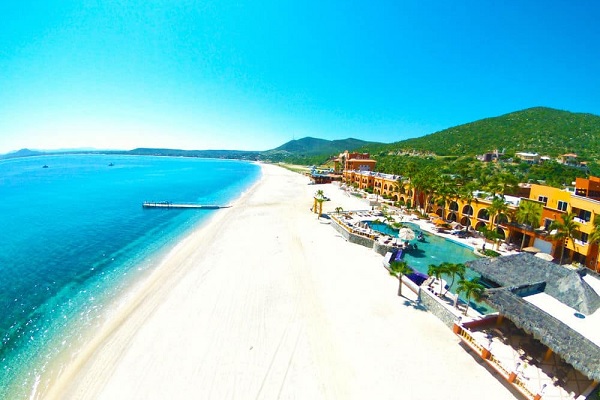
Rancho Pescadero is a 103-key adults-only boutique resort in The Unbound Collection by Hyatt, located in El Pescadero on Cabo's Pacific Side. Originally founded by Lisa Harper in 2009 with 12 rooms, it reopened November 2022 after a major renovation and expansion. It is not a residential development — it is a hotel. But its presence is reshaping the Pacific Side real estate market in ways every Cabo buyer should understand.
Key Takeaways
- ✓ Rancho Pescadero is a 103-key Hyatt Unbound resort — not a residential development with units for sale
- ✓ Founded in 2009, reopened November 2022 after renovation/expansion from 12 rooms to 103 keys
- ✓ Located in El Pescadero, ~1 hour north of SJD airport on the Pacific Side
- ✓ Nearby land values have appreciated 30-50% since the 2022 Hyatt branding
- ✓ Separate Rancho Pescadero Residences development offers actual homes for purchase nearby
Interested in Pacific Side Properties?
I track every development from Cerritos to Todos Santos. Let me show you what is available near the Rancho Pescadero corridor.
Get Pacific Side ListingsThe Resort: What Rancho Pescadero Actually Is
Let me clear up the most common confusion first. Rancho Pescadero is a hotel. You can book a stay. You cannot buy a unit there. If someone tells you they are "buying at Rancho Pescadero," they almost certainly mean the separate Rancho Pescadero Residences development in the area, not the resort itself.
The resort's story begins with Lisa Harper, who purchased the original property in 2009 and opened a 12-room boutique hotel that quickly became the Pacific Side's most sought-after destination. It earned a reputation for farm-to-table dining from its own organic gardens, a barefoot-luxury aesthetic, and a surf-and-wellness culture that resonated with a specific kind of traveler — one who found Cabo San Lucas too commercial and Todos Santos too sleepy.
The 2022 reopening transformed the property from a small boutique operation into a legitimate resort: 103 keys, expanded wellness facilities, new pools, additional dining venues, and the Hyatt Unbound Collection brand. The expansion maintained the property's signature personality — adults-only, wellness-focused, organic farm anchoring the culinary program — while scaling it to a level that draws international attention and Hyatt's global distribution network.
The Wellness and Culinary Identity
What separates Rancho Pescadero from other Pacific Side hospitality is its commitment to a wellness-first identity that is not performative. The property was designed around its organic garden and farm, which supply the majority of ingredients for the on-site restaurants. This is not a hotel that happens to have a spa. The wellness programming is central to the guest experience:
- On-site organic farm and garden: the culinary program sources directly from the property, with seasonal menus that reflect what is growing
- Yoga and movement programming: daily classes with views of the Pacific
- Surf instruction: the El Pescadero coastline offers consistent Pacific swells, and the resort arranges instruction and board rentals
- Spa and bodywork: treatment rooms integrated into the landscape, not sealed off in a building
- Adults-only policy: maintains the atmosphere for guests seeking genuine quiet and restoration
This identity matters for real estate because it defines the type of buyer the area attracts. El Pescadero is not drawing the Medano Beach party crowd. It is attracting wellness-oriented, design-conscious, higher-income travelers who are more likely to convert into residential buyers looking for a permanent or semi-permanent Pacific Side home.
Pacific Side Context: Where It Fits
The Pacific Side of Los Cabos stretches from Cerritos Beach north through El Pescadero to Todos Santos, roughly 40 miles of coastline that is developing in real time. Here is the landscape:
- Cerritos Beach: the surf hub, about 45 minutes from SJD. Beachfront condos and small developments. Several new projects: Soleado Cerritos, The Cliff at Cerritos, Tortuga del Sol.
- El Pescadero: agricultural community transitioning to a boutique destination. Rancho Pescadero is the anchor. Organic farms, surf breaks, and a growing restaurant scene.
- Todos Santos: the established cultural anchor — a Pueblo Magico (Magic Town) with galleries, restaurants, the Hotel California, and a walkable historic center. More mature than El Pescadero but still early-stage compared to Cabo San Lucas.
The Pacific Side offers entry prices 40-60% below the Corridor or Cabo San Lucas. A vacant lot in El Pescadero that sells for $200,000 would cost $500,000+ in an equivalent position near the Corridor. The trade-off is infrastructure: roads are still two-lane, power supply can be inconsistent in some areas, and water delivery to remote lots requires planning.
The Hyatt Halo Effect on Property Values
When an international hotel brand invests in an emerging market, it sends a signal to every other investor and buyer watching: this area has arrived. The Hyatt branding at Rancho Pescadero has done exactly that for El Pescadero.
Since the November 2022 reopening, the measurable effects include:
- Land values within 5km of the resort: appreciated an estimated 30-50%
- New development launches: several residential projects have broken ground in the El Pescadero-Cerritos corridor, including Rancho Pescadero Residences
- Increased infrastructure investment: road improvements, utility extensions, and commercial services expanding along the Pacific corridor
- Buyer profile shift: the area is attracting more design-conscious, higher-budget buyers who previously only considered the Corridor or San Jose del Cabo
This pattern is not unique to Rancho Pescadero. The same halo effect occurred when the Four Seasons arrived at Costa Palmas on the East Cape, and when branded residences like St. Regis and Montage came to Quivira. Institutional hospitality brands validate a market for all the properties surrounding them.
Rancho Pescadero Residences — The Residential Play
The separate Rancho Pescadero Residences development is the actual buying opportunity in this corridor. It is a residential community in the El Pescadero area that offers homes and lots for purchase. The development benefits from proximity to the resort — guests who stay at Rancho Pescadero and fall in love with the lifestyle become natural buyers for the residential project.
This is the pattern that has driven sales at branded communities across Los Cabos: stay at the hotel, experience the lifestyle, buy the residence. The resort functions as a permanent marketing engine for the surrounding residential market.
Want Details on Rancho Pescadero Residences?
I have current pricing, floor plans, and construction timelines for every Pacific Side development — including Rancho Pescadero Residences.
Book a CallHow It Compares to Other Pacific Side Options
If the Pacific Side appeals to you, Rancho Pescadero's corridor is one of several options. Here is how they compare:
- El Pescadero / Rancho Pescadero area: the emerging boutique destination. Wellness-oriented, farm-to-table culture, surf lifestyle. Prices are still early-stage. Best for buyers who want to get in before the wave crests. Read our full El Pescadero guide.
- Cerritos Beach: more established surf community with beachfront condos and small resort developments. Slightly higher prices than El Pescadero, more tourist infrastructure. Our Cerritos guide has current pricing.
- Todos Santos: the cultural anchor with the most mature infrastructure on the Pacific Side. Galleries, restaurants, the Pueblo Magico designation, and a walkable historic center. Higher entry prices than El Pescadero or Cerritos. See our Todos Santos real estate guide.
The right choice depends on your tolerance for emerging versus established infrastructure, your timeline (buying now versus 2-3 years from now), and whether the specific wellness/surf/farm-to-table lifestyle of the Pescadero corridor matches your vision for life in Baja.
Getting There: The Access Question
Rancho Pescadero and the El Pescadero area sit approximately 60 miles north of San Jose del Cabo International Airport (SJD). The drive takes about one hour on Highway 19, the Pacific coast road that runs from Cabo San Lucas through Todos Santos to La Paz. The road is a well-maintained two-lane highway with dramatic Pacific views.
For buyers evaluating the area, the access question cuts both ways:
- The upside of distance: the one-hour drive from SJD is a natural filter that keeps casual tourists in Cabo. This preserves the Pacific Side's character and prevents the over-commercialization that has changed parts of Cabo San Lucas. Buyers who value authenticity and quiet view this as a feature, not a bug.
- The downside of distance: for rental properties, the drive adds a friction point. Guests arriving at SJD face a 60-minute transfer, which some compare unfavorably to a 15-minute ride to a Corridor villa. This can suppress short-stay bookings — the Pacific Side performs best for week-long or longer stays where the transfer is amortized across more nights.
- Infrastructure trajectory: the Todos Santos bypass road and ongoing improvements to Highway 19 are reducing drive times. The SCT (Mexico's transportation ministry) has prioritized Pacific corridor infrastructure as development accelerates.
If you are buying for personal use and plan extended stays (2+ weeks at a time), the drive is irrelevant — you make it once and settle in. If you are buying purely for rental income with high guest turnover, the distance is a factor in your yield model. Price it accordingly.
Environmental and Sustainability Design
Rancho Pescadero's renovation incorporated sustainability features that are increasingly important to both guests and buyers on the Pacific Side:
- Organic farming: the on-site garden reduces food-mile impact and provides a working model of sustainable agriculture in the Baja desert
- Water management: the property uses grey water recycling and drought-adapted landscaping appropriate to the arid Pacific Side climate
- Low-density design: 103 keys spread across substantial acreage, preserving open space and natural sight lines to the Pacific
- Integration with landscape: the architecture works with the terrain rather than leveling it, using local materials and open-air design that minimizes HVAC requirements
These principles are influencing the design language of new developments in the corridor. Buyers on the Pacific Side increasingly expect sustainable design, and developments that ignore this expectation are at a disadvantage.
Buyer Timing: When to Move on the Pacific Side
The Pacific Side is in the early-to-mid phase of a development cycle that the Corridor went through 10-15 years ago. The parallels are instructive:
- Corridor 2010-2015: a handful of established communities (Palmilla, Cabo Real), new developments launching, infrastructure improving, prices accessible. Buyers who entered during this window saw 80-150% appreciation by 2026.
- Pacific Side today: one anchor resort brand (Hyatt at Rancho Pescadero), new developments launching, infrastructure improving, prices accessible. The setup is similar.
The risk on the Pacific Side is infrastructure lag — the roads, utilities, and commercial services are still catching up to the development pipeline. If that gap closes (as it did in the Corridor), early buyers benefit significantly. If development outpaces infrastructure, the area could face growing pains that slow appreciation.
My read: the Hyatt investment and the multiple new developments are catalysts that will pull infrastructure forward. The Pacific Side in 2026 looks like the Corridor did in 2012 — early enough to capture the growth, late enough that the direction is clear.
Rental Income Potential in El Pescadero
The rental market in the El Pescadero-Cerritos corridor operates differently than Cabo San Lucas or the Corridor. Nightly rates are lower — typically $200-$500/night for a quality 2-3 bedroom property — but the guest profile skews toward longer stays. Week-long and month-long bookings are common, driven by the surf, yoga, and remote-work demographic that the area attracts.
- Peak season (Nov-Apr): $300-$500/night or $5,000-$8,000/month for quality properties. Occupancy runs 55-70% with professional management.
- Green season (May-Oct): $150-$300/night or $3,000-$5,000/month. The surf crowd arrives during summer swells, partially offsetting the heat-driven decline that hits Cabo harder. Occupancy 35-50%.
- Annual gross income: $35,000-$65,000 on properties acquired for $300K-$600K
- Cap rate: 5-8% — among the highest in the Los Cabos region, driven by lower acquisition costs
The trade-off is management. Finding a reliable property manager in El Pescadero is harder than in Cabo San Lucas, where dozens of established companies operate. The management infrastructure is growing but not yet at the level of the more established markets. Vet any management company carefully — ask for their current portfolio, guest review scores, and owner references before committing.
For a broader look at how the Pacific Side fits into the full Los Cabos market, see our best areas guide. And for the investment case across the entire region, our 2026 investment analysis covers the fundamentals.
Explore the Pacific Side With Me
I'll walk you through every development from Cerritos to Todos Santos, with current pricing, construction status, and the infrastructure reality on the ground.
Get In TouchFrequently Asked Questions
Is Rancho Pescadero a residential development or a hotel?+
Rancho Pescadero is primarily a hotel — a 103-key adults-only boutique resort operating under The Unbound Collection by Hyatt brand. It is not a traditional residential development with units for sale. There is a separate development nearby called Rancho Pescadero Residences, which is a residential project in the area. Do not confuse the two — the resort and the residential development are distinct properties.
Where is Rancho Pescadero located?+
Rancho Pescadero is located in El Pescadero, a small agricultural and surfing community on the Pacific Side of the Baja California Sur peninsula. It sits approximately 60 miles (about 1 hour drive) north of the San Jose del Cabo International Airport and roughly 8 miles south of Todos Santos. The surrounding area is characterized by open desert, organic farms, and uncrowded Pacific surf breaks.
When did Rancho Pescadero reopen after renovation?+
Rancho Pescadero reopened in November 2022 after a significant renovation and expansion. The property was originally founded by Lisa Harper in 2009 as a 12-room boutique hotel. The renovation expanded the resort to 103 keys and brought it under The Unbound Collection by Hyatt brand, adding new dining venues, expanded wellness facilities, a new pool, and upgraded suites while maintaining the property's signature farm-to-table and wellness-focused identity.
How has Rancho Pescadero affected El Pescadero real estate prices?+
The Hyatt-branded resort has had a measurable halo effect on El Pescadero property values. Vacant lots within a 5-kilometer radius of the resort have appreciated an estimated 30 to 50 percent since the 2022 reopening. The brand validation — a major international hotel chain investing in the area — signals to buyers and developers that infrastructure and services will continue improving. Several new residential developments have launched in the Pescadero-Cerritos corridor since the reopening.
What is the difference between Rancho Pescadero resort and Rancho Pescadero Residences?+
Rancho Pescadero is the 103-key Hyatt Unbound boutique hotel — you can book a stay there but you cannot buy a room or suite. Rancho Pescadero Residences is a separate residential development in the El Pescadero area that offers homes and lots for purchase. The residential project is in the same general vicinity and benefits from the resort's brand presence, but they are distinct properties with different ownership structures.
Is the Pacific Side of Los Cabos a good real estate investment?+
The Pacific Side — stretching from Cerritos Beach north through El Pescadero to Todos Santos — represents the highest-growth segment of the Los Cabos real estate market. Entry prices are 40 to 60 percent lower than the Corridor or Cabo San Lucas, and institutional investment from brands like Hyatt, Four Seasons (at nearby Rancho San Lucas), and emerging boutique operators signals a major upward trajectory. The trade-off is infrastructure maturity — roads, utilities, and services are still developing compared to established communities closer to SJD.

Aaron Cuha
Real Estate Advisor & Los Cabos Market Expert
Real estate advisor and founder of Living In Cabo. 15+ years helping families navigate complex real estate decisions. Strategic partner with Ronival — Baja's largest brokerage.