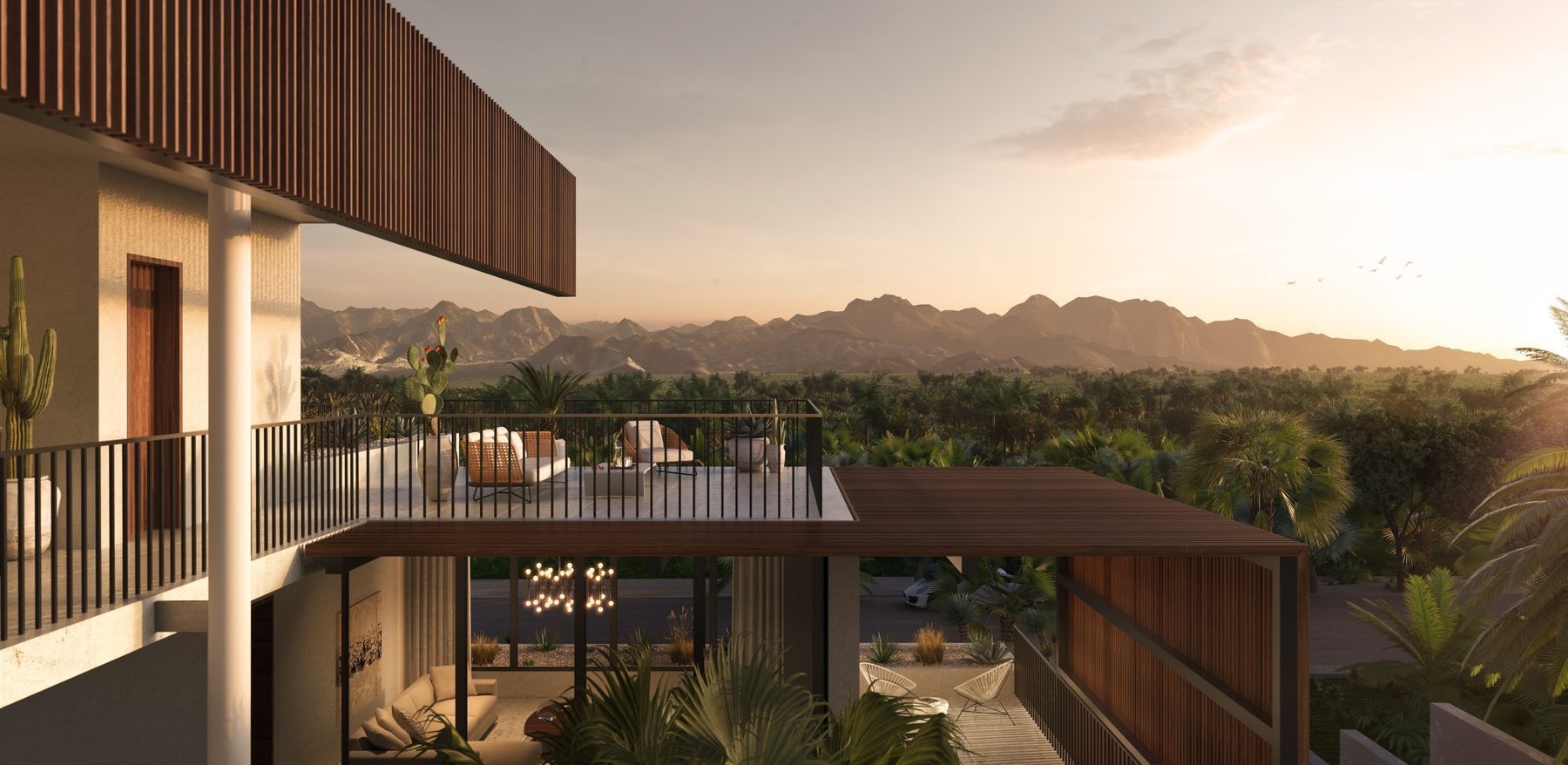
Renovating in Los Cabos can turn a dated property on a prime lot into a multimillion-dollar showpiece at a fraction of new-build cost. Here is how the process actually works for foreign buyers.
Key Takeaways
- Older Pedregal homes on prime lots can be bought at $1-2M and renovated for $200-400K into $3-4M properties — the math is compelling.
- Skilled construction labor in Los Cabos runs $15-25/day; general labor $8-15/day. Materials are comparable to US prices for imports, 30-50% cheaper for local stone and tile.
- Municipal construction permits (licencia de construccion) take 2-6 weeks. HOA architectural review adds another layer in gated communities.
- Mexico has no general contractor licensing like the US — word of mouth and agent referrals are your quality filter.
- Rainy season (Aug-Oct) delays outdoor work. A full renovation takes 4-8 months; plan your start date around the weather.
Considering a renovation project in Los Cabos?
I can connect you with vetted architects, contractors, and renovation-ready properties across Pedregal, Palmilla, and beyond.
Get ConnectedWhy Renovation Makes Financial Sense in Los Cabos
I walk a lot of properties in Los Cabos. And some of the most exciting opportunities I see are not new developments with glossy sales offices and architectural renderings. They are older homes in prime locations that a smart buyer can transform for significantly less than replacement cost.
The clearest example is Pedregal. This community was the original luxury address in Cabo San Lucas, developed in the 1970s and 1980s. Many of the original homes sit on spectacular Pacific-view lots worth $1M or more on their own. But the structures are dated — 1980s floor plans, outdated kitchens, tired finishes. You can pick up one of these homes for $1-2M, invest $200-400K in a ground-up renovation, and end up with a property that competes with $3-4M new builds next door.
The same logic applies in Fonatur and downtown San Jose del Cabo, where colonial-style homes with good bones and walkable locations can be updated for a fraction of what a new condo in the Corridor would cost. The art district in SJD has seen several stunning renovation projects in recent years — American and Canadian buyers taking traditional Mexican homes and modernizing them while preserving the architectural character.
Not every property is a renovation candidate. The math only works when the lot value or location justifies the total investment. A dated condo in a mediocre complex is not a renovation play — it is a teardown with no upside. But a well-located home on a great lot with solid structural bones? That is where the opportunity lives.
Finding Contractors: How It Actually Works
This is where most foreign buyers get nervous, and I understand why. In the US and Canada, you pull up a licensed contractor, check their bond and insurance, read their Yelp reviews, and sign a contract with clear milestones. In Mexico, the ecosystem works differently.
There is no general contractor licensing system in Mexico comparable to what exists in the US or Canada. There is no state licensing board, no bond requirement, no standardized insurance mandate for residential construction contractors. This does not mean the work quality is poor — it means the vetting process falls entirely on you and your network.
How to Actually Vet a Contractor in Cabo
Here is what works:
- Start with your Ronival agent. Experienced agents in Los Cabos maintain a shortlist of architects and contractors they have personally watched deliver quality projects. This is by far the most reliable starting point.
- Visit completed projects. Any contractor worth hiring will have finished work you can walk through. Do not accept photos alone — go see it in person. Look at the details: tile cuts, grout lines, paint edges, cabinet hardware, electrical outlet placement. Quality reveals itself in the finishes.
- Talk to foreign buyers who have been through it. Get three references minimum, and ask the hard questions: Did the project come in on budget? On time? What went sideways and how did the contractor handle it?
- Hire an architect first. A qualified architect (arquitecto) in Mexico carries professional certification and acts as the project designer and, often, the general contractor equivalent. Many architects in Los Cabos have their own construction crews or manage subcontractors directly.
- Check for RFC registration. Any legitimate business in Mexico has a Registro Federal de Contribuyentes (RFC) number, equivalent to an EIN in the US. Ask for it. If they cannot produce one, walk away.
Expect architect fees in the range of 8-15% of total construction cost for full design and project management. That may feel steep, but in a market without contractor licensing, a good architect is your quality insurance policy.
What Renovation Actually Costs in Los Cabos
The cost structure for renovation in Los Cabos is fundamentally different from the US, and that difference is the core reason the numbers work so well for foreign buyers.
Labor Costs
Construction labor in Los Cabos is skilled, abundant, and dramatically less expensive than in the US or Canada:
- Skilled tradespeople (electricians, plumbers, tile setters, cabinetmakers): $15-25 USD per day
- General labor (demolition, cleanup, material handling): $8-15 USD per day
- Master mason (maestro de obra): $25-40 USD per day — this is the on-site foreman who runs the crew
- A crew of 8-10 workers for a full renovation costs roughly $150-250/day total in labor
Compare that to a US renovation where a single electrician charges $75-150/hour. The labor cost differential is the engine that makes Cabo renovation economics so attractive.
Material Costs
Materials tell a more nuanced story:
- Local stone, tile, and custom woodwork: 30-50% less than equivalent US prices. Mexican cantera stone, Saltillo tile, and custom-milled tropical hardwoods are readily available and beautifully crafted locally.
- Imported finishes: Roughly comparable to US prices. Italian porcelain, European fixtures, Sub-Zero and Wolf appliances — anything that ships from overseas costs what it costs, plus import duties of 15-20%.
- Concrete and structural materials: Comparable to US prices. Mexico builds almost exclusively with concrete block and poured concrete (not wood framing), so structural costs are similar on a per-square-foot basis.
- Windows and doors: Aluminum and PVC window fabrication is 30-40% cheaper locally. High-end European window systems (Schuco, Reynaers) are available but cost the same or slightly more than US pricing due to import logistics.
A good rule of thumb: budget $100-200 per square foot for a comprehensive renovation with mid-to-high-end finishes. A 3,000-square-foot home renovation lands in the $300K-600K range all-in, depending on how much structural work is involved and how fancy you go with the finishes.
Want to see renovation-ready properties with real numbers?
I can walk you through specific properties where the renovation math works — lot value, construction cost estimates, and projected after-renovation value.
Book a Call with AaronPermits and Approvals: What You Need Before Breaking Ground
You cannot just start swinging a sledgehammer. Mexico has a permit process, and skipping it creates real legal and financial risk — including potential demolition orders on unpermitted work.
Municipal Construction Permit
The primary permit is the licencia de construccion, issued by the Direccion de Desarrollo Urbano (Urban Development Directorate) of the municipality where your property is located. Los Cabos is split between two municipalities — Los Cabos (covering Cabo San Lucas and the Corridor) and La Paz (covering the East Cape).
To obtain the permit, you will need:
- Architectural plans signed by a licensed architect (arquitecto with cedula profesional)
- Structural engineering calculations for any modifications that affect load-bearing walls
- Proof of property ownership (escritura or fideicomiso documents)
- Property tax receipts showing current payment (predial)
- Site plan showing property boundaries and setbacks
Timeline: expect 2-6 weeks for permit approval. Straightforward interior renovations on the shorter end; projects involving structural changes, additions, or properties near the coastline on the longer end.
HOA Architectural Review
If your property is in a gated community — and most luxury homes in Los Cabos are — you will face a separate HOA architectural review before the municipality even looks at your plans. Communities like Pedregal, Palmilla, and Cabo San Lucas resort communities have design guidelines covering everything from exterior colors to fence heights to landscape plant species.
HOA review typically adds 2-4 weeks and may require revisions to your plans. Do not treat this as a formality — communities take their architectural standards seriously, and submitting plans that violate design guidelines will get you sent back to the drawing board.
Common Pitfalls Foreign Buyers Hit During Renovation
I have watched dozens of renovation projects in Los Cabos over the years. The ones that go sideways almost always hit the same set of problems. Here is what to watch for:
Electrical and Plumbing Differences
Mexico's electrical system runs at 127V/60Hz — the same voltage and frequency as the US and Canada, so your appliances will work. But that is where the similarity ends. Older homes frequently have:
- Ungrounded outlets — two-prong wiring with no ground conductor. Any renovation should include a complete grounding upgrade.
- Undersized panels — homes built in the 1980s may have 100-amp service that cannot handle modern AC loads, especially the multiple mini-split units common in Cabo.
- Inconsistent conduit — wiring may be run through conduit in some areas and loose in walls in others. An electrical audit before demolition begins is essential.
Plumbing presents its own challenges. Water pressure varies significantly by neighborhood and elevation. Some areas of Pedregal (especially the upper terraces) rely on cisterns and booster pumps. PVC drainage is standard but older homes may have cast iron or clay drain lines that need replacement. On-demand water heaters (calentadores de paso) are far more common than tank heaters — and generally more appropriate for the climate.
Water Supply and Weather
Los Cabos sits in a desert. Water is delivered by the municipal utility (OOMSAPAS) on a scheduled basis to cisterns, not on-demand from pressurized mains like most US cities. Your renovation plan must account for cistern capacity, pump sizing, and water-efficient fixtures. This is non-negotiable — undersize the cistern and you will run dry during peak usage.
Rainy season runs August through October and can bring tropical storms that dump several inches in hours. Do not schedule exterior demolition, roofing, or waterproofing work during this window. Interior work can proceed, but exterior exposure during a storm can cause damage that sets the project back weeks.
Scope Creep and Budget Management
This is universal to renovation everywhere, but it hits harder when you are managing across a language barrier and a cultural difference in how change orders are communicated. Establish a written scope of work with your architect before the first day of demolition. Every change — every "while we are at it, let us also..." — gets a written cost estimate and approval before work proceeds.
I recommend a 15-20% contingency buffer on top of your renovation budget. In older Cabo homes, opening walls frequently reveals surprises — deteriorated rebar, termite damage in wood elements, plumbing that needs full replacement rather than repair. The contingency is not optional.
Managing the Project When You Are Not in Cabo
Most foreign buyers doing renovations in Los Cabos are not living full-time in Cabo. They are in Denver or Toronto or San Francisco, trying to manage a construction project 1,500 miles away. This is doable, but only with the right infrastructure.
Your options for on-the-ground oversight:
- Dedicated project manager: $1,500-3,000/month for a bilingual construction manager who visits the site daily, coordinates with trades, manages the budget, and reports to you with photos and video. This is the gold standard for major renovations.
- Architect as project manager: Many architects in Los Cabos include project management in their scope of services, particularly for projects they designed. Confirm this explicitly — do not assume design fees include site management.
- Your Ronival agent: For smaller projects, your agent can do periodic check-ins and flag issues. This is not a substitute for a dedicated manager on a major renovation, but it works for kitchen remodels and cosmetic updates.
- Construction cameras: Wyze and Ring cameras work fine in Mexico (Wi-Fi based, no cellular dependency). Install them before work begins and you can monitor progress daily from your phone. This supplements, but does not replace, human oversight.
Communication protocol matters. Establish a weekly video call with your architect or project manager at a fixed time. Require daily photo documentation. Use WhatsApp for all project communication — it is the universal business communication tool in Mexico, and trying to force email will slow everything down.
Realistic Timelines for Common Projects
Every contractor will give you an optimistic timeline. Here is what actually happens:
- Full home renovation (gut and rebuild interior): 4-8 months, with 6 months being typical for a 2,500-3,500 square foot home.
- Kitchen and bathroom remodel: 6-12 weeks. Custom cabinetry adds 2-3 weeks for fabrication.
- Pool installation or rebuild: 6-10 weeks. Plaster and tile work need curing time that cannot be rushed.
- Roof replacement or repair: 2-4 weeks for a standard residential roof. Flat concrete roofs (common in Cabo) need proper waterproofing membrane that requires dry weather to install.
- Exterior repaint and landscaping: 2-4 weeks for painting; landscaping varies but a full hardscape and plant installation runs 4-8 weeks.
Add 2-6 weeks for permits at the front end. Add a buffer for rainy season if your project window overlaps August through October. And add whatever your gut tells you, because construction in any country takes longer than quoted. That is not a Mexico-specific observation — it is a universal law of renovation.
When to Renovate vs. Buy New Construction
Renovation is not always the right play. Here is my framework for when the numbers work and when they do not:
Renovate when:
- The lot or location is irreplaceable (ocean-view lot in Pedregal, walkable SJD art district)
- The purchase price plus renovation cost is 40% or more below comparable new builds
- The structure is sound — foundation, walls, and roof are solid with no major structural deficiencies
- You want a unique property with character, not a cookie-cutter development unit
Buy new construction when:
- The lot value does not justify renovation investment (inland lot with no view premium)
- Structural issues would require essentially rebuilding from the foundation up
- You want developer warranties, modern building codes, and move-in-ready delivery
- Pre-construction pricing gives you better economics than renovation (see my guide to pre-construction vs. resale in Cabo)
For a broader view of what is available across the market, my guide to the best areas to buy in Los Cabos breaks down every major community and price range.
Financing Your Renovation
Mexican banks do not offer traditional home equity lines of credit to foreign property owners. Your renovation funding will almost certainly come from one of these sources:
- Cash from US/Canadian accounts: Wire transfers to your Mexican bank account or directly to your contractor. Most common approach.
- US home equity line: Borrow against your US property and deploy the funds in Mexico. Your US lender never needs to know the money is being used for a Mexican renovation.
- Phased renovation: Break the project into phases and fund each phase separately. Phase 1 might be structural and systems; Phase 2 finishes and fixtures; Phase 3 landscaping and pool. This spreads the capital outlay over 12-18 months.
Payment structure with your contractor is critical. Never pay more than 30% upfront. Structure payments against milestones: 30% at contract signing, 30% at rough-in completion (framing, electrical, plumbing), 30% at finish installation, and 10% holdback for 30 days after punch list completion. This gives you leverage if quality slips or timelines stretch.
For more on the financial side of owning in Cabo, see my guides on property taxes in Cabo San Lucas and closing costs in Mexico.
External resources: Mexico Secretary of Urban Development (SEDATU) | PROFECO Consumer Protection | US State Department Mexico Investment Climate
Ready to explore renovation opportunities in Los Cabos?
I know the properties, the architects, and the contractors. Let me help you find the right project and put the right team around it.
Start the ConversationFrequently Asked Questions
How much does it cost to renovate a home in Los Cabos?+
A full renovation in Los Cabos typically runs $200,000 to $400,000 USD for a major project. Skilled labor costs $15-25 USD per day for electricians, plumbers, and tile setters, while general labor runs $8-15 per day. Imported finishes cost roughly the same as in the US, while local stone, tile, and custom woodwork run 30-50% less.
Do I need a permit to renovate in Los Cabos?+
Yes. You need a licencia de construccion (construction permit) from the Direccion de Desarrollo Urbano in the municipality where your property is located. Permits take 2-6 weeks to obtain. If your property is in a gated community, you will also need HOA architectural review approval before any work begins.
How long does a full renovation take in Cabo?+
A full home renovation in Los Cabos takes 4-8 months depending on scope. A kitchen and bathroom remodel runs 6-12 weeks. Timelines can extend during rainy season (August through October) since outdoor work slows or stops. Plan your start date accordingly.
How do I find a reliable contractor in Los Cabos?+
Word of mouth is the primary way to find quality contractors in Los Cabos. There is no general contractor licensing system like in the US. Ask your Ronival agent for referrals to vetted architects and builders. Visit other projects the contractor has completed. Get at least three references from foreign buyers who have been through the process.
Can I manage a renovation remotely from the US?+
You can, but you need eyes on the ground. Options include hiring a local project manager ($1,500-3,000/month), having your Ronival agent conduct periodic check-ins, or installing construction cameras for daily monitoring. Do not attempt to manage a major renovation from the US with no local oversight.
What are common renovation pitfalls in Mexico?+
The most common pitfalls are plumbing and electrical standards that differ from US and Canadian codes, inconsistent grounding practices, water pressure and supply issues in some areas, rainy season delays from August through October, and underestimating the timeline for permit approvals. Working with an experienced local architect mitigates most of these.
Is it better to renovate or buy new construction in Cabo?+
Renovation makes financial sense when you can acquire a prime-location property below replacement cost. In Pedregal, older homes on ocean-view lots can be purchased at $1-2M and renovated for $200-400K into properties worth $3-4M. New construction in the same location would cost $4-6M or more. The math works when the lot value justifies the investment.
What is the voltage and electrical standard in Los Cabos?+
Mexico uses 127V at 60Hz, which is compatible with US and Canadian appliances. However, grounding practices vary by property age and location. Older homes may have ungrounded outlets that need updating. Any renovation should include a full electrical panel upgrade and proper grounding throughout.

Aaron Cuha
Real Estate Advisor & Los Cabos Market Expert
Real estate advisor and founder of Living In Cabo. 15+ years helping families navigate complex real estate decisions. Strategic partner with Ronival — Baja's largest brokerage.