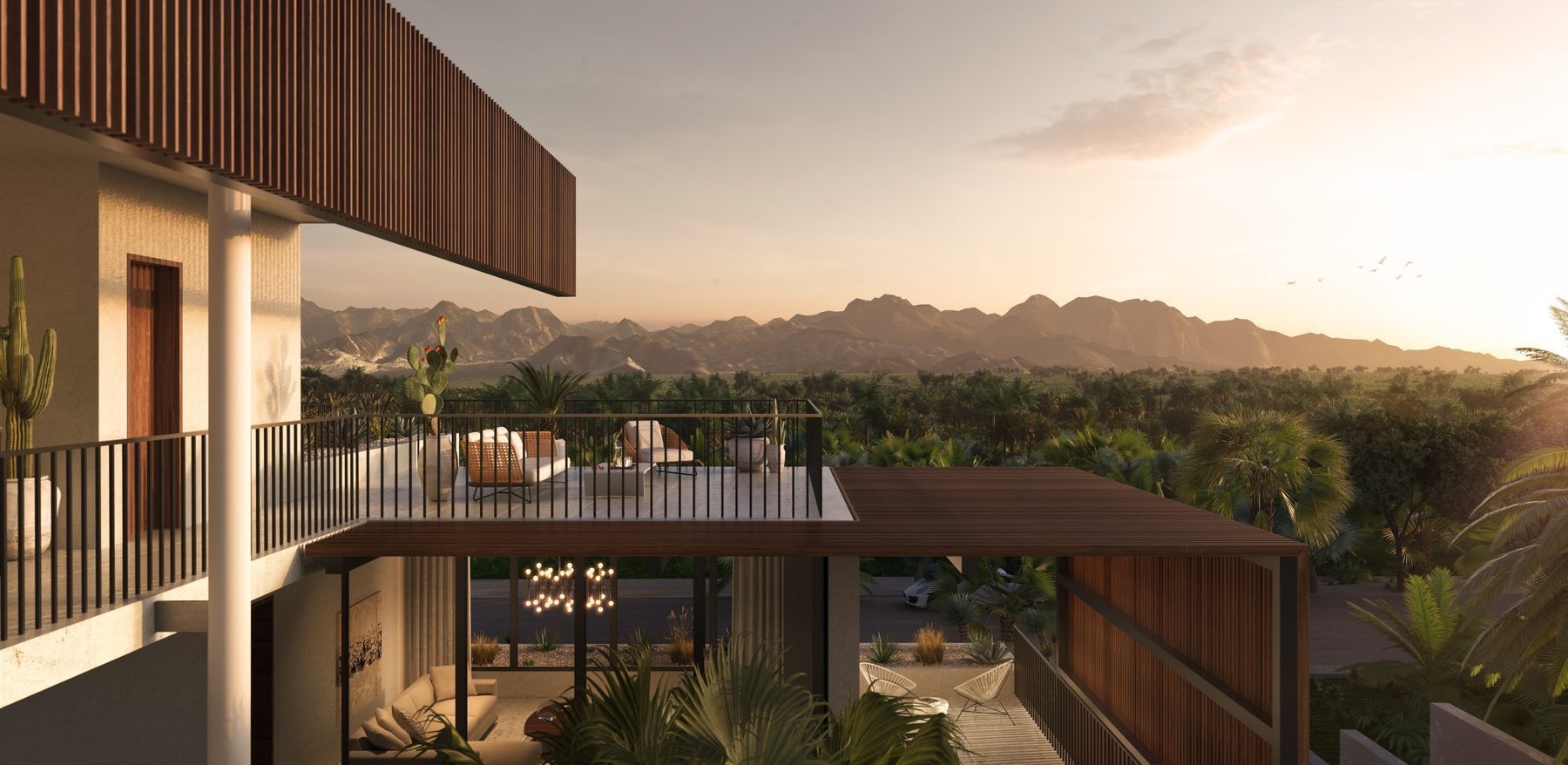
Smart home technology for a Cabo property is not a luxury upgrade — it is basic risk management. When you own a half-million-dollar asset 2,000 miles from where you sleep, remote monitoring is the difference between catching a leak on Tuesday and discovering $40,000 in water damage in November.
Key Takeaways
- ✓ Standard cameras fail in salt air within 7–8 months — use IP66/IP67 marine-grade with 316 stainless
- ✓ Water leak detection is the single highest-ROI sensor you can install ($50–$200 per sensor)
- ✓ Starlink works across BCS with 50–200 Mbps — the backbone for all remote monitoring
- ✓ Smart AC control saves $200–$400/month in electricity on unoccupied properties
- ✓ Full setup runs $5,000–$15,000 for a comprehensive system; basic camera/alarm is $1,500–$4,000
Need Help Setting Up Your Cabo Property?
We connect buyers with trusted property managers and tech installers who understand Baja's unique challenges.
Schedule a Free ConsultationWhy Cabo Destroys Normal Smart Home Gear
I have walked through properties in Pedregal where the owner spent $3,000 on Ring cameras and Nest gear, and every single unit was corroded within a year. The combination of salt air, 95-degree summer heat, direct UV exposure, and humidity kills consumer electronics that work perfectly fine in Scottsdale or San Diego.
According to Smart Shield Systems, standard camera housings fail via salt penetration within 7–8 months in marine environments. IP66/IP67-rated units with 316-grade stainless steel brackets survive 22 months at 94% reliability. That marine-grade hardware premium of 10–25% is not optional in Los Cabos — it is the baseline.
The same principle applies to every piece of outdoor tech: locks, motion sensors, doorbells, and cable connections. If it is exposed to exterior air within a mile of the ocean, it needs marine-grade specifications or a sealed enclosure.
Step One: Connectivity — Starlink Changed Everything
None of this works without reliable internet, and until recently that was Cabo's weakest link. Telmex DSL delivered 5–15 Mbps on a good day. Cable was unavailable in most residential communities. Cellular was inconsistent.
Starlink changed the equation entirely. Mexico received full nationwide coverage authorization in 2024, and service quality has improved steadily through 2025 and 2026. Speeds range from 50 to 200 Mbps depending on congestion and location, with latency around 25–50 milliseconds.
The hardware kit costs roughly $599 USD. Monthly service runs $65–$120 depending on the tier. For an absentee owner, the Residential tier with a fixed address is the right choice — you do not need the Roam plan unless you are splitting time between properties.
Installation tip: mount the dish on the roof with a clear northern-sky view. Avoid placement near satellite TV dishes or tall palapa structures that block the signal arc. Most property managers in Los Cabos now have installers they work with regularly.
Priority One: Water Leak Detection
Water damage is the number-one risk for unoccupied properties in Cabo. A pinhole leak in a water heater, a failed fitting under a bathroom sink, a cracked roof drain — any of these can run for weeks before a monthly property management walkthrough catches it.
Smart leak sensors cost $30–$80 each. Place them at every water heater, under every sink, behind every washing machine and dishwasher, and at any roof drain that penetrates the interior. Brands that work well in Cabo's humidity: Govee (budget), Moen Flo (premium), and YoLink (long-range, LoRa-based so they work even if WiFi drops).
For maximum protection, pair sensors with an automatic shutoff valve on the main water line. The Moen Flo Smart Water Monitor and Shutoff runs about $500 installed and can cut water to the entire property the moment a sensor triggers. That $500 will save you $20,000+ the first time it fires.
Security Cameras That Survive Salt Air
Skip Ring. Skip Nest. Skip Arlo. They are fine products for a house in Denver. They are expensive failures in Cabo.
What works: Reolink RLC-823A (IP66, aluminum housing, 4K, local storage via NVR so you do not depend on cloud uploads), Axis P3245 series (commercial-grade, IP67, used by most luxury developments in Los Cabos), and Hanwha/Wisenet (marine-rated models with 316 stainless mounting hardware).
Budget: $1,500–$3,000 for a 4-camera NVR system with marine-grade housings. $4,000–$8,000 for a 6–8 camera system covering a villa with pool, garage, and perimeter.
Record locally to an NVR inside the house and mirror to a cloud backup. Local recording means you have footage even if the internet drops. Cloud backup means you have footage even if someone steals the NVR. Both matter.
Looking to Buy a Property in Cabo?
We help buyers find properties and set them up for long-distance ownership from day one.
Book a CallClimate Control: Stop Paying to Cool an Empty House
This is the easy win. Most Cabo properties use ductless mini-split AC units. A smart controller like Sensibo Air ($119), Cielo Breez Plus ($99), or Tado ($129) converts any infrared-controlled mini-split into a WiFi-connected, app-controlled system.
Set the AC to maintain 78–80°F when the property is empty — warm enough to minimize electricity costs, cool enough to prevent mold in humid months. When you or your guests arrive, drop it to 72°F from the airport. The system adjusts in 20 minutes.
Electricity in Cabo runs on CFE's tiered tariff system. An unmanaged property running AC at 72°F year-round can hit the DAC (alto consumo) tier — the highest rate — and cost $300–$400 per month. Smart control keeps you in the lower tier, saving $150–$250 monthly.
Smart Locks and Access Control
If you rent your property or have a property manager, smart locks eliminate the key-under-the-mat problem. The Yale Assure Lock 2 and Schlage Encode Plus both support temporary access codes — give your cleaner a code that works Tuesday 9am–1pm, give your guest a code that works for their stay dates, and revoke everything remotely.
Important: choose a lock with a physical key backup. WiFi-dependent locks with no manual override are a liability during power outages, which happen during hurricane season.
Power Monitoring and Backup
A smart plug with energy monitoring on your main panel (or an Emporia Vue whole-home monitor) tells you if the power goes out, when it comes back, and how much electricity your property is using. This catches a running AC unit with a stuck compressor, a pool pump that will not shut off, or a power outage that has left your refrigerator thawing for three days.
For properties that depend on continuous power — wine storage, aquariums, medical equipment — a small UPS (uninterruptible power supply) on critical systems buys time during brief outages and sends alerts during extended ones.
The Complete Cabo Smart Home Stack
Here is what I recommend for a typical 2–3 bedroom villa or condo in Los Cabos:
- Internet: Starlink Residential ($599 kit + $65–$120/month)
- Cameras: 4–6 marine-grade cameras with local NVR + cloud backup ($2,000–$5,000)
- Leak sensors: 6–10 sensors at every water point ($200–$600)
- Automatic water shutoff: Main-line smart valve ($400–$600 installed)
- Smart AC control: One controller per mini-split unit ($100–$130 each, typically 3–5 units)
- Smart locks: Front door + garage/service entrance ($200–$400 each)
- Power monitoring: Whole-home energy monitor ($150–$250)
- Smart plugs: 4–6 for lamps, pool pump override, etc. ($60–$120)
Total budget: $4,000–$8,000 for a solid system. $10,000–$15,000 for a larger property with full perimeter coverage.
What Technology Does Not Replace
Smart home tech is a force multiplier for your property manager, not a replacement. Someone still needs to physically check on the property, handle maintenance, prep for storms, let in vendors, and deal with the thousand small things that happen to a house in the tropics.
What technology does is turn your property manager from reactive to proactive. Instead of discovering a leak during a monthly walkthrough, they get a phone alert the moment the sensor triggers. Instead of driving to your property to check if the AC is running after a power outage, they check the app. Instead of wondering if the pool guy actually showed up, they check the camera log.
The technology makes the human more effective. It does not make the human optional.
Own a Cabo Property or Planning To?
Let us connect you with the right property manager and tech installer so your investment is protected from day one.
Contact Us TodayFrequently Asked Questions
How long do standard security cameras last in Cabo's salt air?+
Standard consumer cameras with plastic housings fail within 7–8 months in coastal salt air. IP66/IP67-rated cameras with 316-grade stainless steel housings survive 22+ months at 94% reliability. Marine-grade hardware adds 10–25% to the cost but is the only viable option for oceanfront or near-ocean properties.
Does Starlink work in Los Cabos?+
Yes. Starlink received full nationwide Mexico coverage authorization in 2024 and operates reliably across Baja California Sur. You need clear northern-sky line of sight. Speeds range from 50–200 Mbps depending on congestion and location. The kit costs roughly $599 USD and the monthly plan is $65–$120 USD depending on the tier.
How much does a basic smart home setup cost in Cabo?+
A basic camera-and-alarm system runs $1,500–$4,000 installed. A comprehensive system for a larger property with multiple structures — cameras, leak sensors, climate control, smart locks, and monitoring — costs $5,000–$15,000. Monthly monitoring fees range from $30 to $75.
Can I control my Cabo property's AC remotely?+
Yes. Smart thermostats and mini-split controllers like Sensibo, Cielo Breez, and Tado work with most ductless mini-split systems common in Cabo. You can adjust temperatures, set schedules, and receive alerts from your phone. This is one of the highest-ROI smart home investments since AC left running on an empty property can cost $200–$400 per month in electricity.
What is the biggest risk for an unoccupied Cabo property?+
Water damage. A slow leak from a water heater, pipe joint, or roof penetration can cause tens of thousands of dollars in damage before anyone notices. Smart water leak sensors placed at water heaters, under sinks, near washing machines, and at roof drains send immediate alerts to your phone. An automatic shutoff valve adds another layer of protection for $200–$500 installed.
Do I need a property manager if I have smart home tech?+
Yes. Technology monitors but does not fix. You still need someone local who can respond to alerts, handle maintenance, prep for hurricane season, and manage vendors. Smart home tech makes your property manager more effective — they get real-time data instead of discovering problems during a monthly walkthrough.

Aaron Cuha
Real Estate Advisor & Los Cabos Market Expert
Real estate advisor and founder of Living In Cabo. 15+ years helping families navigate complex real estate decisions. Strategic partner with Ronival — Baja's largest brokerage.