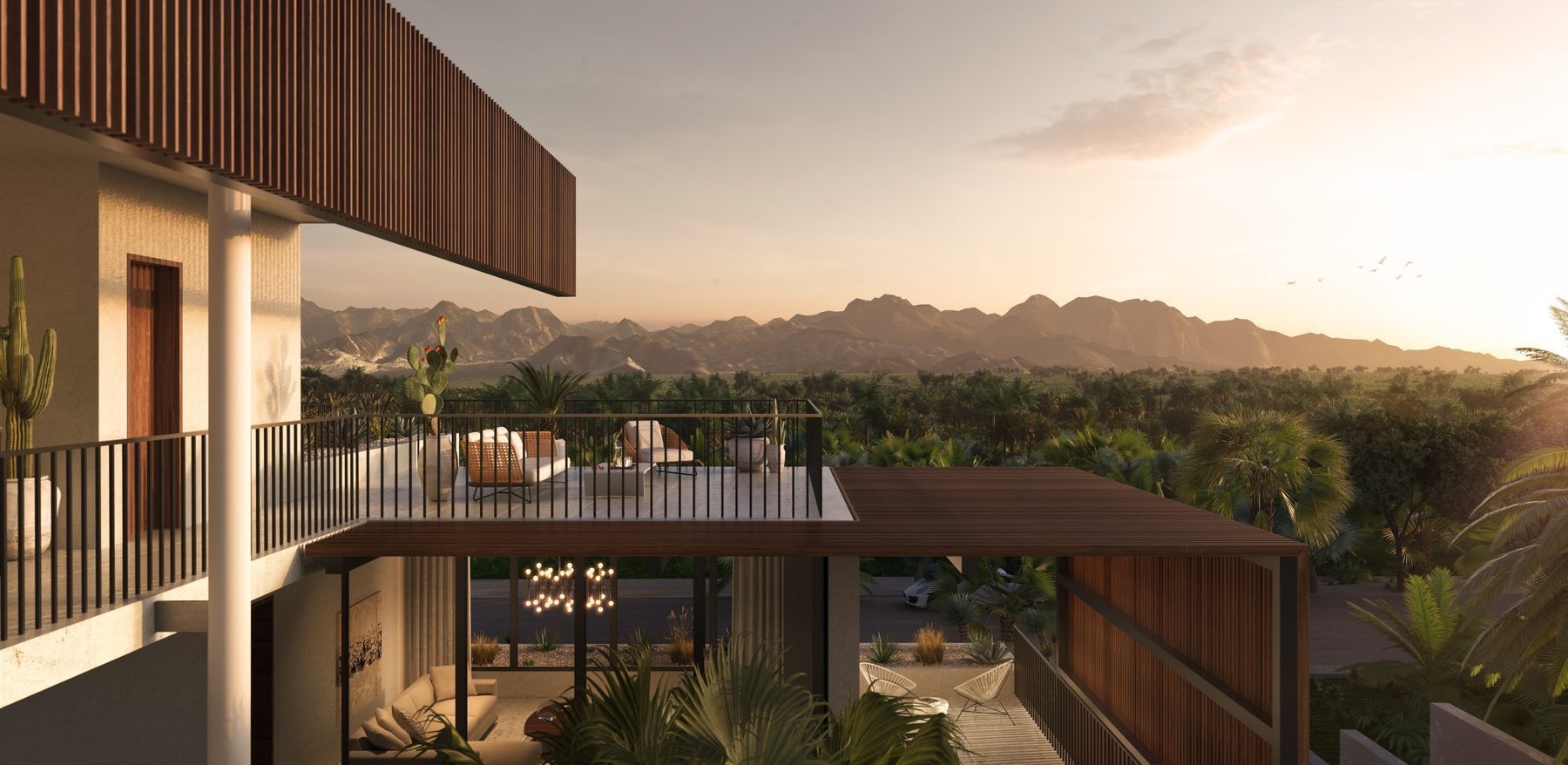
The most common question I hear from first-time Cabo buyers: "How do I actually pay for this?" The answer, for 85% of American buyers, is not a Mexican mortgage — it is leveraging assets you already have in the US.
Key Takeaways
- 85% of American Cabo buyers use US-side financing or cash — not Mexican mortgages
- HELOCs offer the lowest friction: 6.5–8.5% rate, minimal closing costs, revolving credit
- Cash-out refinancing locks a fixed rate (6.0–7.5%) but carries $3K–$8K in closing costs
- Cross-border portfolio loans exist at 7–9.5% but require 30–40% down
- Mexican bank mortgages run 9–12% interest with 50–70% LTV — a last resort, not a first choice
Need Financing Strategy Help?
We connect buyers with lenders who understand cross-border transactions. The right structure saves thousands.
Talk to Our TeamWhy US-Side Financing Beats Mexican Mortgages
The math is simple. Mexican mortgages for foreigners carry interest rates of 9–12%, require 30–50% down payments, cap at 15–20 year terms, and charge origination fees of 1–3%. A US HELOC at 7% with no origination fee saves you tens of thousands in interest over the life of the loan.
More importantly, US lenders already know you. They have your credit history, your income verification, your tax returns. Mexican banks need all of that translated, apostilled, and verified — a process that adds 30–60 days to an already-long closing timeline.
The exception: if you have limited US equity but strong cash flow, a Mexican mortgage or Mexican corporation structure might make sense. For everyone else, start with your US assets.
Option 1: Home Equity Line of Credit (HELOC)
The HELOC is the Swiss Army knife of Cabo financing. You borrow against the equity in your US primary residence (or an investment property) and use the funds to wire to your Mexican closing.
Current rates (mid-2026): 6.5–8.5% variable, tied to US Prime Rate
How much you can access: Most lenders allow a combined loan-to-value (CLTV) of 80–85%. If your home is worth $700K and you owe $350K, you could access $210K–$245K.
Pros:
- Fastest to close — many HELOCs fund in 2–3 weeks
- Minimal or zero closing costs ($0–$500 at most lenders)
- Revolving credit — draw what you need, pay it back, draw again
- Interest-only payments available during the draw period (typically 10 years)
- Interest may be tax-deductible if used for a second home
Cons:
- Variable rate — your payment fluctuates with US interest rates
- Draw period ends (usually after 10 years), then you enter repayment
- Your US home is the collateral — default risks your primary residence
- Some lenders cap HELOCs below $250K, which may not cover a full purchase
Best for: Buyers with significant US home equity who want speed and flexibility. Ideal when the Cabo purchase price is $200K–$500K and your US home has sufficient equity to cover it.
Option 2: Cash-Out Refinance
A cash-out refinance replaces your existing US mortgage with a larger one, and you pocket the difference as cash. For buyers who locked in a low rate pre-2022, this is a harder call — you are giving up a 3% mortgage for a 6.5% one. But if your current rate is already 5%+ or you need a large sum, it is worth evaluating.
Current rates (mid-2026): 6.0–7.5% fixed, 30-year term
How much you can access: Up to 80% LTV on your primary residence. On a $700K home with $350K owed, you could refinance to $560K and take $210K cash.
Pros:
- Fixed rate — your payment is locked for 30 years
- Higher borrowing limits than most HELOCs
- Single monthly payment (replaces your existing mortgage)
- Potentially deductible interest
Cons:
- Closing costs of $3,000–$8,000 (appraisal, origination, title)
- If your current rate is below 5%, you are paying more on your entire balance, not just the new cash
- 30–45 day closing timeline — slower than a HELOC
- Increases your total US mortgage debt
Best for: Buyers who want a fixed rate, need $200K+ in cash, and either don't have a low existing rate to protect or are refinancing an investment property where rates were already higher.
Not Sure Which Option Fits?
Our team works with lenders on both sides of the border. We help you model the numbers before you commit.
Book a Strategy CallOption 3: Cross-Border Portfolio Loans
A small but growing number of lenders specialize in financing foreign property purchases for US residents. These are portfolio loans — held on the lender's books, not sold to Fannie or Freddie — and the terms reflect the added complexity.
Current rates: 7.0–9.5%, fixed or adjustable
Down payment: 30–40% required
Terms: 15–25 years
Lenders in this space include Global Mortgage Group, MexLend, and a handful of regional banks with cross-border programs. Qualification requires US credit scores of 680+, proof of income, and sometimes an appraisal of the Mexican property by an approved appraiser.
Pros:
- The Mexican property itself can serve as partial collateral — you do not necessarily risk your US home
- Designed for cross-border transactions — the lender understands fideicomiso structures
- Some offer USD-denominated loans, avoiding peso conversion risk
Cons:
- Higher rates than US-only options
- Large down payment requirement
- Limited lender pool — less competition means less negotiating power
- Longer closing timelines (45–90 days)
Other Strategies Worth Knowing
Securities-Based Line of Credit
If you have a brokerage account with $500K+ in investable assets, most major brokerages (Schwab, Fidelity, Morgan Stanley) offer securities-based lines of credit (SBLOCs). You borrow against your portfolio at rates of 5.5–7.5% without selling positions and triggering capital gains. The cash can be wired anywhere — including a Mexican notario's trust account.
The risk: if your portfolio drops significantly, you face a margin call. But for buyers with diversified portfolios who want to stay invested while purchasing abroad, SBLOCs offer some of the lowest rates available.
Self-Directed IRA
A self-directed IRA can hold foreign real estate, including Mexican property in a fideicomiso. The IRA — not you personally — is the beneficiary of the trust. All rental income flows into the IRA; all expenses are paid from it. You cannot personally use the property while the IRA holds it. See our detailed self-directed IRA guide.
1031 Exchange Considerations
The IRS does not recognize a 1031 exchange from US property to Mexican property (or vice versa) because the replacement property must be in the US to qualify. However, you can sell a US investment property via 1031 into another US property, then use a HELOC on that new property to fund a Cabo purchase. Two steps, but it preserves the tax deferral.
Financing Options Compared
| Option | Rate | Speed | Best For |
|---|---|---|---|
| HELOC | 6.5–8.5% | 2–3 weeks | Speed + flexibility |
| Cash-Out Refi | 6.0–7.5% | 30–45 days | Fixed rate, large sums |
| Portfolio Loan | 7.0–9.5% | 45–90 days | No US home equity |
| SBLOC | 5.5–7.5% | 1–2 weeks | Large portfolio, stay invested |
| Mexican Mortgage | 9–12% | 60–90 days | No US assets |
Getting the Money There
Once you have financing in place, the funds need to reach Mexico. The standard path is a SWIFT international wire transfer from your US bank to the Mexican notario's trust account (cuenta de garantía). Budget $30–50 for the wire fee, but watch the foreign exchange spread — banks charge 1.5–3% above the mid-market rate. On a $500K wire, that is $7,500–$15,000 in hidden costs.
Use a specialized FX provider like Wise or OFX to save 50–70% on the conversion. For the complete walkthrough, see our wire transfer guide.
The Bottom Line
The right financing strategy depends on your existing assets, risk tolerance, and timeline. For most buyers I work with, the answer is a HELOC — it is fast, cheap, and flexible. If you need more than $250K or want rate certainty, consider a cash-out refi. If you do not want to touch your US home equity at all, a portfolio loan or SBLOC is worth exploring.
What I tell every buyer: figure out your financing before you fly down for showings. Nothing kills a deal faster than falling in love with a property and then spending 60 days scrambling for funds while another buyer steps in with cash.
Get Pre-Qualified Before You Fly Down
We connect you with lenders who understand cross-border deals. Show up to viewings ready to move.
Get StartedFrequently Asked Questions
Can I get a US mortgage for a property in Mexico?+
No. Conventional US mortgages (Fannie Mae, Freddie Mac) cannot be used to purchase foreign property. The property must be in the US to serve as collateral. However, you can leverage US-based assets — your primary home, investment accounts, or retirement funds — to generate cash for a Mexico purchase.
What is the best way to finance a Cabo property from the US?+
For most buyers, a HELOC on their US primary residence is the fastest and most cost-effective option. Rates run 6.5–8.5% in 2026, there are minimal closing costs ($0–$500), and you get a revolving credit line you can draw against. If you have significant equity, a cash-out refinance locks in a fixed rate (6.0–7.5%) but comes with higher closing costs ($3,000–$8,000).
How much equity do I need in my US home to fund a Cabo purchase?+
Most lenders allow you to borrow up to 80–85% of your home's value (combined with your existing mortgage). If your US home is worth $600K and you owe $300K, you have $300K in equity and could access $180K–$210K through a HELOC or cash-out refi. For a $400K Cabo property, you would need about $400K in accessible equity or combine a HELOC with other funds.
Are Mexican mortgages available to foreigners?+
Yes. Several Mexican banks (Santander Mexico, HSBC Mexico, Scotiabank Mexico) and cross-border lenders offer mortgages to foreign buyers. Rates run 9–12% with 50–70% LTV and 15–20 year terms. The higher rate reflects Mexico's interest rate environment and the cross-border risk premium. See our full guide on Mexican mortgage options.
Can I use a self-directed IRA to buy Cabo property?+
Yes, though it requires a self-directed IRA custodian that allows foreign real estate (Equity Trust, Entrust, IRA Financial Group). The IRA — not you — owns the property through the fideicomiso trust. All income and expenses must flow through the IRA. You cannot personally use the property while the IRA holds it. See our self-directed IRA guide for the full mechanics.
What are the tax implications of using a HELOC for a Mexico purchase?+
Interest on a HELOC used to purchase a second home is generally deductible on your US taxes (subject to the $750K total mortgage interest deduction limit). Consult a CPA familiar with cross-border real estate — the deductibility depends on how the property is used (personal vs rental) and your total mortgage debt across properties.

Aaron Cuha
Real Estate Advisor & Los Cabos Market Expert
Real estate advisor and founder of Living In Cabo. 15+ years helping families navigate complex real estate decisions. Strategic partner with Ronival — Baja's largest brokerage.