After you close on a Cabo property, the next 30 days are about plumbing your new life: a Mexican bank account, internet that actually works, CFE in your name, water you can trust, propane on auto-delivery, and a Telcel SIM. Done right, your total monthly utility budget lands between $400 and $900 USD.
Key Takeaways
- ✓ Intercam Banco, BBVA, and HSBC open accounts for non-residents with passport + comprobante de domicilio
- ✓ Telmex Infinitum (up to 500 Mbps) covers most neighborhoods; Starlink ($110/mo) wins for Pedregal, Costa Palmas, and rural lots
- ✓ CFE electricity runs $80–$600/mo — staying under 500 kWh keeps you out of the brutal DAC tariff
- ✓ Water is municipal (Oomsapas) in most areas, trucked (pipa) on many hillside and rural lots at $30–$60/fill, and privately desalinated in a few master-planned communities like Pedregal and Costa Palmas
- ✓ Telcel dominates BCS coverage; ~$25/mo for unlimited mobile
- ✓ Realistic all-in utility budget: $400–$900/mo for a 3BR Cabo home
Just Closed in Cabo? We Will Get You Plugged In.
Our team hands new owners a vetted vendor list — bank contacts, internet installers, CFE transfer help, and bilingual paperwork support — the same week you close.
Get the Concierge Setup List
1. Mexican Banking for Non-Residents
Opening a Mexican bank account is the single highest-leverage move of your first month. You do not need it to own the property — but paying recurring bills, receiving rental income, and avoiding $35 wire fees on a $25 propane charge makes it essential. Four banks dominate the foreign-owner market in Los Cabos, and your choice depends on whether you have an RFC tax ID, how often you will be in country, and how much hand-holding you want in English.

The four banks worth opening at
- Intercam Banco — the foreigner-friendly default. English-speaking staff at both Cabo San Lucas and San Jose branches, no Mexican RFC required for basic accounts, and a dollar-denominated option that lets you hold USD inside Mexico. Account opening takes 60 to 90 minutes if your paperwork is right. This is the bank most relocating Americans land at first.
- BBVA Mexico — the largest retail bank in the country. Best mobile app (BBVA Mexico), thousands of ATMs, and strong fideicomiso services. Will ask for an RFC for full-service accounts but will open a basic Cuenta Express on passport alone.
- Banamex (Citibanamex) — owned by Citigroup, useful if you bank with Citi in the US — limited cross-border transfer benefits remain. Strong branch network, mid-tier app.
- HSBC Mexico — if you already bank with HSBC in the US or UK, account linking is real and useful. Smaller branch footprint in Los Cabos but premier banking benefits travel.
What documents you actually need
- Passport — original, not a copy. Make sure it has at least 6 months of validity.
- Immigration document — your FMM tourist permit (the slip the airline hands you on arrival) is fine for basic accounts at Intercam. For BBVA, HSBC, and any account above ~$50K in deposits, an FM3/Residente Temporal or Residente Permanente card is usually required.
- Comprobante de domicilio — proof of Mexican address. A CFE electricity bill, Telmex bill, or Oomsapas water bill in your name, less than 90 days old. Until you have one in your name, banks will sometimes accept a notarized escritura (deed) plus a utility bill in the prior owner's name, but this varies branch by branch.
- Minimum opening deposit — typically $1,000 to $5,000 MXN in cash or USD wire.
- RFC — required for BBVA full-service accounts and for any account that will collect rental income.
RFC: when you need a Mexican tax ID and how to get one
The RFC (Registro Federal de Contribuyentes) is Mexico's equivalent of an SSN/EIN. You need it if you plan to collect rental income, run a business, deduct property improvements on a future sale, or open a full-service bank account. Get one by booking a Cita SAT appointment online at citas.sat.gob.mx, showing up at the La Paz or Cabo San Lucas SAT office with your passport, CURP, comprobante de domicilio, and the digital appointment confirmation. You walk out with a printed cedula the same day. Cost: zero. The bottleneck is appointment availability — book three to four weeks ahead.
Wire fees and online banking
Sending USD from a US bank to a Mexican account costs $30 to $50 per outbound wire on the US side, plus $10 to $20 on the receiving side, plus an FX spread of roughly 1 to 2 percent. Once your Mexican account is live, all four banks offer solid mobile apps for paying CFE, Telmex, Oomsapas, propane vendors, and any service with a "referencia" (reference number) — usually printed on every Mexican bill. BBVA's app is the strongest, followed by Intercam.
2. Internet: Telmex, Megacable, Totalplay, Starlink
Internet quality in Cabo varies street-by-street more than any other utility. A condo in Marina downtown might have 500 Mbps fiber for $35/month while a Pedregal cliffside villa 800 meters away has no last-mile copper at all. Pick the wrong provider and you spend three weeks waiting for an install that never quite happens. Here is what actually works in 2026.
Telmex Infinitum (fiber) — the default
Telmex is the incumbent and covers the broadest footprint in Los Cabos. Their Infinitum fiber product delivers up to 500 Mbps in most Cabo San Lucas and San Jose del Cabo neighborhoods. Plans run roughly $25 USD per month for 100 Mbps and $40 for 500 Mbps. Install takes 5 to 10 business days if there is fiber on your street. According to Telmex's residential portal, coverage maps for individual addresses are checkable online before you commit. Walking into a Telmex Tienda with your comprobante de domicilio in hand is faster than the phone hotline.
Megacable (cable) — speed king where available
Megacable runs hybrid fiber-coax with 1 Gbps tiers in parts of El Tezal, downtown Cabo, and central San Jose. Pricing is competitive with Telmex but speeds can be higher. Customer service is more inconsistent. Best for: heavy streamers, large families, or anyone running multiple 4K feeds.
Totalplay (fiber) — newer subdivisions
Totalplay has been aggressively wiring newer developments along the Corridor and in San Jose. Where available, their 500 Mbps to 1 Gbps fiber product is excellent, with bundled IPTV and phone. Their footprint is narrower than Telmex but worth asking about.
Starlink — the fix for everything else
For Pedregal cliffs, hillside Palmilla, Costa Palmas, East Cape lots, Cerritos Beach, Todos Santos outskirts, or any property without last-mile copper or fiber, Starlink is the answer. Residential service in Mexico runs roughly $110 USD per month with no install fee, and the dish ships in 1 to 2 weeks. According to Starlink Mexico, the standard residential plan now delivers 100 to 250 Mbps with low latency suitable for video calls. Many remote workers in Cabo run Telmex as primary and Starlink as failover — total cost ~$145/month for bulletproof uptime.
3. CFE Electricity and the DAC Trap
Electricity is the single biggest utility variable in Cabo. The Comisión Federal de Electricidad (CFE) is Mexico's national power utility, and they price residential service on a tiered tariff system that subsidizes low users and brutally surcharges anyone who crosses the high-consumption threshold. According to CFE's residential tariff page, Tarifa 1F applies to most BCS households, but crossing roughly 500 kWh per month over a sustained billing window pushes you into the DAC (Doméstico de Alto Consumo) tariff — and DAC pricing can triple your bill overnight.
What your CFE bill actually looks like
| Season / Usage | Monthly kWh | Tariff | Typical Bill (USD) |
|---|---|---|---|
| Winter, minimal AC | 150–300 | 1F subsidized | $40–$100 |
| Shoulder season, occasional AC | 300–500 | 1F subsidized | $100–$200 |
| Summer, 24/7 AC, no DAC | 500–800 | 1F upper band | $200–$350 |
| Summer, large home, DAC tripped | 1,000+ | DAC | $400–$900 |
How to avoid DAC
- Inverter mini-splits in every bedroom. A 12,000 BTU inverter unit costs roughly 60% less to run than a conventional AC. This is the single biggest lever.
- Pool pump timers. Run the pool pump 4 to 6 hours overnight, not 24/7. Saves 100 to 200 kWh per month.
- Propane water heaters and stoves. Electric resistance water heating is a DAC fast-track.
- Solar PV. A 5 kW rooftop system installed in Cabo runs $8,000 to $12,000 USD and pays back in 4 to 6 years. CFE net metering is functional in BCS.
- Read every bill. CFE bills are bimonthly. The line item "DAC" appearing on your bill is the warning. Once you trip DAC, you have to stay under threshold for 12 straight months to drop out.
Transferring CFE into your name
At closing, your notario typically initiates the CFE name change, but you should follow up the same week. Walk into the local CFE office (Cabo San Lucas or San Jose del Cabo) with your escritura, passport, RFC if you have one, and the last paid CFE bill from the seller. Cost: under 200 pesos. Timeline: 1 to 3 weeks for the new bill to arrive in your name. Pro tip: set up auto-pay (domiciliación) from your new Mexican bank account on day one to avoid a missed bill triggering a service cut.
4. Water, Propane, and Trash
The "boring" utilities — water, propane, trash — are where new owners get the most surprises. Confirm the source of each before you close so there are no January phone calls about why the kitchen tap is dry.
Water: Oomsapas vs. pipa truck
Oomsapas (municipal water) serves most of downtown Cabo San Lucas, San Jose del Cabo, La Playita, El Tezal, Cabo del Sol, and Club Campestre. Bills run $20 to $50 per month and are paid bimonthly at the Oomsapas office or via your Mexican bank app. Pressure and reliability are generally good but can drop during dry-season peaks.
Pipa truck delivery serves many hillside Pedregal homes, parts of Palmilla, rural East Cape lots, and any property with a private cistern not connected to municipal lines. A 5,000-liter pipa fill runs $30 to $60 USD; most families need one to two fills per month. Set up a regular vendor with WhatsApp ordering — same-day or next-day delivery is normal.
For drinking water, everyone uses garrafones. 19-liter jugs of purified water (Ciel, Bonafont, e-pura) delivered to your door for roughly $2 USD each. Even on municipal water, no one drinks straight from the tap.
Propane (gas)
Mexican homes run on propane for stoves, water heaters, dryers, and pool heating. You either have an estacionario (stationary tank) outside the house that gets refilled by a tanker truck, or smaller cylinder tanks you swap out. Major suppliers: Gas Imperial, Gas del Pacifico, Z Gas, Tomza. Sign up for automatic delivery on a schedule — they will read your tank gauge, refill at 30%, and bill your registered card. Typical monthly cost: $40 to $80 USD for a household; $100+ if you have an electric-resistance avoidance setup with propane water heat and pool heat.
Trash collection
Municipal trash pickup runs once or twice a week in most Cabo neighborhoods at no separate charge — it is bundled into your property tax (predial). Many luxury communities (Pedregal, Palmilla, Diamante) layer on a private service through the HOA for daily or every-other-day collection. If your HOA does not include trash, expect $20 to $40/month for a private service.
5. Phone and Mobile
Mobile is the easiest utility to nail. Three carriers cover Baja California Sur, and one dominates.
- Telcel — best coverage by a wide margin, especially on the East Cape highway and in Pacific Side villages. Sin Limite postpaid: unlimited minutes/texts and 30 to 60 GB data for ~$25 USD/month. Prepaid Amigo plans from $10/month. According to Telcel's plan portal, postpaid setup requires an ID and proof of address; prepaid SIMs are sold at every OXXO with just a passport.
- AT&T Mexico — solid second. Bundles with US AT&T plans (free roaming both directions on the Mexico Unlimited plan). Coverage is strong in towns, thinner in remote stretches.
- Movistar — coverage trails in BCS. Skip unless you have a specific reason.
If you split time between Cabo and the US, the cleanest setup is a US plan with international roaming (T-Mobile, AT&T, Google Fi) on your iPhone or Android primary, plus a $10/month Telcel prepaid SIM in a cheap second handset for purely-Mexican services that require a Mexican phone number (banking SMS codes, food delivery, ride share).
Free Download: Cabo Neighborhood Guide
Which Cabo neighborhoods have fiber, municipal water, and HOA-included utilities — mapped community by community. Includes provider contact lists and average bill ranges.
Download the Guide6. What Your HOA Already Covers
HOA inclusions vary wildly. Some Cabo communities bundle so much into the monthly fee that your standalone utility bill drops by 30 to 50 percent; others bundle almost nothing. Always read the HOA disclosure during due diligence — not the morning after closing.
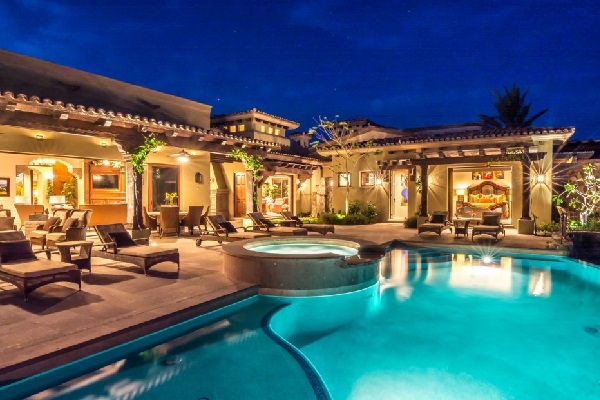
Common HOA inclusions in luxury Cabo communities
- Water — common in Palmilla, Diamante, Costa Palmas, Maravilla. Municipal or community-well water bundled into dues.
- Trash collection — almost universal in gated communities.
- Basic cable / IPTV — included in some master-planned developments (Cabo del Sol, Quivira, some Pedregal subassociations).
- Common-area landscaping and lighting — always included.
- 24/7 security — always included, often the biggest single cost driver.
- Beach club and gym — Costa Palmas, Diamante, Maravilla, Chileno Bay.
Almost never included: CFE electricity (always individually metered), propane, internet, phone.
7. Realistic Monthly Utility Budget
Here is what to budget for a 3-bedroom Cabo home for a couple living there full-time, broken down by category. Numbers are 2026 USD.
| Category | Lean | Typical | Heavy AC / Pool / Remote Work |
|---|---|---|---|
| CFE electricity | $80–$150 | $200–$350 | $400–$600 |
| Internet (Telmex or Megacable) | $25 | $40 | $145 (Telmex + Starlink) |
| Water (municipal or pipa) | $20 | $40 | $80 |
| Propane | $30 | $50 | $100 |
| Drinking water (garrafones) | $15 | $25 | $30 |
| Mobile (Telcel) | $10 | $25 | $50 (2 lines) |
| Trash (if not HOA) | $0 | $25 | $40 |
| Monthly Total | $180–$275 | $405–$555 | $845–$1,045 |
If your community HOA covers water, trash, and basic cable, knock $50 to $150 off the top. For broader cost-of-living context across housing, healthcare, and groceries, see our cost of living in Cabo San Lucas 2026 breakdown.
8. Your Month-1 Setup Checklist
Run this in order. Each step unlocks the next.
- Day 0 (closing): Get the seller's last paid CFE, Telmex, and Oomsapas bills handed to you at the notario. Confirm the notario has initiated CFE name change.
- Day 1–3: Walk into Intercam Banco (Plaza del Mar in Cabo or downtown San Jose). Open a basic account with passport, FMM, and the seller's CFE bill plus your notarized escritura as proof of address.
- Day 3–5: Book a Cita SAT appointment online for your RFC. First available is usually 2 to 4 weeks out.
- Day 5–7: Visit the local CFE office to confirm name transfer and set up auto-pay (domiciliación) from your new Intercam account.
- Day 5–10: Schedule Telmex Infinitum install. If your address has no fiber, order Starlink Residential same day — kit arrives in 1 to 2 weeks.
- Day 7–10: Walk into a Telcel store with passport and comprobante. Activate a Sin Limite plan. Use that Mexican phone number for everything downstream.
- Day 10–14: Transfer Oomsapas water (if municipal) or contract a regular pipa vendor on WhatsApp. Set up auto-pay for Oomsapas.
- Day 10–14: Schedule a propane provider site visit (Gas Imperial or Z Gas). Sign up for automatic refill at 30% tank level.
- Day 14–21: Attend your RFC appointment at SAT. Walk out with your cedula.
- Day 21–30: Upgrade your Intercam account to a full-service tier now that you have an RFC. Order a debit card if you want one.
- Day 21–30: Confirm everything is on auto-pay from Intercam: CFE, Telmex, Oomsapas, propane, mobile, HOA. The whole system should now run without your attention.

9. Where to Go From Here
If you have not closed yet but you are working backward from "what will my life actually look like," start with our how to move to Cabo San Lucas guide. If you are budgeting the full picture — not just utilities — read the cost of living breakdown. And if you are already in the property search, our community guides note which neighborhoods are on municipal water, which require pipa, and which have HOA-bundled utilities.
Take the Next Step
We hand every new owner a turnkey concierge list — bank contacts, internet installers, CFE help, and bilingual paperwork support. Get yours before closing.
Contact Us TodayFrequently Asked Questions
Do I need a Mexican bank account to own property in Cabo?+
No, you do not. Most American owners pay HOA dues, CFE electricity, and property taxes directly from a US account via wire or international card. A local account just makes life easier — paying a $25 propane bill from your Chase account costs $35 in wire fees. Intercam Banco, BBVA, and HSBC all open accounts for non-residents with a passport and proof of address; you can be set up within a week of closing.
What internet provider is best for Cabo San Lucas?+
Telmex Infinitum dominates established Cabo neighborhoods with fiber up to 500 Mbps for about $35 USD/month. Megacable runs cable up to 1 Gbps in El Tezal and downtown corridors. Totalplay offers fiber in newer subdivisions. For Pedregal cliffs, Costa Palmas, East Cape, or any rural lot, Starlink is the answer: $110/month, instant install, and 150+ Mbps almost anywhere with sky access. Many remote workers run Telmex and Starlink in parallel as failover.
How much does CFE electricity cost in a Cabo home?+
Expect $80 to $200 per month in winter and $200 to $600 in summer for a 3-bedroom home running AC. CFE uses a tiered tariff system, and crossing roughly 500 kWh per month puts you into the DAC (high-consumption) rate that strips your subsidy. DAC pricing can triple your bill overnight. Inverter mini-splits, ceiling fans, and pool-timer discipline are the difference between a $250 summer bill and a $600 one.
Do I need an RFC tax ID as a foreign property owner?+
Not for owning the property — your fideicomiso handles that. You need an RFC if you collect rental income, register a Mexican business, sell the property and want to deduct improvements, or open most full-service Mexican bank accounts. You get one by booking a Cita SAT appointment online, showing up with your passport, CURP, and proof of address, and walking out with a printed cedula the same day.
Is water trucked or piped in Cabo neighborhoods?+
It depends on the community, and the difference matters. Downtown Cabo, San Jose del Cabo, El Tezal, and Club Campestre are mostly on Oomsapas municipal water with bills of $20 to $50 per month. A few of the larger master-planned communities run their own private desalination plants — Pedregal is the best-known example, and Costa Palmas operates one on the East Cape — so those homes are not dependent on either the municipal grid or trucked water. Elsewhere, hillside lots and rural East Cape properties do rely on pipa truck deliveries, typically $30 to $60 per fill of a 5,000-liter tank, with families using one to two fills per month. Always confirm the water source before you close — it is one of the few infrastructure questions that materially changes what a property costs to run.
Which mobile carrier has the best coverage in Baja California Sur?+
Telcel has the strongest network across all of Baja California Sur — downtown, the Corridor, East Cape highway, and Pacific Side. AT&T Mexico is a strong second and bundles with US AT&T plans. Movistar trails in rural BCS. A Telcel Sin Limite postpaid plan with unlimited minutes, texts, and 30+ GB of data runs about $25 USD per month. Prepaid Amigo plans start at $10 per month for casual users.
What is a comprobante de domicilio and why does every utility want one?+
A comprobante de domicilio is proof of Mexican address — a utility bill (CFE, Telmex, water) in your name at the property, less than 90 days old. Banks, SAT, mobile carriers, and even gyms request it. The chicken-and-egg problem: you need one to open accounts, but you need accounts to generate one. Solution: get CFE transferred into your name at closing, then use that bill for everything else.
What should my total monthly utility budget be for a Cabo home?+
For a 3-bedroom home in a typical Cabo neighborhood, budget $400 to $900 USD per month, all in. Roughly $200 to $400 for CFE (more in summer), $35 to $110 for internet, $20 to $50 for water, $40 to $80 for propane, $25 for mobile, and $30 to $60 for trash and miscellaneous. HOA-included communities (some of Palmilla, Diamante, Costa Palmas) bundle water, trash, and basic cable, lowering this by $50 to $150.

Aaron Cuha
Real Estate Advisor & Los Cabos Market Expert
Real estate advisor and founder of Living In Cabo. 15+ years helping families navigate complex real estate decisions. Strategic partner with Ronival — Baja's largest brokerage.