Cabo vs Lake Tahoe real estate is a comparison that lands on my desk at least twice a month, and the math surprises almost everyone who runs it. Both markets attract the same buyer: high-income Americans who want a lifestyle property they can use four to twelve weeks a year and rent the rest. But the carrying costs, tax treatment, insurance burden, and rental dynamics are so different that the two destinations barely belong in the same spreadsheet.
Key Takeaways
- Based on market data, comparable lifestyle properties in Los Cabos typically cost 30-50% less than their Tahoe equivalents, with property taxes a fraction of the US rate.
- Tahoe-area wildfire insurance can run $10,000-$25,000 per year in high-risk zones; Cabo hurricane insurance runs roughly $1,500-$3,000 per year for a typical condo.
- Cabo delivers a longer peak rental season (roughly November through April) while Tahoe splits between ski and summer, with dead shoulder months in between.
- Tahoe property taxes on the California side average roughly 1-1.2% of assessed value; Cabo predial typically runs 0.1-0.3%.
- Climate, flight access, and annual carrying costs all favor Cabo for the buyer who does not need winter sports.
Thinking about Cabo instead of the mountains?
Tell us your budget and lifestyle priorities. We will match you with the right communities and put real numbers in front of you.
Start the ConversationWhy Tahoe and Cabo End Up on the Same Shortlist
I spent years in Park City real estate before turning my attention to Baja, so I understand the mountain-town buyer. They want a home that justifies itself: a place the family actually uses, a property that holds value, and ideally a rental income stream that softens the carrying cost. Both Tahoe and Cabo check those boxes, which is why a buyer with $1 million or more to spend often puts them side by side.
The comparison makes intuitive sense. Both are within a short flight of major California and Western US metros. Both have strong short-term rental demand. Both attract a high-net-worth crowd that lifts average transaction prices. But once you get past the surface, the numbers diverge in ways that change the decision.
Purchase Price: What Your Dollar Buys
Based on market data, the Lake Tahoe basin — including Incline Village on the Nevada side, South Lake Tahoe, and the North Shore communities — has a median single-family home price roughly in the $800,000 to $1.5 million range. Lakefront properties with dock access commonly start at $3 million and can exceed $20 million for prime locations on the West Shore or Crystal Bay.
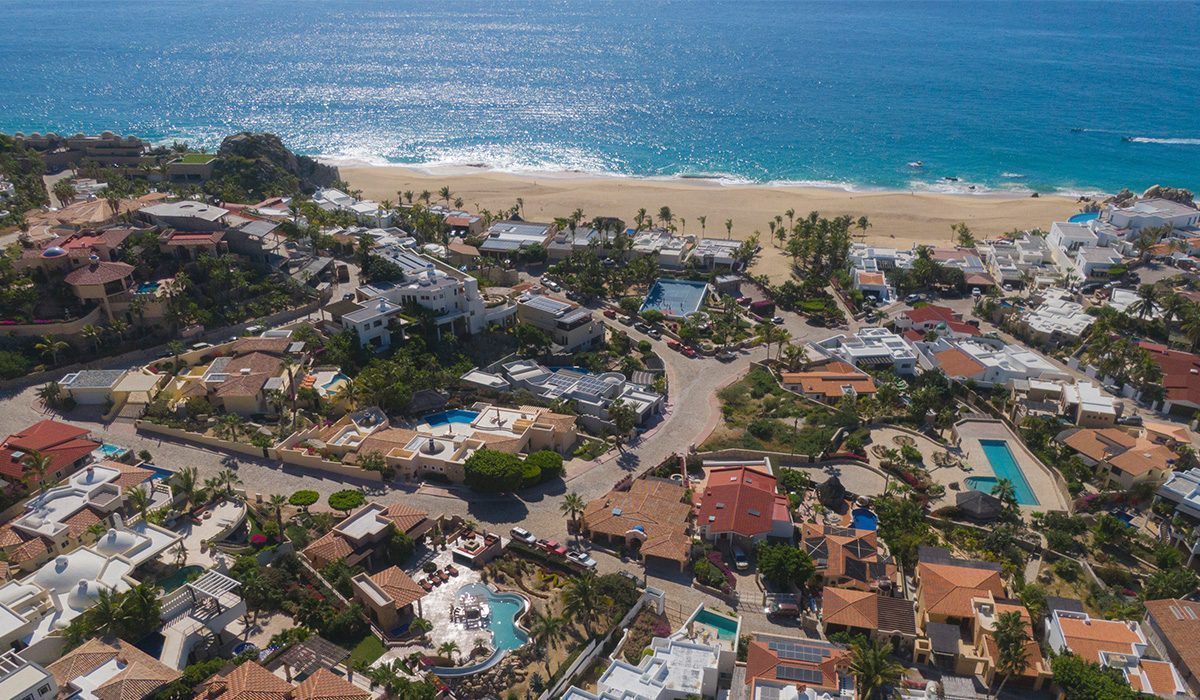
In Los Cabos, based on market data, the median condo price runs roughly $400,000 to $800,000 depending on community and finish level. Beachfront villas with ocean views start around $1.5 million and can reach $10 million or more in communities like Pedregal, El Dorado, or Chileno Bay. For context, $1 million in Cabo buys you a three-bedroom condo in a branded-residence community with resort amenities. In Tahoe, the same million is a dated three-bedroom cabin that needs a new roof.
That price gap means Cabo buyers often end up in nicer properties, in better-maintained developments, with more amenities included — and still have capital left over.
Property Taxes: The Annual Gap
This is where the comparison gets dramatic. Lake Tahoe straddles the California-Nevada border, and which side your property sits on has a massive tax impact.
- California side (El Dorado County, Placer County): property taxes average roughly 1% to 1.2% of assessed value. A $1.5 million home generates approximately $15,000-$18,000 per year in property tax alone.
- Nevada side (Washoe County, including Incline Village): property taxes are lower, roughly 0.5% to 0.8%, but Incline Village specifically has seen reassessment battles that pushed some bills higher.
- Los Cabos (predial): annual property tax is typically 0.1% to 0.3% of the catastral (assessed) value, which itself is usually well below market value. A $1.5 million condo might carry a predial bill of roughly $1,000 to $3,000 per year.
The property tax delta alone can be $12,000-$15,000 per year in Cabo's favor. Over a decade, that is $120,000-$150,000 that stays in your pocket or gets reinvested. Read the full breakdown of annual ownership costs in Los Cabos.
Annual Carrying Costs: Insurance, Maintenance, and the Hidden Bills
Beyond the mortgage and taxes, both markets have significant ongoing costs. But the composition is very different.
Lake Tahoe Carrying Costs
- Wildfire insurance: This is the headline item. After the Caldor Fire (2021), Camp Fire (2018), and ongoing fire seasons, carriers have pulled out of entire Tahoe zip codes. Remaining options often cost $10,000-$25,000 per year for a $1.5 million home. California's FAIR Plan backstop exists but is bare-bones. I know Park City buyers who looked at Tahoe and walked away because of insurance alone.
- Snow removal and heating: propane or natural gas heating runs $3,000-$6,000 per winter. Snow removal contracts cost $2,000-$5,000 per season depending on driveway length.
- HOA fees: gated communities and lakefront subdivisions commonly charge $500-$1,500 per month.
- Winterization: if you are not there November through March, the house needs to be winterized — pipes drained, heat kept at minimum, systems monitored.
Los Cabos Carrying Costs
- Hurricane insurance: roughly $1,500-$3,000 per year for a typical condo. Concrete construction and modern building codes make Los Cabos structures far more hurricane-resistant than wood-frame mountain homes are fire-resistant.
- HOA fees: vary widely, from roughly $300-$500/month for mid-range developments to $800-$2,000/month for branded-residence communities with resort amenities. Read the HOA fee breakdown by development.
- Property management: $150-$400 per month for a management company to handle maintenance, pay bills, and coordinate rental guests.
- Utilities: electricity (CFE) is the main bill, running roughly $100-$400/month depending on AC usage.
When you total it up, a $1.5 million Tahoe property might cost $35,000-$50,000 per year to carry before the mortgage. A comparable Cabo property might cost $15,000-$25,000. That is not a rounding error.
Want the actual numbers for a specific community?
Book a call and I will walk you through the carrying cost math for the developments that match your budget.
Book a CallSide-by-Side Comparison
| Factor | Lake Tahoe | Los Cabos |
|---|---|---|
| Median Home Price | ~$800K-$1.5M | ~$400K-$800K (condo) |
| Property Tax Rate | 0.5%-1.2% | 0.1%-0.3% |
| Natural Disaster Insurance | $10K-$25K/yr (wildfire) | $1.5K-$3K/yr (hurricane) |
| Peak Rental Season | Dec-Mar (ski), Jun-Sep (summer) | Nov-Apr (6 months) |
| Shoulder/Dead Season | Oct-Nov, Apr-May (weak) | May-Oct (lower but not dead) |
| Climate | Cold winters, warm summers | Warm to hot year-round |
| Airport Access | RNO/SMF + 30-90 min drive | SJD direct flights, 15-40 min drive |
| Annual Carrying Cost (est.) | $35K-$50K | $15K-$25K |
Rental Income: Two Different Rhythms
Tahoe has a split-season rental dynamic. Ski season (December through March) is strong, with nightly rates for a lakeside cabin reaching $400-$800 per night on peak weekends. Summer (June through September) brings a second wave — hiking, lake sports, outdoor concerts — with slightly lower rates. But April, May, October, and November are soft. Many Tahoe rentals sit empty for two to four months per year.
Los Cabos runs a different rhythm. Peak season starts in November and runs through April, roughly six continuous months. Nightly rates for quality condos in resort communities commonly range from $250 to $600+ per night based on market data. The green season (May through October) slows but does not die. Hotel occupancy still exceeds 50% in most months, and strategic pricing can keep a well-managed unit booked 40-60% even in the low months. See my full breakdown of Cabo rental income and ROI by community.
The net result: many Cabo properties deliver 10-12 months of some rental activity versus 8-9 months in Tahoe, and the cost structure means more of that gross revenue becomes net income.
The Insurance Crisis: Wildfire vs Hurricane
This factor has changed the calculus for mountain-town buyers more than any other in the past five years, and I have written about it at length. The wildfire insurance crisis is not a theoretical risk — it is a current, ongoing cost explosion that makes Tahoe ownership dramatically more expensive than it was a decade ago.
State Farm, Allstate, and other major carriers have pulled out of high-fire-risk zones across the Tahoe basin. The remaining options are surplus-lines carriers at premium prices, or California's FAIR Plan, which offers limited coverage at high cost. Some Tahoe homeowners are paying more for insurance than they pay in property taxes.
By contrast, hurricane insurance in Los Cabos is readily available and comparatively affordable. Concrete and steel construction, which is standard in Mexican coastal development, handles hurricane wind loads far better than the wood-frame construction common around Tahoe handles wildfire. Cabo's last major hurricane impact was Odile in 2014, and the rebuilding demonstrated how resilient modern construction can be. Insurance carriers have not fled the Los Cabos market the way they have fled mountain zones in the western US.
Getting There: Flight Access and Door-to-Door Time
Lake Tahoe does not have a commercial airport. You fly into Reno-Tahoe International (RNO) and drive 30-60 minutes depending on which side of the lake you are headed to. Sacramento (SMF) is another option, roughly 90 minutes to the west shore. From the Bay Area, it is a 3.5-4 hour drive without traffic — and winter traffic on I-80 can double that.
Los Cabos International (SJD) has direct flights from Los Angeles, San Francisco, San Diego, Denver, Dallas, Houston, Phoenix, Seattle, and many other US cities. Most developments are 15-40 minutes from the terminal. From a LAX gate to your front door in Cabo can be under four hours. The same trip to Tahoe — LAX to RNO, rental car, drive to the property — takes a comparable amount of time but involves more logistics.
For the buyer who values easy access, Cabo's airport infrastructure is a genuine advantage. You step off a direct flight, clear customs in 15-20 minutes, and you are at the property. No chains required, no mountain pass closures, no winter road conditions.
Lifestyle: What Each Place Offers
This is the one area where the comparison becomes subjective. Tahoe wins if you love skiing, snowboarding, and winter sports. Nothing in Cabo replicates the feeling of a powder day at Palisades or a spring ski at Heavenly. The mountain bike trails, the paddleboard and kayak culture on the lake, the Emerald Bay hikes — Tahoe's natural beauty is extraordinary and different from anything Baja offers.
Cabo wins on golf (18+ courses including several world-class championship layouts), fishing (the marlin capital of the world), diving, year-round beach culture, and the restaurant scene, which has exploded in recent years. The social calendar runs year-round because the weather never shuts it down. And for retirees or semi-retired buyers, the full-time living proposition in Cabo is far more practical than Tahoe, where winter isolation is real.
The Decision Framework
Pick Tahoe if: Winter sports are non-negotiable, you live within driving distance and will use the home 30+ days per year (especially in winter), and the insurance premium is a manageable line item relative to your overall carrying cost.
Pick Cabo if: You want the lower carrying cost, the longer rental season, the tax advantage, year-round warm weather, and an international lifestyle experience. Especially if you are coming from anywhere outside the western US, where Tahoe access requires an extra connection.
Pick both if: You have the budget. I know several families who sold a single $3 million Tahoe property and bought both a $1.5 million Cabo condo and kept a $1 million place near a ski resort. The combined carrying cost was less than what they were paying for Tahoe alone.
Ready to run the numbers for Cabo?
Tell us your budget, your current market, and how many weeks a year you plan to use the property. We will build your comparison.
Get My ComparisonFrequently Asked Questions
Is Cabo or Lake Tahoe cheaper for a vacation home?+
Based on market data, comparable vacation properties in Los Cabos typically cost 30-50% less than their Lake Tahoe equivalents. Annual carrying costs are also significantly lower, driven by smaller property tax bills (0.1-0.3% vs 0.5-1.2%), lower insurance costs, and no heating or snow removal expenses.
How do Cabo and Tahoe rental incomes compare?+
Both markets support short-term rental income. Tahoe has two peak seasons (ski and summer) with weak shoulder months. Cabo has a continuous six-month peak season (November through April) and a slower but still active green season. Cabo's lower carrying costs mean more gross rental revenue converts to net income.
Is wildfire insurance really that expensive in Tahoe?+
Yes. Based on published reports, wildfire insurance in high-risk Tahoe zones can cost $10,000-$25,000 per year, and availability is shrinking as major carriers pull out. By comparison, Cabo hurricane insurance for a typical condo runs roughly $1,500-$3,000 per year and remains widely available.
How long does it take to fly to Cabo vs drive to Tahoe?+
From Los Angeles, the door-to-door time is often comparable: roughly 4-5 hours for either destination. But Cabo involves a direct, comfortable flight followed by a 15-40 minute drive. Tahoe often involves a flight to Reno plus a 30-60 minute drive, or a 4+ hour drive from the Bay Area that can double in winter traffic.
Can I live in Cabo full-time but not in Tahoe?+
Both are technically feasible for full-time living, but Cabo is far more practical for year-round residents. Tahoe winters bring heavy snow, road closures, and isolation. Cabo offers 350+ days of sunshine, a growing expat community, good healthcare, and a social calendar that never pauses for weather.
What are property taxes in Cabo vs Lake Tahoe?+
Tahoe property taxes range from roughly 0.5% (Nevada side) to 1-1.2% (California side) of assessed value. Cabo's predial tax is typically 0.1-0.3% of the catastral value, which itself is usually below market value. On a $1.5 million property, the annual difference can be $12,000-$15,000.
Which market appreciates faster?+
Both markets have shown strong appreciation over the past decade. Tahoe saw a COVID-era surge followed by moderation, and fire risk has weighed on some zones. Los Cabos has benefited from sustained international demand, infrastructure investment, and branded-residence development. Past performance does not predict future results for either market.

Aaron Cuha
Real Estate Advisor & Los Cabos Market Expert
Real estate advisor and founder of Living In Cabo. 15+ years helping families navigate complex real estate decisions. Strategic partner with Ronival — Baja's largest brokerage.