Los Cabos has eight serious international and bilingual school options between Cabo San Lucas, the Corridor, and San Jose del Cabo. Tuition runs $5,000 to $18,000 USD per year — a fraction of comparable US private schools. Here is the 2026 family playbook on curricula, calendars, and admissions.
Key Takeaways
- ✓ Colegio El Camino is the only full IB Continuum school in Los Cabos (PYP, MYP, Diploma)
- ✓ Tuition ranges $5K-$18K USD/year — well below US private school equivalents
- ✓ The Mexican school year runs September to mid-July under SEP regulation
- ✓ Bus service is available from Pedregal, the Corridor, and central San Jose
- ✓ Apply 6-9 months ahead — top schools have waiting lists for popular grades
Moving a Family to Cabo? Start with Schools.
Our team helps US and Canadian families align the right neighborhood with the right school. We know the bus routes, the admissions directors, and the realistic application timelines.
Schedule a Free Consultation1. The Los Cabos School Landscape
Los Cabos has matured from a tourist outpost into a year-round expat community of 30,000+ foreign residents — and the school market has followed. As of 2026, families have three serious curriculum paths: full International Baccalaureate at Colegio El Camino, bilingual SEP-plus-international at schools like Delmar and Amaranto, and Montessori or US-aligned alternatives for families wanting an off-system approach.
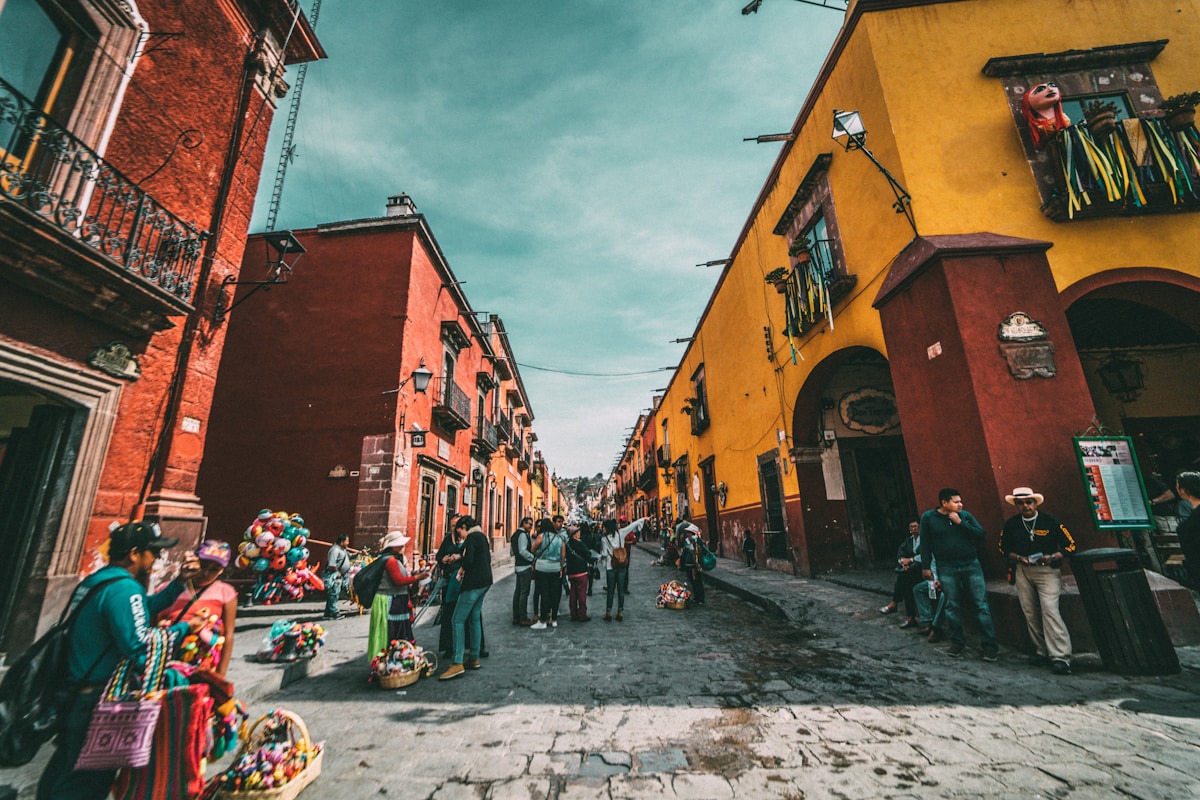
The geography matters. Cabo San Lucas concentrates schools in El Tezal and the inland residential corridor. San Jose del Cabo has fewer but increasingly competitive options near Club Campestre and the airport corridor. The Corridor itself has no dedicated school — Corridor families bus their kids into one town or the other. The Secretaría de Educación Pública (SEP) regulates all accredited schools.
2. Schools in Cabo San Lucas
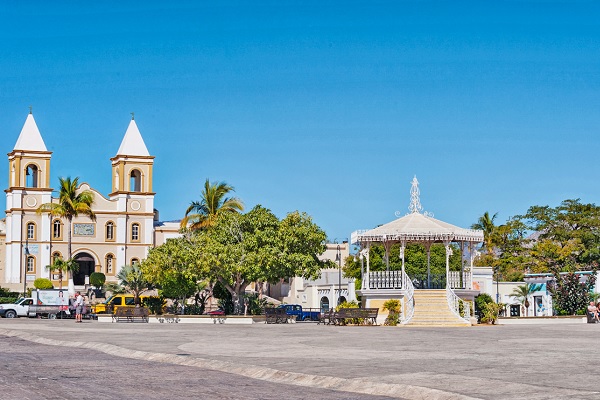
Cabo San Lucas has the deepest school market in the region, anchored by Colegio El Camino (IB) and Delmar International School. Both serve the largest expat populations and operate K-12 programs. Newer families also gravitate toward Amaranto and Instituto Howard Gardner for smaller class sizes.
Colegio El Camino — the flagship. Founded 40+ years ago, El Camino is one of only 25 schools in Mexico authorized to deliver the full IB Continuum (PYP K-6, MYP 7-9, Diploma 11-12). Student body is 380, with 20+ nationalities represented. English-Spanish bilingual delivery throughout. Strong university placement record. IB Organization profile.
Delmar International School — located in El Tezal, Delmar runs bilingual programs from preschool through high school with a US-influenced curriculum and SEP accreditation. Smaller campus than El Camino, strong reputation for hands-on learning and a tight community feel. The Early Learning Center was designed by Fielding International for project-based pedagogy.
Colegio Amaranto — founded 1996. Bilingual K-12 with a constructivist approach emphasizing creativity and personalized instruction. Strong arts program. Roughly $5,000 to $8,000 USD annual tuition depending on grade.
Instituto Howard Gardner — bilingual SEP-plus-AMCO method, K-9. Named after the multiple-intelligences educational psychologist. Smaller, more academic-focused environment. Good fit for families wanting a structured SEP track with strong English integration.
A pattern worth noting: Cabo San Lucas schools draw heavily from the El Tezal, Pedregal, Cabo Bello, and Corridor neighborhoods. Class composition typically runs 40-60% foreign-passport students at El Camino and Delmar, with the remainder being children of Mexican professionals working in tourism, real estate, and hospitality. That mix is one of the under-marketed advantages of Cabo schooling — your kids develop authentic bilingual social networks instead of the segregated "expat bubble" common in other Mexican beach towns.
3. Schools in San Jose del Cabo
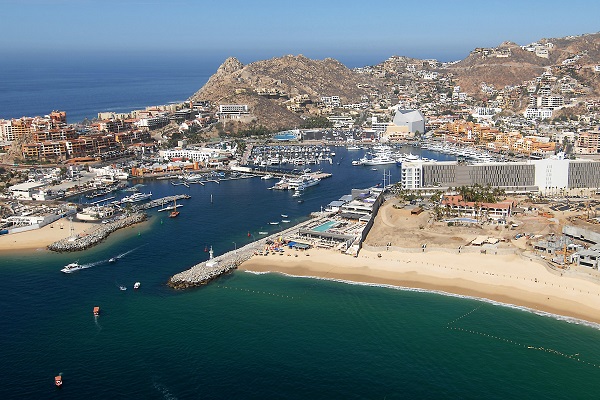
San Jose del Cabo has a smaller but increasingly competitive set of schools, often preferred by families wanting a quieter, more authentically Mexican environment. The Club Campestre area has become a school hub thanks to Colegio Mission and several smaller bilingual options.
Colegio Mission — Club Campestre area. Bilingual SEP curriculum with international enrichment from preschool through high school. Emphasis on character formation and community service. Popular with Costa Palmas and East Cape families willing to make the longer drive.
Centro Escolar Picacho McGregor — bilingual preschool through grade 9. Blends Mexican SEP standards with international content. Smaller class sizes, strong cultural integration program for arriving expat kids.
The American School of San Jose del Cabo — preschool through high school with a US-aligned curriculum delivered bilingually. SEP-accredited. Strong fit for families planning to return their kids to US universities or US high schools mid-track.
Montessori Regina — the first Montessori school in San Jose, serving preschool through elementary. Authentic Montessori method, mixed-age classrooms, child-led learning. The best fit for families committed to alternative pedagogy.
San Jose schools tend to attract families who chose the town deliberately — for the Art District, the colonial walkability, and the slower pace. The class composition skews more local-Mexican, more long-term-expat, and less transient-vacation-rental than Cabo San Lucas. For families wanting their kids to root into a community, San Jose schools deliver that ecosystem more naturally. The trade-off is fewer total options, smaller graduating classes (15-30 students vs 40-60 at El Camino), and longer drive times if you eventually move outside the immediate San Jose corridor.
4. Curriculum Comparison: IB vs SEP vs US-Aligned
The three main curriculum tracks deliver very different student experiences and post-graduation outcomes. Choose based on where your kids will likely attend university and how mobile your family expects to be.
| Curriculum | Best For | Recognition | Tuition Range |
|---|---|---|---|
| Full IB (El Camino) | Global mobility, top universities | Worldwide | $10K-$18K/yr |
| Bilingual SEP + International | Long-term Mexico stay | Mexico + transcripts | $5K-$10K/yr |
| US-Aligned Bilingual | Planning US university or return | US after WES eval | $6K-$12K/yr |
| Montessori | Alternative pedagogy, K-6 | Limited beyond elementary | $4K-$8K/yr |
| Online (Crimson, K12) | Travel-heavy families | US accredited | $8K-$25K/yr |
The IB Diploma carries the strongest international recognition — accepted by every major US, Canadian, UK, and European university. SEP-only diplomas need to be evaluated by World Education Services for US admissions. US-aligned schools issue transcripts that universities recognize directly without translation.
A practical caveat on the IB path: it gets significantly harder in grades 11 and 12, and the Diploma Program assumes a high baseline of academic discipline plus competence in two languages. Students who join El Camino in elementary years through the PYP track tend to thrive into the Diploma. Students transferring in for grades 9 or 10 from a non-IB school often struggle with the Internal Assessment and Extended Essay workload. Be honest about your student's readiness before committing to a transfer at that age — most families who switch back to a SEP-bilingual track at grade 10 do so for sustainability, not because IB itself failed.
📥 Free Download: Los Cabos Neighborhood Guide
Picking the right school is half the battle. The other half is picking the right neighborhood — one with bus routes, family amenities, and resale value. Get our full neighborhood breakdown.
Download Free Guide5. The Mexican School Calendar
Mexico's SEP-regulated school year is shorter than the US and Canadian academic calendar but more concentrated. The 2025-2026 calendar runs from September 1, 2025 to July 15, 2026 — 185 school days total per Mexico News Daily reporting. Most international schools in Cabo follow this rhythm with some calendar variation.
Typical Cabo school year structure:
- First semester: Early September to mid-December
- Winter break: Mid-December through first week of January (2-3 weeks)
- Second semester: Early January through early July
- Holy Week / Easter: Two weeks in March or April
- Summer break: Mid-July through end of August (6-8 weeks)
This calendar matters for families synchronizing with US-based grandparents, sports leagues, or summer camps. The shorter Cabo summer means visits to the US in July need to be planned tightly. Some families dual-enroll in US online summer schools (K12, Crimson) to keep their kids on the US academic track if they expect to return.
6. Admissions Timeline & Documents
Apply 6 to 9 months before your target start date. Top schools — El Camino in particular — maintain waiting lists for popular grades (especially K, 1st, and 6th grade entry points). Mid-year transfers are usually possible in January but require space availability.
Standard admissions package:
- Application form — submitted online or in-person at the admissions office
- Last 2 years of transcripts — sealed and translated to Spanish (most schools accept English originals)
- Standardized test scores — if available from current school
- Teacher recommendation letters — typically 1-2 letters
- Passport copies for student and parents
- Residency card or visa — required for enrollment, not application
- Updated immunization records — Mexico requires MMR, hepatitis B, polio, and pertussis
- Placement test — typically math and Spanish proficiency, sometimes English
- Family interview — almost universal at international schools
- Enrollment fee — non-refundable, $1,000 to $3,000 USD on acceptance
7. Bus Routes & Family Logistics
Most international schools in Cabo run optional bus service for $1,000 to $2,500 USD per year. Routes are designed around the highest-density expat neighborhoods. For families weighing where to live, the bus matrix matters as much as the home itself.
| Neighborhood | Closest Schools | Bus Available | Drive Time |
|---|---|---|---|
| Pedregal | El Camino, Delmar, Amaranto | Yes | 10-15 min |
| El Tezal | Delmar, Amaranto, Howard Gardner | Yes | 5-10 min |
| Cabo Bello / Corridor | El Camino, Delmar, Mission | Yes | 15-25 min |
| Palmilla / Cabo del Sol | Mission, El Camino, Delmar | Yes | 20-30 min |
| Club Campestre | Mission, McGregor, American School | Yes | 5-15 min |
| San Jose Centro | Mission, McGregor, Montessori Regina | Yes | 5-10 min |
| Costa Palmas (East Cape) | Mission, American School | Limited | 45-60 min |
Families relocating to Costa Palmas or other East Cape developments typically hire a private driver instead of riding the bus — the distance falls outside standard routes. Budget $500 to $1,000 USD per month for dedicated driver service.
A logistics note often missed in first-year planning: extracurriculars. Most international schools schedule sports, music, and language clubs between 3:00 and 5:00 PM. The school bus typically runs only on the standard 7:30 AM / 2:30 PM schedule. Families with kids in afternoon programs need a backup plan — carpool networks, a Vialidad-licensed nanny driver, or a parent willing to handle the second run. This single logistical reality has nudged many families to choose Cabo San Lucas housing within 10 minutes of the school over a more aspirational Corridor property 25 minutes away.
8. Homeschool & Online Alternatives
For families with travel-heavy lifestyles or kids who do not fit traditional classroom models, online and homeschool options have expanded dramatically since 2020:
- Crimson Global Academy — accredited online private school with synchronous live classes, AP and IB tracks, and university counseling. Tuition $15,000 to $25,000 USD per year. Strong fit for high-achieving high schoolers.
- K12 / Stride — US-accredited online K-12 platform. Tuition varies by state of enrollment, often free if registered in a participating US state. Asynchronous and flexible.
- Connections Academy — Pearson-owned, US-accredited K-12. Similar to K12 structure.
- Homeschool co-ops — small informal groups exist in El Tezal and San Jose Art District. Parent-led with rotating subject leads.
- Hybrid models — some families enroll in part-time bilingual school plus part-time online to combine social development with US transcript continuity.
Mexican law allows homeschooling but does not formally recognize home-issued diplomas. For families planning eventual return to the US or Canada, online-accredited diplomas are the cleaner path. The SEP REVOE registry tracks formally accredited schools.
The fastest-growing pattern in 2026 Cabo expat families is the hybrid: morning classes at a local bilingual school for social development, language immersion, and SEP credit, plus afternoon online courses through Crimson or K12 for US AP-track work and college prep. The math on a hybrid runs roughly $12,000 to $20,000 USD per year combined — still well under a US private school — and produces a student with two recognized academic transcripts, true bilingualism, and a wider university option set than either path alone. For families with one parent commuting back to the US for work, this also matches the practical reality of split-time residency.

9. How to Choose
The decision usually comes down to four factors: curriculum match, neighborhood logistics, social fit, and budget. Most families visit 3-4 schools over a single Cabo trip before committing. Almost every school in Cabo offers shadow days where a prospective student spends a half-day in classes.
Ask the admissions office these questions on your tour:
- What percentage of graduating seniors attend universities outside Mexico?
- What is the teacher retention rate over the last 3 years?
- How does the school support newly arrived non-Spanish-speaking students?
- What is the average class size by grade band?
- What are the all-in costs — tuition, enrollment, bus, books, uniforms, technology fees?
- What is the policy on mid-year transfers and family travel?
10. Your Family Move-In Checklist
If you are planning a family move to Cabo for the 2026-2027 school year, here is the order to do it:
- Decide on curriculum track — IB, bilingual SEP, US-aligned, or online
- Visit Cabo for school tours — most admissions offices accommodate prospective family visits with 2 weeks notice
- Apply by January 2026 for September 2026 start at top-tier schools
- Pick your neighborhood around the chosen school's bus route — read our Living in Cabo expat guide
- Budget the full picture — tuition, bus, books, plus the Cabo cost of living
- Plan the relocation — driving, residency, household goods — start with our complete Cabo move guide
The families who move smoothest are the ones who pick the school first, the neighborhood second, and the home third. Pick a great school in the wrong location and you spend two hours a day in the car. Pick a great location near no good school and you regret it within a semester.
Ready to Find Your Cabo Home Near the Right School?
We work with families weekly on the school-neighborhood-home stack. Tell us your kids' grades, and we will map your real options — bus routes, walking distance, and resale value.
Contact Us TodayFrequently Asked Questions
What is the best international school in Los Cabos?+
Colegio El Camino in Cabo San Lucas is the only full IB Continuum school in Los Cabos — meaning students can complete the IB Primary Years, Middle Years, and Diploma Program all under one roof. It is one of just 25 schools in Mexico with this status. For families prioritizing global university placement and a single-track education from kindergarten through 12th grade, El Camino is the clear pick.
How much does private school cost in Cabo?+
Private bilingual school tuition in Los Cabos runs $5,000 to $10,000 USD per year for K-8 at schools like Delmar, Amaranto, or Instituto Howard Gardner. Full IB programs at Colegio El Camino run $10,000 to $18,000 USD annually for upper grades. One-time enrollment fees add $1,000 to $3,000 USD. Tuition is well below comparable US or Canadian private schools, which routinely exceed $30,000 per year.
When does the school year start in Mexico?+
Mexico's SEP-regulated school year starts in late August or early September and runs through mid-July. The 2025-2026 calendar runs September 1, 2025 to July 15, 2026 — a 185-day calendar. Most international schools in Cabo follow this rhythm with a 2-week winter break in December and Holy Week off in March or April. Apply 6 to 9 months before your target start date.
Are Cabo schools recognized by US and Canadian universities?+
Yes. IB Diploma graduates from Colegio El Camino are accepted by every major US and Canadian university, including the Ivy League and UC system. SEP-accredited bilingual schools issue the Bachillerato, which is widely recognized after transcript evaluation by services like WES. Many Cabo families also pursue dual-enrollment with US online programs like Crimson Global Academy or K12 to secure a US high school diploma alongside the Mexican credential.
Is bus service available from Pedregal, Palmilla, or Club Campestre?+
Most international schools in Cabo offer optional bus service for an additional $1,000 to $2,500 USD per year. Routes typically cover Pedregal, Cabo Bello, El Tezal, the Corridor (Palmilla, Cabo del Sol, Club Campestre, Querencia), and central San Jose del Cabo. Costa Palmas families typically use private drivers, as the East Cape distance falls outside standard routes.
Can my child enroll mid-year if we move in January?+
Yes, but space is limited. Most Cabo international schools accept mid-year transfers in January and after Easter break, with placement testing for grade level and language proficiency. Bring sealed transcripts from your child's current school, immunization records (Mexico requires MMR, hepatitis B, and polio updates), and a passport or residency card. Plan for a 4 to 8 week onboarding period if your child is not yet bilingual.
Do my kids need to speak Spanish before enrolling?+
Not at most international schools. Colegio El Camino, Delmar, and Amaranto run dedicated Spanish-as-a-Second-Language tracks for non-bilingual arrivals, especially in K through 6. Older students entering grades 7-12 should expect a more intensive language ramp — typically a full academic year of accelerated Spanish before joining mainstream classes. Younger children typically reach functional fluency within 12 to 18 months.

Aaron Cuha
Real Estate Advisor & Los Cabos Market Expert
Real estate advisor and founder of Living In Cabo. 15+ years helping families navigate complex real estate decisions. Strategic partner with Ronival — Baja's largest brokerage.