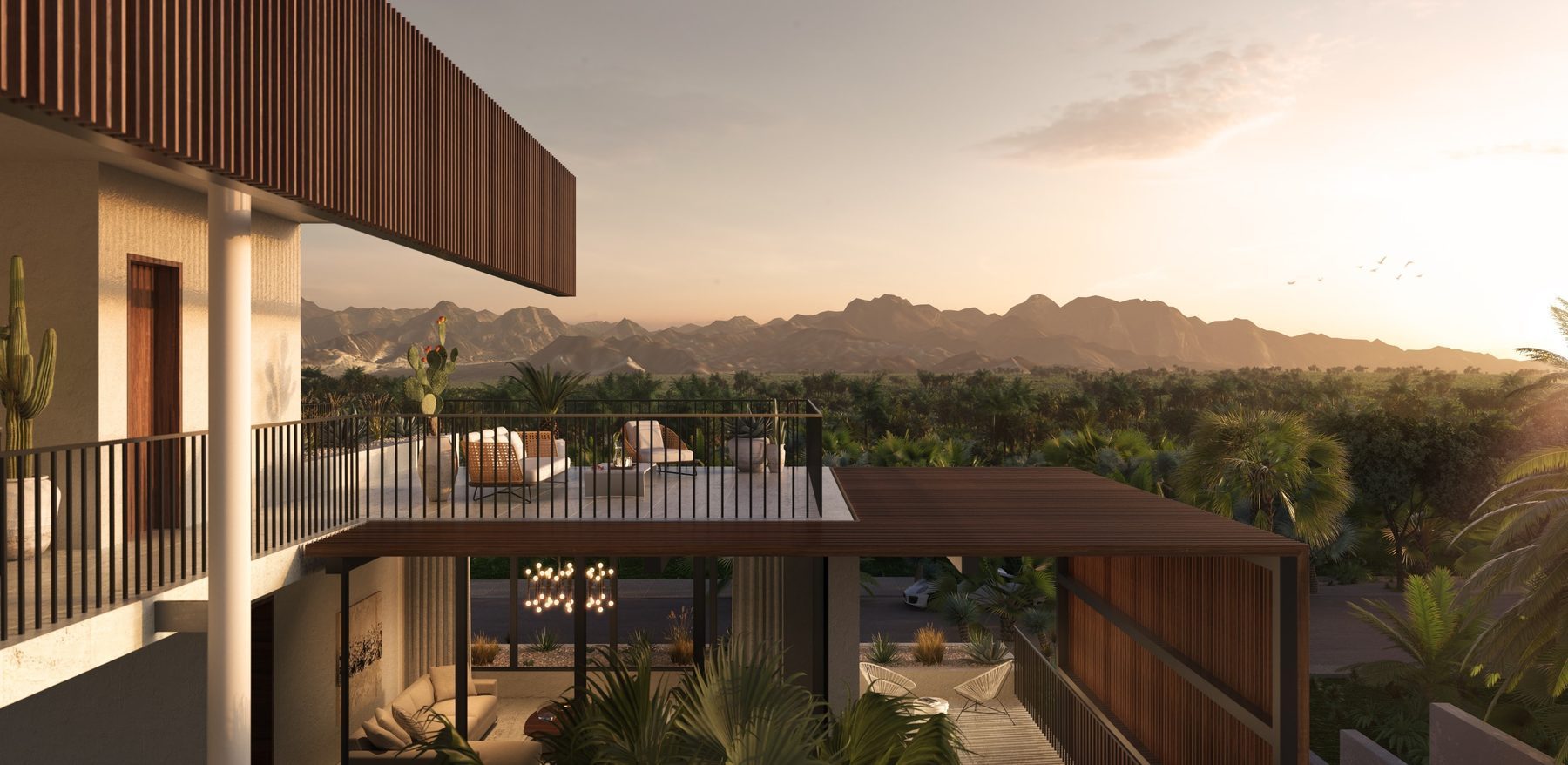
Pre-construction in Los Cabos can deliver 15–30% savings over resale — or it can leave your deposit trapped in a project that never finishes. I have seen both outcomes more times than I care to count, and the difference almost always comes down to three things: the developer's track record, the contract structure, and where your money actually sits while they build.
Key Takeaways
- • Developer delays of 6–18 months beyond promised delivery are common in Los Cabos — budget your timeline accordingly
- • Deposits held in developer-controlled accounts have no third-party protection if the developer defaults
- • Milestone-based payment schedules (10/30/30/30) reduce your exposure at every phase of construction
- • Penalidades convencionales (delay penalty clauses) are enforceable in Mexico but only if written into the promesa de compraventa
- • Checking a developer's completion history on prior phases is the single best predictor of future performance
Considering a Pre-Construction Purchase?
Let us review the developer's track record and contract terms before you commit a deposit.
Get a Contract ReviewWhy Buyers Choose Pre-Construction in Cabo
The math is straightforward. A two-bedroom condo at a Corridor development might list at $480,000 in Phase 1 pre-construction and sell for $620,000–$680,000 as a completed resale two years later. That 30–40% spread is real, and I have closed enough of these deals to confirm it happens — when the developer delivers.
Beyond the price advantage, pre-construction lets you customize finishes, pick the best unit positions early, and structure payments over the construction period instead of bringing the full purchase price at once. For buyers coming from the US or Canada, that payment schedule flexibility is a major draw.
But here is what the sales office will not tell you: pre-construction in Mexico carries risks that do not exist in the same way in the US or Canada. There is no equivalent of a state contractor's license board. There is no mandatory escrow requirement for deposits. And there is no standardized warranty framework for new construction. Every protection you get, you negotiate into the contract yourself — or you do not get it at all.
The Four Most Common Pre-Construction Risks
Risk 1: Construction Delays
This is by far the most common issue. I would estimate that 60–70% of pre-construction projects in Los Cabos deliver late. The question is how late and what the consequences are.
Minor delays — 3 to 6 months — are almost standard. Permitting in Mexico is unpredictable, supply chains for imported materials (particularly from the US, given recent tariff complications) can stall, and weather events during hurricane season can set back construction timelines. I factor a 6-month buffer into every pre-construction timeline I quote to clients.
Major delays — 12 to 36 months — are a different story. I have seen a Corridor development that promised 24-month delivery take nearly five years to complete. The buyers who purchased in Phase 1 eventually got their units, but they spent three additional years paying opportunity cost on tied-up capital, dealing with uncertainty, and watching their projected rental income timeline evaporate.
- What causes minor delays: Permitting backlogs at the municipal level, weather events, supply chain disruptions for imported materials, seasonal labor shortages during peak construction periods (October–March)
- What causes major delays: Developer cash flow problems (they sold Phase 1 too cheaply and cannot fund completion), design changes mid-construction, regulatory issues with environmental permits (SEMARNAT), or disputes with the ejido or landowner on the underlying property
- What causes project abandonment: Developer insolvency, fraud, or catastrophic permitting failures where the project literally cannot be legally completed
Risk 2: Developer Default or Bankruptcy
This is the nightmare scenario, and while it is less common than delays, it happens. I have personally been involved in two situations where a developer ceased operations mid-construction in Los Cabos. One was a small Pacific Side project — roughly 20 units — where the developer ran out of capital after completing the foundation and first-floor structure. The other was a mid-size development near the Corridor where the developer's parent company in Mexico City had financial problems unrelated to the Cabo project.
In both cases, the buyers had deposits of 30–50% of the purchase price held directly by the developer. Recovery was painful: one group of buyers organized, hired a Mexican litigation attorney, and eventually recovered approximately 60 cents on the dollar after 18 months of legal proceedings. The other group is still in litigation three years later.
Risk 3: Quality Below Promises
The rendering showed Italian marble countertops, floor-to-ceiling glass, European fixtures, and a rooftop infinity pool with LED lighting. What was delivered: Chinese porcelain tile (not bad, but not marble), standard-height windows, domestic fixtures, and a pool that works but looks nothing like the rendering.
This is shockingly common. The sales materials in Cabo pre-construction are aspirational, not contractual — unless you make them contractual. I have seen developments where the model unit was built to a noticeably higher standard than the production units. The difference in finish quality can represent $30,000–$80,000 in value on a $500,000 unit.
Risk 4: Amenity Bait-and-Switch
The master plan showed a beach club, two restaurants, a spa, a gym, and a kids' club. Phase 1 delivers with the pool and gym. The developer promises the rest "in Phase 2." Phase 2 takes three years to launch, and when it does, the beach club has been redesigned to a smaller footprint and the spa has been eliminated entirely.
This happens because amenities are expensive, and developers fund them from the proceeds of later phases. If Phase 2 sales are slow — which has happened across several Cabo developments in the 2026 correction — the amenity buildout gets delayed or downsized. You bought at a price that assumed full amenity delivery, but you are living with partial amenities and no clear timeline for the rest.
How to Protect Your Deposit
Use Third-Party Escrow — Not the Developer's Account
This is the single most important piece of advice in this entire article. In Mexico, there is no legal requirement for a developer to hold your deposit in escrow. Many developers deposit your money directly into their operating account and use it to fund construction. If they default, your deposit is commingled with their general funds and you are an unsecured creditor in a Mexican bankruptcy proceeding.
The solution: insist on a third-party escrow arrangement through a reputable title company or escrow agent. Companies like Stewart Title Latin America and First American Title (both active in Los Cabos) offer escrow services where your deposit is held in a segregated account and released to the developer only upon verified construction milestones.
Yes, this costs money — typically 1–1.5% of the escrowed amount. It is the best insurance you will ever buy.
Want Your Contract Reviewed Before Signing?
We connect buyers with real estate attorneys who specialize in Cabo pre-construction contracts.
Book a Strategy CallNegotiate a Milestone-Based Payment Schedule
A developer who asks for 50% upfront and 50% at delivery is asking you to take on most of the financial risk. Push for a milestone-based structure:
- 10% at signing — held in third-party escrow
- 20% at foundation completion — released from escrow upon verified milestone
- 20% at structure completion — walls, roof, rough plumbing and electrical
- 20% at finish stage — interiors, fixtures, finishes installed
- 30% at delivery and escritura — the final payment when you take possession and the deed is recorded
This structure means your maximum exposure at any point is limited to the cumulative payments made, and each payment is tied to demonstrable progress. If the developer stalls after foundation, you have 30% at risk instead of 50%.
Not every developer will agree to this. Larger, more established developers with strong track records may insist on their standard payment terms (often 40/30/30 or 50/25/25). That is a negotiation, and your leverage depends on market conditions. In the current buyer's market, you have more room to push.
Essential Contract Clauses
Your promesa de compraventa (promise to purchase, the standard pre-construction contract in Mexico) should include these provisions. If they are not in the developer's standard contract, your attorney should add them:
- Penalidades convencionales (delay penalties): A specified penalty per month of delay beyond the promised delivery date — typically 0.5–1% of the purchase price per month. This is enforceable under Mexican civil law (Código Civil Federal, Article 1840)
- Right of rescission with deposit return: If the developer is more than 12 months late (or whatever threshold you negotiate), you have the right to cancel the contract and receive a full refund of all payments made, plus the accrued delay penalties
- Specification list as an exhibit: Attach the detailed finish specifications (materials, brands, models) as a binding exhibit to the contract. "Equivalent quality" substitution clauses should be limited and require your written approval
- Third-party inspection rights: Your right to hire an independent inspector at key milestones (foundation, structure, pre-delivery) at your own expense
- Force majeure definition: A narrow, specific list of what constitutes force majeure (natural disaster, government shutdown, pandemic) — not a catch-all that lets the developer excuse any delay
- Amenity delivery timeline: If you are buying based on promised future amenities, the timeline and consequences for non-delivery should be in writing
Due Diligence on the Developer
Check Their Completion History
The single best predictor of whether a developer will deliver your project on time and to standard is whether they have done it before. Ask for — and verify — a list of every project the developer has completed in Baja California Sur. Then do the following:
- Visit their completed projects: Walk the common areas, look at the finish quality, talk to residents. Do the amenities match what was promised? Are the units well-maintained? Are there visible construction quality issues?
- Talk to owners in prior phases: Ask about their experience. Was delivery on time? Were there surprise costs? Did the developer honor warranty claims? Facebook groups for specific Cabo developments are a goldmine for this information
- Check with the municipal building department: Verify that the project has all required permits — construction permit (licencia de construcción), environmental impact authorization (MIA from SEMARNAT if applicable), and municipal land use approval (uso de suelo)
- Run a Registro Público search: Confirm the developer owns or has clear rights to the land. Verify there are no liens, encumbrances, or ejido complications
Red Flags That Should Stop You Cold
In my experience, these are the warning signs that precede most developer problems:
- No completed projects in the region. A first-time Cabo developer with a track record in Guadalajara or Mexico City is not the same as a developer with three completed phases in Los Cabos. Building in Baja has unique challenges — logistics, labor, materials supply, hurricane considerations — that outside developers routinely underestimate
- Aggressive early-phase pricing that seems too good. If a developer is offering Phase 1 at 40–50% below comparable completed properties, they may be underpricing to generate cash flow. That cash flow dependency means they cannot afford delays
- Refusal to use third-party escrow. A legitimate developer with adequate funding should have no objection to escrow. Resistance to escrow is the single biggest red flag
- No model unit or show unit available. If the development is past Phase 1 and there is nothing physical to walk through, that is concerning
- Sales team cannot answer specific construction timeline questions. Vague answers like "sometime in Q4" or "approximately 18 months" without a detailed milestone schedule suggest the project plan is not well-defined
- Developer has changed project scope or design significantly after initial sales. One change is normal. Three or four redesigns suggest the developer is still figuring out what they are building — with your money
When Things Go Wrong: Recovery Options
Start With Negotiation
If a developer is delayed but still operational, your first step is direct negotiation. In my experience, developers in financial stress will often agree to concessions — upgrade packages, reduced final payment amounts, extended payment deadlines — rather than face contract cancellations that worsen their cash flow. Document everything in writing.
File a PROFECO Complaint
PROFECO (Procuraduría Federal del Consumidor) is Mexico's federal consumer protection agency. They handle real estate complaints and can mediate between buyers and developers. The process is free, does not require an attorney, and PROFECO has enforcement authority. The downside: it is slow, and PROFECO's remedies are generally limited to mediation and fines. They cannot force a developer to complete construction.
Civil Litigation
For significant amounts — deposits of $100,000 or more — civil litigation through a Mexican court may be warranted. You will need a Mexican attorney licensed in Baja California Sur. The process typically takes 12–24 months and costs $10,000–$25,000 in legal fees. Recovery rates vary widely based on the developer's remaining assets.
If you used third-party escrow, your recovery is simpler — you file a claim with the escrow agent, who releases your funds according to the contract terms. This is why escrow is so important.
Organize With Other Buyers
If multiple buyers are affected, organizing as a group gives you significantly more leverage and reduces per-buyer legal costs. I have seen buyer groups in Cabo successfully negotiate full deposit returns from distressed developers simply by presenting a unified front with a single attorney. The developer knows that one lawsuit from one buyer is manageable; twenty lawsuits from an organized group with media attention is an existential threat.
The 2026 Market Context
The current construction pipeline in Los Cabos is substantial — over 2,000 units in various stages of development across the Corridor, Pacific Side, and East Cape. Some of these projects were launched during the 2021–2024 boom when buyer demand and pricing seemed limitless. Now that the market has corrected and sales velocity has slowed, some developers are facing the exact cash flow pressure that leads to delays.
This is not a reason to avoid pre-construction — it is a reason to be more selective. The developers who entered 2026 with strong balance sheets, completed prior phases, and realistic pricing are still delivering. The ones who were overleveraged and dependent on rapid Phase 2 sales are the ones showing stress.
I am actually telling select clients that right now is one of the better times to buy pre-construction in Cabo — precisely because developers are more willing to negotiate on terms, accept escrow requirements, and offer buyer-friendly payment schedules that they would never have agreed to in 2023.
Your Pre-Construction Due Diligence Checklist
- Verify developer has completed at least one prior project in Baja California Sur
- Visit completed projects and talk to existing owners
- Confirm all permits are in place (licencia de construcción, uso de suelo, MIA if applicable)
- Run a Registro Público search on the land
- Hire an independent Mexican real estate attorney to review the promesa de compraventa
- Insist on third-party escrow for all deposits and progress payments
- Negotiate milestone-based payment schedule
- Include delay penalty clauses (penalidades convencionales)
- Attach detailed finish specifications as a binding contract exhibit
- Include right of rescission with full refund for delays beyond 12 months
- Verify the developer's financial stability (ask for financial references from their bank)
- Get the amenity delivery timeline in writing with consequences for non-delivery
Buying Pre-Construction? Do Not Sign Without a Review
We review pre-construction contracts and connect you with attorneys who protect Cabo buyers every day.
Contact Us TodayFrequently Asked Questions
How common are developer delays in Los Cabos pre-construction?+
Very common. Approximately 60–70% of pre-construction projects in Los Cabos deliver later than the originally promised date. Minor delays of 3–6 months are nearly standard due to permitting, weather, and supply chain issues. Major delays of 12–36 months occur in roughly 10–15% of projects, typically caused by developer cash flow problems or regulatory complications. Complete project abandonment is rare — perhaps 2–3% of projects over the past decade — but devastating when it occurs.
Can I get my deposit back if the developer defaults in Mexico?+
It depends on where your deposit is held. If your deposit was placed in third-party escrow (through Stewart Title, First American, or a similar provider), recovery is straightforward — the escrow agent releases your funds per the contract terms. If your deposit went directly into the developer's operating account, recovery is much harder. You become an unsecured creditor and must pursue recovery through PROFECO mediation or civil litigation. Historical recovery rates for non-escrowed deposits range from 40–80% after legal proceedings that take 12–24 months.
What is a promesa de compraventa and how is it different from a US purchase agreement?+
A promesa de compraventa (promise of sale) is the standard pre-construction purchase contract in Mexico. Unlike a US purchase agreement that typically leads to closing within 30–60 days, a promesa governs a relationship that may last 18–36 months through the construction period. It outlines payment schedules, delivery timelines, specifications, and remedies for non-performance. The key difference from US contracts: Mexican promesas are less regulated and less standardized, which means buyer protections that would be automatic in the US (like escrow, warranties, and delay remedies) must be explicitly negotiated and written into the contract.
How much does third-party escrow cost for Cabo pre-construction?+
Third-party escrow for pre-construction in Los Cabos typically costs 1–1.5% of the total escrowed amount. For a $500,000 purchase with $250,000 in progress payments held in escrow, expect to pay $2,500–$3,750 for the escrow service. Some title companies charge a flat fee instead — typically $2,000–$5,000 depending on the complexity. This covers account setup, milestone verification, fund disbursement, and documentation. It is one of the best investments you can make in a pre-construction purchase.
What are penalidades convencionales and are they enforceable?+
Penalidades convencionales are contractual delay penalties specified in the promesa de compraventa. Under Mexican civil law (Código Civil Federal, Article 1840), these penalties are enforceable as long as they are clearly stated in the contract. Typical rates are 0.5–1% of the purchase price per month of delay beyond the agreed delivery date. For a $600,000 unit with a 0.75% monthly penalty, that is $4,500 per month the developer pays you for each month of delay. The penalty is applied as a credit against your final payment or as a direct payment, depending on contract terms.
Should I avoid pre-construction in the current Cabo market correction?+
No — the current market correction actually makes pre-construction more attractive for informed buyers. Developers are more willing to negotiate favorable terms: third-party escrow acceptance, milestone-based payment schedules, delay penalty clauses, and upgrade packages. Phase 1 pricing in the current market often includes genuine discounts that developers would not have offered in 2023–2024. The key is being more selective — stick with developers who have completed prior Cabo projects, have adequate capitalization, and are willing to accept buyer-protective contract terms.
How do I verify that a Cabo developer has the proper permits?+
Request copies of three key documents: (1) the licencia de construcción (construction permit) issued by the municipal government of Los Cabos, which authorizes the specific project; (2) the uso de suelo (land use certificate) confirming the zoning allows residential development; and (3) if the project is near the coast or in an environmentally sensitive area, the Manifestación de Impacto Ambiental (MIA) from SEMARNAT. Your attorney can verify these documents with the issuing authorities. Also run a Registro Público de la Propiedad search to confirm the developer's land ownership is clear of liens, encumbrances, or ejido claims.

Aaron Cuha
Real Estate Advisor & Los Cabos Market Expert
Real estate advisor and founder of Living In Cabo. 15+ years helping families navigate complex real estate decisions. Strategic partner with Ronival — Baja's largest brokerage.