I've coached real estate agents across Hawaii's luxury market and personally helped clients close deals in both Maui and Los Cabos — so when people ask me which is the better buy in 2026, I don't have to guess. The numbers aren't close, but the decision isn't only about numbers.
Key Takeaways
- Cabo runs roughly 40-60% cheaper than Hawaii per square foot for comparable luxury oceanfront property
- Mexico's annual property tax (predial) is a fraction of Hawaii's non-owner-occupied rates — often 10x lower in dollar terms
- Foreign buyers in Cabo need a fideicomiso bank trust; Hawaii has no equivalent structure for any buyer, foreign or domestic
- From central and eastern US cities, Cabo has meaningfully shorter flight times than Hawaii
- Hawaii offers a more mature, liquid US-dollar market; Cabo offers lower entry cost and higher gross rental yield potential
Comparing Cabo to Other Beach Markets?
I've worked both sides of this comparison. Let's talk through your specific numbers — price target, financing, and how you plan to use the property.
Talk to Our Team1. Price Per Square Foot — The Gap Is Bigger Than You Think
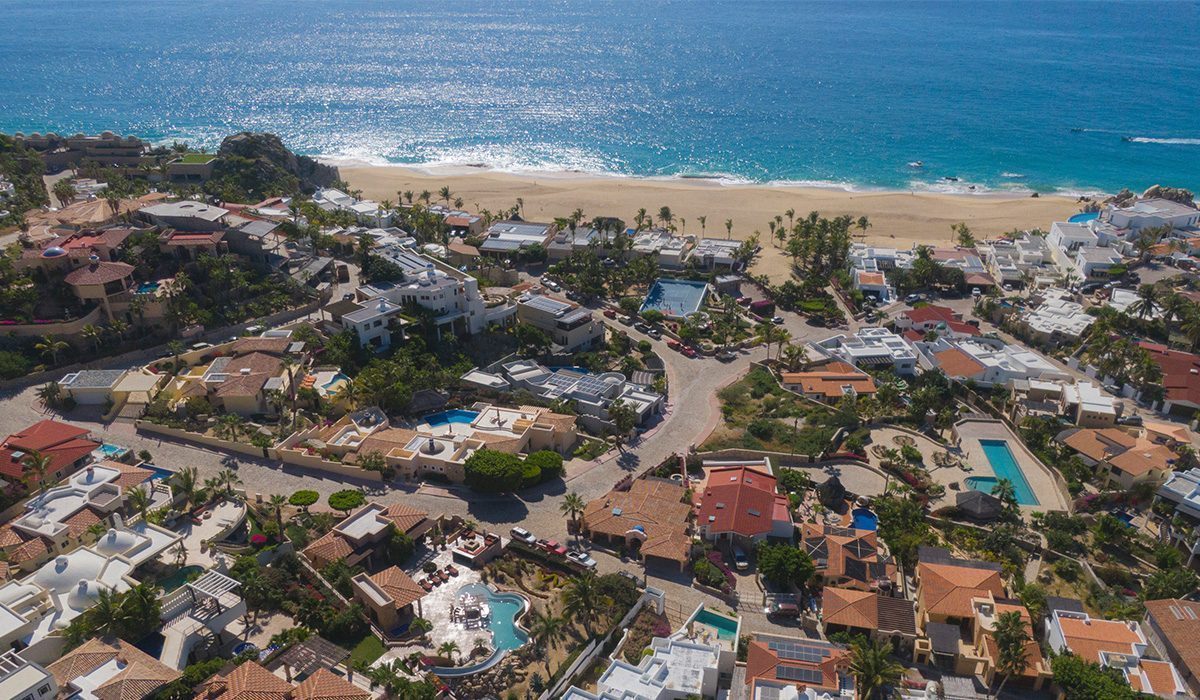
This is where the comparison gets lopsided fast. Luxury oceanfront and ocean-view condos in Cabo San Lucas and The Corridor — think developments comparable to what you'd find along Maui's Wailea coast — typically run $400 to $900 per square foot depending on the development, finish level, and proximity to the water.
Comparable oceanfront or ocean-view luxury product in Maui or Oahu commonly runs $1,200 to $2,500+ per square foot. Hawaii's statewide median single-family home price has held well above $900,000-$1,000,000 in recent years according to data tracked by the Honolulu Board of Realtors and Realtor Association of Maui, and that's the median across all housing stock — not the luxury oceanfront segment specifically, which runs considerably higher.
| Metric | Los Cabos (Luxury Segment) | Hawaii (Maui/Oahu Luxury Segment) |
|---|---|---|
| Price per sq ft (oceanfront/view) | $400-900 | $1,200-2,500+ |
| Entry-level luxury condo | $400K-800K | $1.2M-2M+ |
| Trophy oceanfront villa | $3M-15M+ | $8M-30M+ |
I walked a client through this exact comparison last year — a buyer who had been actively shopping Maui for over a year before pivoting to look at Palmilla and Diamante. The property they eventually purchased in Cabo would have cost roughly double in a comparable Maui location.
2. Property Taxes — Not Even Close
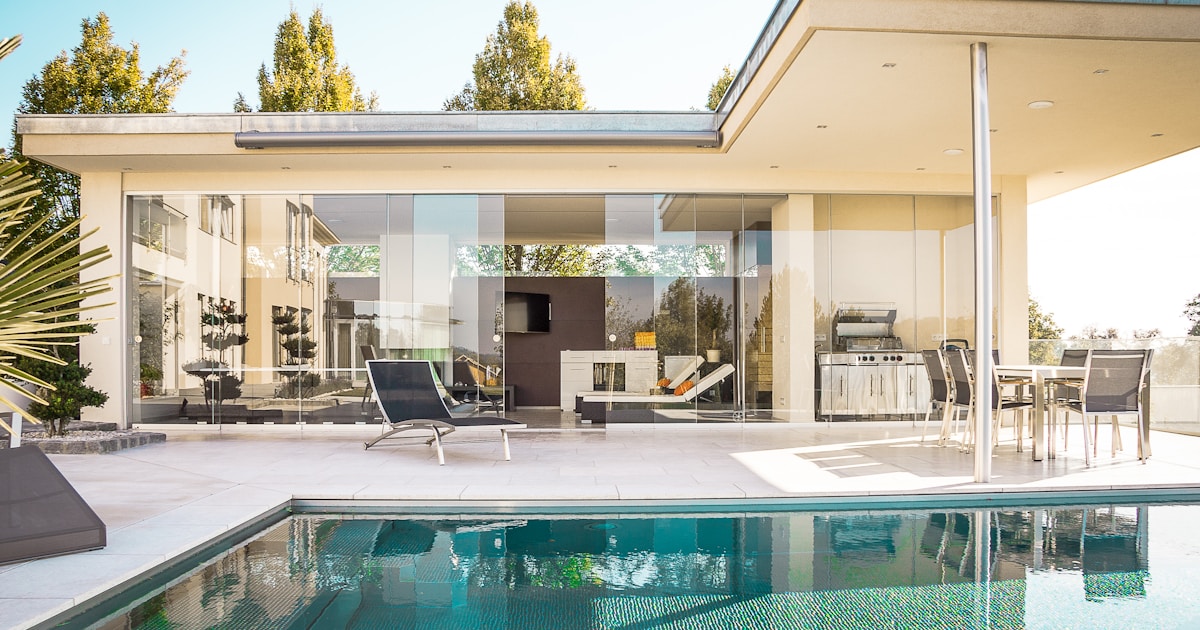
This is the number that surprises people most. Mexico's annual property tax, the predial, is calculated on assessed value — not market value — and typically works out to somewhere between 0.1% and 0.3% annually. On a $2 million Cabo home, that often means an annual property tax bill in the low thousands of dollars.
Hawaii property taxes are set at the county level, and rates for non-owner-occupied residential and investment property have climbed sharply in several counties. Maui County in particular restructured its tax tiers in recent years to significantly increase rates on non-owner-occupied property, especially in higher value tiers — pushing effective annual tax bills on comparable high-value homes into the $10,000 to $30,000+ range, and sometimes higher for the top luxury tier. County-specific current rates are published by the County of Maui and City and County of Honolulu real property tax offices.
For buyers who don't plan to occupy the home as a primary residence — which describes the vast majority of both Cabo and Hawaii luxury buyers — this tax differential alone can represent tens of thousands of dollars in annual savings by choosing Cabo. For the full mechanics of how predial is calculated, see our guide on property taxes in Cabo San Lucas.

Run Your Own Numbers
Book a call and we'll walk through a real side-by-side for your specific budget — purchase price, taxes, HOA, and realistic rental income.
Book a Call3. HOA Fees and Carrying Costs
HOA fees in both markets scale with amenities, and luxury gated communities in Cabo — Querencia, Pedregal, or Costa Palmas, for example — carry meaningful monthly dues, often $500 to $2,000+ per month depending on the community and unit size, covering security, landscaping, and shared amenities.
Hawaii HOA and condo association fees at comparable luxury properties often run higher in absolute dollar terms, frequently $1,000 to $3,000+ per month for comparable oceanfront condo product, partly reflecting higher labor and insurance costs in Hawaii. Hawaii's property insurance market has also tightened considerably in recent years, particularly for coastal and high-value properties, adding another carrying-cost pressure that Cabo buyers generally face to a lesser degree — though insurance for hurricane-zone Cabo property is a real cost buyers should budget for, not ignore.
- Cabo HOA fees: roughly $500-2,000/month at comparable luxury communities
- Hawaii HOA/condo fees: roughly $1,000-3,000+/month at comparable luxury properties
- Insurance: both markets face elevated coastal insurance costs — Hawaii from wildfire/hurricane risk repricing, Cabo from hurricane exposure — budget for both, don't assume either is cheap
4. Rental Income Potential
Both markets support strong short-term rental demand from a healthy tourism base, but the yield math tends to favor Cabo because the denominator — purchase price — is so much lower while nightly rates for comparable luxury product are genuinely competitive.
A $700,000 Cabo condo commanding $400-600/night in high season can post gross yields that a comparable-quality $1.5-2 million Hawaii condo, even at similar nightly rates, simply can't match on a percentage basis. Net yield is a different conversation once you factor in property management, HOA, and local short-term rental regulation — and this is where Hawaii has become a harder market to operate in.
Short-term rental regulation has tightened significantly across Hawaii, particularly Oahu's ordinance changes restricting non-hosted vacation rentals outside resort zones, and Maui's ongoing regulatory pressure on vacation rental inventory in the wake of housing shortage concerns. Los Cabos has generally remained a more permissive environment for licensed short-term rentals, though buyers should always confirm current local regulations and HOA rental policies before assuming rental flexibility. See our guide on vacation rental income and ROI in Cabo for detailed yield modeling.
5. Ownership Structure — Fideicomiso vs Direct Title
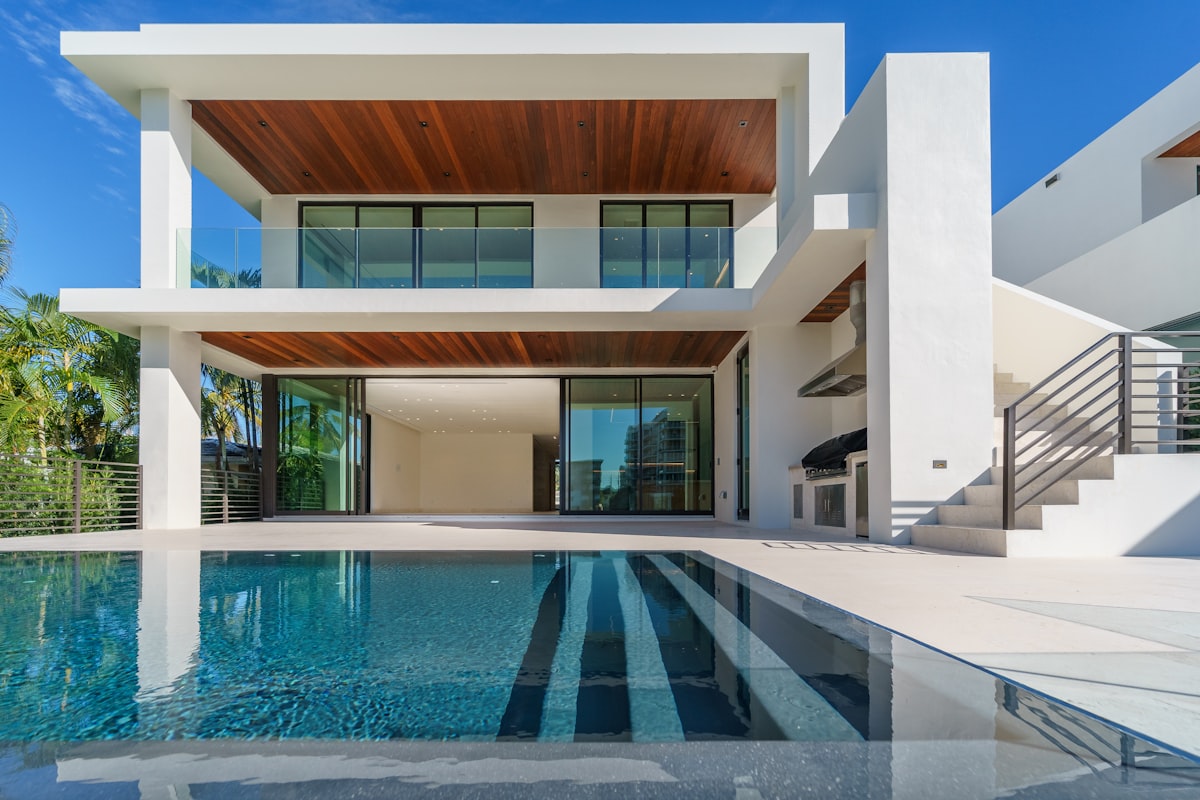
This is the biggest structural difference between the two markets. Hawaii is a US state — any buyer, foreign or domestic, holds property directly, subject to the same rules as anyone else. There's no special foreign-ownership vehicle required.
Cabo sits within Mexico's restricted coastal zone (50 km from the coastline, which covers virtually all of Los Cabos), so foreign buyers hold property through a fideicomiso — a bank trust where a Mexican bank holds legal title while the buyer retains full beneficial ownership, use, rental, and inheritance rights. It's a secure, decades-proven structure, but it does add an annual trustee fee (typically $500-700 USD) and a setup process most first-time Mexico buyers haven't encountered. Full details are in our fideicomiso guide.
Neither structure is objectively harder — Hawaii's is simply more familiar to US buyers. Once you've been through a fideicomiso setup once, it stops feeling foreign.

6. Flight Times and Accessibility
From the West Coast, the comparison is closer than most people expect — Los Angeles to Cabo San Lucas runs about 2.5 hours, while Los Angeles to Honolulu runs 5.5-6 hours. Cabo is actually the shorter flight from LA.
From central and eastern US cities, the gap widens significantly in Cabo's favor. Dallas, Denver, Chicago, and even New York all have direct flights to Los Cabos International Airport running roughly 3.5 to 5 hours. Reaching Hawaii from those same cities typically requires 8-11 hours, often with a connection through the West Coast.
| Origin City | Flight to Cabo | Flight to Hawaii (Honolulu) |
|---|---|---|
| Los Angeles | ~2.5 hrs | ~5.5-6 hrs |
| Dallas | ~3 hrs | ~8.5 hrs |
| Denver | ~3.5 hrs | ~7.5 hrs |
| Chicago | ~4.5 hrs | ~9-10 hrs |
| New York | ~5.5 hrs | ~10-11 hrs |
For a client base weighted toward the central and eastern US and Canada, this accessibility advantage compounds every trip — more usable weekends per year, easier logistics for guests and renters, and less time lost to travel.
7. Lifestyle — Where Money Doesn't Settle the Argument
Here's where I tell clients to stop looking at spreadsheets. Hawaii offers a US-culture, US-legal-system, English-first environment with a deep-rooted, distinct Hawaiian culture and a level of environmental protection and infrastructure maturity that's hard to overstate. For buyers who want zero language barrier and maximum familiarity, that matters.
Cabo offers a different but equally compelling lifestyle — a genuinely bilingual environment in the tourist and expat-heavy areas, a fast-growing culinary and cultural scene (see our piece on the region's farm-to-table food culture), and a still-developing luxury market with more room for appreciation than Hawaii's mature, largely built-out coastline.
Neither answer is wrong. What I tell clients: if lifestyle familiarity and long-term legal simplicity matter most, Hawaii wins. If total cost, higher yield potential, and buying into a market with more room to run matter most, Cabo wins.
8. Financing — Cash Market vs Mortgage Market
This is a difference that catches a lot of buyers off guard. Hawaii operates on the standard US mortgage system — conventional loans, jumbo loans, and the full infrastructure of US lenders competing for your business, with financing terms most American buyers already understand.
Cabo, by contrast, is still largely a cash market for foreign buyers. Mexican bank financing for non-residents is limited and comes with higher rates and shorter terms than most US buyers are used to, and while a small number of US-based lenders now offer cross-border financing products for Mexican resort real estate, availability and terms are nowhere near as deep as the US mortgage market. Most of the Cabo closings I've been part of were cash purchases, sometimes funded through a HELOC or portfolio loan against US assets rather than financing secured directly against the Mexican property.
This isn't necessarily a disadvantage — it's simply a different capital structure to plan around. Buyers who go in expecting to finance the Cabo purchase the way they'd finance a Hawaii condo are often surprised, so build this into your planning early rather than discovering it mid-negotiation.
9. Appreciation — Which Market Has More Room to Run
Hawaii's coastline, particularly Maui and Oahu's most desirable stretches, is largely built out. Land is scarce, zoning is restrictive, and new luxury supply is limited — which has historically supported strong, steady appreciation but also means much of the easy upside has already been captured over the past several decades.
Los Cabos, by comparison, is still in an active growth phase. New master-planned communities continue to break ground along The Corridor, San Jose del Cabo, and increasingly the East Cape and Pacific Side, and the region has seen consistent year-over-year price appreciation in the luxury segment as international demand continues to grow and infrastructure — new flight routes, hospital expansions, highway improvements — keeps catching up to demand. Buyers who purchased in developments like Diamante or Querencia a decade ago have seen substantial appreciation, and I don't see the same growth trajectory available in most of Hawaii's already-mature luxury corridors. For a closer look at how the broader market has moved, see our Los Cabos real estate market report.
9. Everyday Cost of Living — Beyond the Purchase Price
Buyers focus so heavily on purchase price and property taxes that they sometimes overlook the day-to-day cost differential, which compounds meaningfully if you're spending significant time in the home rather than treating it purely as an occasional vacation property.
Groceries, dining out, domestic help, landscaping, and general services all run noticeably cheaper in Cabo than in Hawaii, where the cost of living is consistently ranked among the highest in the United States due to the state's shipping and import dependency. A dinner out, a housekeeper, a gardener, a driver — these recurring costs add up differently over a year of ownership, and Cabo's advantage here is real, not marginal.
Healthcare is a nuance worth flagging honestly: Hawaii gives you the full US healthcare system without a second thought. Cabo has strong private hospitals and a growing base of English-speaking doctors, particularly in San Jose del Cabo and Cabo San Lucas, and most full-time expats carry international health insurance to bridge any gaps — a genuine consideration, not a dealbreaker, but one to plan for rather than assume away.
10. A Client Comparison — Same Budget, Two Markets
A few years ago I worked with a couple who had spent over a year actively shopping the Maui luxury condo market before reaching out about Cabo. Their budget was roughly $1.5 million, and in Maui that budget was landing them a solid but unremarkable two-bedroom condo, several blocks back from the water, with HOA fees pushing $1,800 a month.
The same budget in Cabo put them into a genuine oceanfront unit in Cabo del Sol with resort amenities, lower HOA fees, and a property tax bill a fraction of what they'd been quoted in Maui. They didn't abandon Hawaii because it's a bad market — they simply ran the numbers side by side and the value gap was too large to ignore. That comparison, more than any spreadsheet I could build for them, is what closed the decision.
11. My Honest Take
I've coached agents through both markets and helped clients buy in both. If you're purely optimizing for value — price per square foot, carrying costs, and rental yield — Cabo wins by a wide margin, and it's not particularly close. If you're optimizing for zero cultural or legal friction and you have the budget to absorb Hawaii's pricing, Hawaii is a fine, mature market that isn't going anywhere.
Most of my clients who seriously run both sets of numbers end up in Cabo — not because Hawaii is a bad market, but because the math on entry cost, carrying costs, and yield is simply better, and the fideicomiso structure turns out to be far less intimidating in practice than it sounds on paper.
If you're weighing both markets, my advice is the same advice I give every client regardless of which way they lean: don't decide off a spreadsheet alone, and don't decide off a single vacation memory alone either. Spend real time in the specific communities you're considering in Cabo — walk Palmilla, tour Costa Palmas, sit through an actual HOA disclosure — the same way you'd do your diligence on a Maui or Oahu purchase. The market that wins is usually the one you actually understood before you signed, not the one with the better marketing.
Ready to Run Your Real Numbers?
We'll build a real side-by-side comparison for your budget — purchase price, taxes, HOA, insurance, and realistic rental income — so you're deciding on facts, not guesses.
Contact Us TodayFrequently Asked Questions
Is real estate cheaper in Cabo or Hawaii?+
Cabo is significantly cheaper on a price-per-square-foot basis for comparable beachfront or ocean-view property. Luxury oceanfront condos in Cabo San Lucas and The Corridor typically run $400-900 per square foot depending on the development, while comparable oceanfront property in Maui or Oahu commonly runs $1,200-2,500+ per square foot. Hawaii's median single-family home price statewide has hovered well above $900,000-$1,000,000 in recent years, while a comparable luxury Cabo home can often be purchased for 40-60% less.
Can foreigners buy property in Hawaii as easily as in Mexico?+
Foreign buyers in Hawaii, since it's part of the United States, face no special restrictions — any legal structure available to a US buyer is available to a foreign buyer, subject to standard financing and tax rules. In Mexico, foreign buyers within the restricted coastal zone (which covers virtually all of Los Cabos) must hold property through a fideicomiso bank trust, which is a well-established, secure structure but does add a layer most US buyers haven't encountered before. Neither process is genuinely difficult, but they are different.
How do property taxes compare between Cabo and Hawaii?+
Property taxes are dramatically lower in Cabo. Mexico's predial (annual property tax) typically runs 0.1% to 0.3% of assessed value annually — often just a few hundred to low thousands of dollars per year even on a multimillion-dollar home. Hawaii's property tax rates vary by county and owner-occupancy status, but non-resident-owned investment or vacation property in counties like Maui can face rates well above owner-occupied rates, sometimes totaling $10,000-$30,000+ annually on a comparable high-value home, particularly after Maui's post-2023 rate restructuring for non-owner-occupied property.
Which market has better rental income potential, Cabo or Hawaii?+
Both markets support strong short-term rental demand, but Cabo often produces a higher gross yield relative to purchase price because the entry price is so much lower while nightly rates for comparable luxury product are competitive with Hawaii. Net yield comparisons depend heavily on HOA fees, property management costs, and local short-term rental regulations, which have tightened significantly in parts of Hawaii (particularly Oahu and increasingly Maui) in recent years, while Los Cabos has generally remained more permissive for licensed short-term rentals.
How long is the flight from major US cities to Cabo vs Hawaii?+
From the West Coast, flights are roughly comparable — Los Angeles to Cabo San Lucas is about 2.5 hours, similar to Los Angeles to Honolulu at around 5.5-6 hours, so Hawaii is actually longer from LA. From central and eastern US cities, Cabo has a clear advantage: direct flights from Dallas, Denver, Chicago, and even New York run 3.5-5 hours to Los Cabos International Airport, while those same cities require 8-11 hour flights to reach Hawaii, often with a connection.
Is Cabo or Hawaii a safer investment long-term?+
Hawaii benefits from US legal protections, US dollar-denominated ownership, and a more mature, liquid resale market. Cabo carries currency and political-risk considerations inherent to any foreign market, though the fideicomiso structure is well-established and the Los Cabos luxury market has shown strong, consistent appreciation over the past decade. Neither is inherently 'safer' — they carry different risk profiles, and buyers should weigh currency exposure and market liquidity against Cabo's lower entry cost and higher yield potential.
Do I need a fideicomiso to buy in Cabo, and is there an equivalent in Hawaii?+
Yes, foreign buyers in Cabo's coastal zone must use a fideicomiso — a bank trust that holds legal title while you retain full beneficial ownership, use, and inheritance rights. Hawaii has no equivalent requirement since US property law applies directly to any buyer regardless of nationality. The fideicomiso adds an annual bank trustee fee, typically $500-700 USD, on top of standard closing costs — a cost with no direct Hawaii parallel.

Aaron Cuha
Real Estate Advisor & Los Cabos Market Expert
Real estate advisor and founder of Living In Cabo. 15+ years helping families navigate complex real estate decisions. Strategic partner with Ronival — Baja's largest brokerage.