I have coached buyers into both Sarasota and Los Cabos for the better part of a decade. They attract the same profile — high-earning Americans who want warm winters, waterfront views, and something that appreciates while they are back home shoveling snow. But the math, the risk, and the daily experience could not be more different.
Key Takeaways
- Cabo delivers comparable waterfront quality at 25 to 40 percent lower purchase prices than Sarasota
- Florida's insurance crisis adds $4,000 to $12,000 per year in costs that Cabo owners simply do not pay
- Property taxes in Cabo run 80 to 95 percent lower — $300 to $1,500 versus $4,500 to $10,000 annually
- Cabo vacation rentals gross 6 to 10 percent yields versus 4 to 7 percent in Sarasota
- Sarasota wins on healthcare infrastructure and ease of domestic travel; Cabo wins on cost of living and lifestyle value
Considering Los Cabos for Your Second Home?
Get a personalized market comparison tailored to your budget, timeline, and lifestyle priorities.
Schedule a Free ConsultationPurchase Price: Where Your Dollar Goes Further
Sarasota's median home price sits around $475,000 as of mid-2026, up from roughly $290,000 in 2020. Waterfront condos — the product most second-home buyers actually want — start closer to $500,000 and easily clear $800,000 for anything with a bay or Gulf view on Longboat Key or Siesta Key.
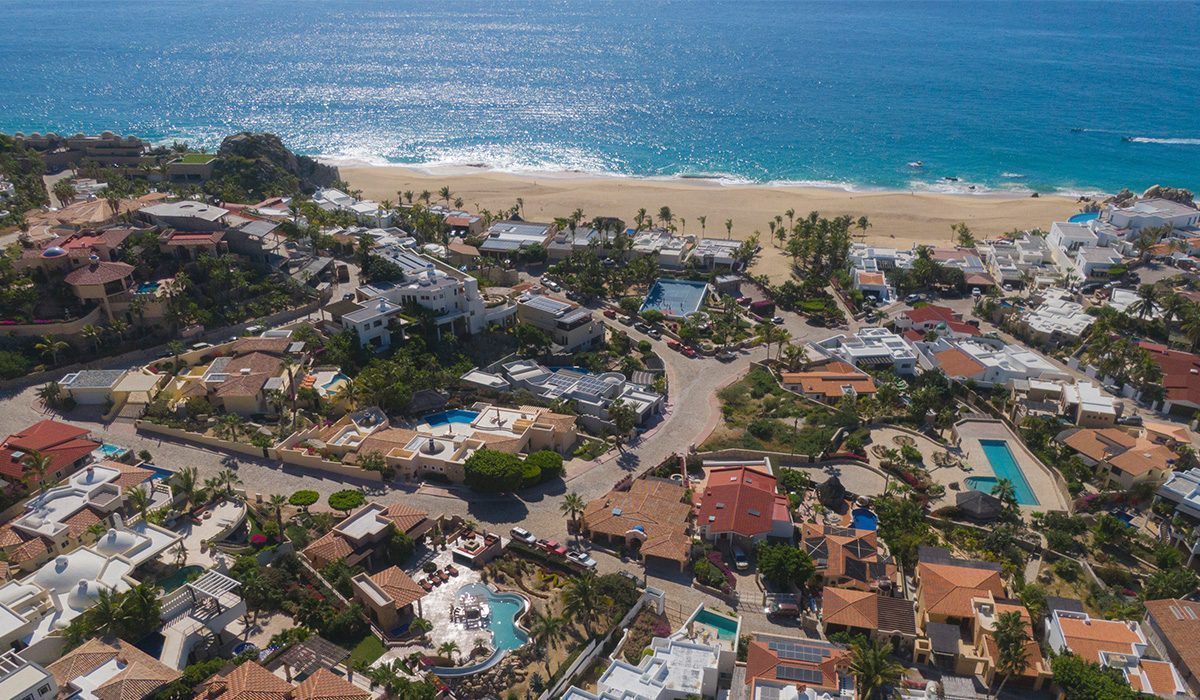
In Los Cabos, a 2-bedroom oceanview condo in a gated community with resort amenities runs $350,000 to $550,000 USD. A 3-bedroom villa with a private pool on the Corridor — the 20-mile stretch between Cabo San Lucas and San Jose del Cabo — starts around $600,000. At the luxury end, branded residences at Palmilla or Cabo del Sol compete with Longboat Key pricing, but you are getting Four Seasons or Park Hyatt service baked into the deal.
The blunt version: for every dollar you spend in Sarasota, you get about 30 to 40 percent more property in Cabo. And you are not fighting the same bidding-war energy that has defined the Gulf Coast since 2020.
Annual Ownership Costs: Where the Real Gap Hides
Purchase price gets all the attention. But the annual carrying costs are where the Cabo vs Sarasota comparison gets ugly for Florida.
| Annual Cost | Sarasota ($500K condo) | Los Cabos ($500K condo) |
|---|---|---|
| Property Tax | $5,000–$5,500 | $400–$1,200 |
| Homeowners Insurance | $6,000–$15,000 | $800–$2,000 |
| HOA / Maintenance | $4,800–$9,600 | $3,600–$7,200 |
| Fideicomiso / Bank Trust | N/A | $550–$1,000 |
| Flood Insurance (if req'd) | $1,500–$4,000 | N/A |
| Total Annual Carry | $17,300–$34,100 | $5,350–$11,400 |
Read that bottom line again. The annual cost difference on comparable condos ranges from $12,000 to $23,000 per year. Over a 10-year hold, that is $120,000 to $230,000 in savings — enough to fund the Cabo purchase down payment itself.
Florida's Insurance Crisis Is the Elephant in the Room
I have to be direct about this because it is the single biggest factor reshaping the Sarasota market. After Hurricane Ian in 2022 and Helene in 2024, Florida's property insurance market effectively collapsed. The Insurance Information Institute reports that the average Florida homeowners premium exceeded $6,000 in 2025, nearly triple the national average. In coastal Sarasota and Manatee counties, $10,000 to $15,000 premiums are now common for properties near the water.
In Cabo, homeowners insurance through companies like GNP Seguros or Zurich Mexico runs $800 to $2,000 per year for a $500,000 property. The coverage includes hurricane and earthquake. Nobody is dropping carriers or refusing to write policies.
Property Tax: Not Even Close
Florida markets itself as tax-friendly because there is no state income tax. That is true. But the property tax rate in Sarasota County runs 0.89 to 1.1 percent of assessed value, and assessed values have surged alongside the market. A $500,000 condo pays $4,500 to $5,500 annually — and that is with the homestead exemption for full-time residents, which snowbirds cannot claim.
Mexico's predial (property tax) is a fraction of that. On a $500,000 Cabo property, you will pay $300 to $1,200 per year depending on the municipality and the catastral (assessed) value, which typically lags market value. Most BCS municipalities offer a 10 to 20 percent discount for paying in January. I wrote about this in detail in the Cabo property tax guide.
Over a decade, the property tax difference alone is $35,000 to $50,000.
Want the Full Cost Breakdown?
Book a 30-minute call and we will walk through the annual carrying costs for your specific budget and property type in Los Cabos.
Book a CallRental Income Potential
Both markets are strong vacation rental destinations, but the economics differ. Sarasota benefits from long seasonal demand — snowbirds rent from October through April, and families visit in summer. Average nightly rates for a beachfront 2-bed in Siesta Key run $250 to $400 in peak season.
Cabo's peak season is shorter and sharper — November through March — but nightly rates are often higher: $300 to $600 for comparable product. The shoulder seasons (April to May, October to November) are softer but still bookable. Summer runs 40 to 60 percent occupancy at discounted rates.
On a $500,000 condo, here is what I see clients actually earning after management fees:
- Sarasota: $25,000–$35,000 net annual income (5–7% gross yield)
- Los Cabos: $30,000–$50,000 net annual income (6–10% gross yield)
Cabo's higher yields come partly from lower operating costs and partly from the premium international travelers pay for resort-quality experiences. If you are buying purely as an investment and plan to use a professional rental management company, Cabo typically wins the yield comparison.
Lifestyle: Two Very Different Versions of Paradise
This is where it stops being a spreadsheet and starts being a gut decision.
Sarasota is a cultured American city that happens to have beaches. You get the Ringling Museum, a solid restaurant scene, Whole Foods and Trader Joe's, English-language everything, and the comfort of never having to think about exchange rates or customs. It is a beautiful place. It is also, at its core, suburban Florida — strip malls, traffic on US 41, and a sameness that comes from being an American city doing American-city things.
Los Cabos is a different country. That is both its greatest asset and its highest hurdle. You get world-class golf at Diamante and Querencia, farm-to-table restaurants that compete with anywhere in North America, desert-meets-ocean landscape that photographs like it was designed by committee, and a cost of living that stretches your dollar 30 to 50 percent further. You also get a different language, different bureaucracy, different healthcare system, and the occasional moment of "I have no idea how this works."
I tell clients: if you want comfort and familiarity with good weather, Sarasota is excellent. If you want adventure, value, and the feeling of having actually gone somewhere, Cabo wins every time.
Getting There: Flight Access and Travel Logistics
Sarasota-Bradenton International (SRQ) has expanded significantly since 2020, with direct flights from the Northeast, Midwest, and several hubs. But it is still a regional airport — many routes are seasonal, and you are often connecting through Atlanta or Charlotte.
SJD Airport in Los Cabos handled 7.2 million passengers in 2025, with nonstop service from 40-plus US cities including Dallas, Houston, Phoenix, Denver, Los Angeles, San Francisco, Chicago, and Atlanta. Southwest, JetBlue, Alaska, American, United, and Delta all serve the route. A $370 million expansion is underway to handle 10 million passengers. Flight time from most US cities is 2 to 5 hours.
For East Coast buyers specifically, Sarasota has the advantage of a shorter, cheaper flight. For anyone west of the Mississippi, Cabo is often the same travel time or less.
Weather: Sunshine vs Sunshine (With Caveats)
Both destinations deliver 300-plus days of sunshine annually. The differences:
- Humidity: Sarasota's summer humidity regularly exceeds 80 percent. Cabo's desert climate keeps humidity around 30 to 50 percent most of the year, spiking only during chubasco season (August to October).
- Summer heat: Both hit the 90s in summer, but Cabo's dry heat feels dramatically more tolerable than Sarasota's wet blanket.
- Hurricane risk: Sarasota sits in the Gulf of Mexico hurricane corridor. Cabo faces Pacific hurricanes less frequently — the last major hit was Hurricane Odile in 2014.
- Winter: Both are mild. Sarasota averages mid-60s in January; Cabo averages mid-70s. Neither requires heavy coats.
Appreciation and Market Trends
Sarasota appreciated aggressively from 2020 to 2023 — roughly 50 to 60 percent in three years — then cooled as insurance costs, rising rates, and inventory increases pushed back. As of late 2026, the market is flat to slightly declining in price, with days on market stretching to 60 to 90 days for condos.
Los Cabos has shown steadier 5 to 8 percent annual appreciation over the past five years, with luxury product outperforming. The condo market has softened slightly in 2026 due to inventory growth in the $300,000 to $600,000 range, but land and villa segments remain strong. I cover the current numbers in the Q3 2026 market report.
The key difference: Cabo's appreciation has been more consistent and less volatile. Sarasota's boom-bust pattern — driven by insurance shocks, interest rate swings, and hurricane damage — introduces a risk premium that the Florida market has not fully priced in.
Healthcare: Where Sarasota Has the Edge
I will be honest about this one because it matters, especially for retirees. Sarasota Memorial Hospital is a nationally ranked facility. You are in the US healthcare system with all its costs and all its capabilities. If you have a medical emergency at 2 AM, the infrastructure is there.
Cabo has excellent and improving healthcare. CHRISTUS Muguerza's new $84 million facility is opening in 2026. Blue Net Hospital and H+ Los Cabos have US-trained specialists. Routine care and dental work cost 50 to 70 percent less than US prices, which is why medical tourism is booming. But for complex procedures — cardiac surgery, oncology, neurosurgery — you may want to be stateside. That is why I tell every Cabo buyer to carry medical evacuation insurance ($300 to $600 per year).
The Verdict: Which One Wins?
There is no universal answer. But here is my framework:
Choose Sarasota if:
- You want zero friction — English only, US dollars, familiar systems
- You have serious health conditions that require consistent access to major US hospitals
- You already own property in Florida and want to consolidate
- Your travel base is East Coast and you want a 2-hour flight
Choose Cabo if:
- You want more property per dollar and dramatically lower carrying costs
- You are comfortable (or excited) about living in another country
- Rental income matters — you want the property to work harder when you are not there
- You prioritize lifestyle, golf, and the sense of being somewhere genuinely different
- You are sick of watching insurance premiums eat your equity
Most of my clients who have looked at both markets end up in Cabo. Not because Florida is bad — it is not. But because the math is so much better, the lifestyle is richer per dollar, and the insurance nightmare that is reshaping the Gulf Coast is nowhere on the horizon in Baja.
Ready to Compare Markets?
Tell us your budget, your ideal lifestyle, and how often you plan to visit. We will show you exactly what Cabo delivers versus your current market.
Contact Us TodayFrequently Asked Questions
Is Cabo cheaper than Sarasota for a second home?+
At comparable quality levels, yes. A 2-bedroom oceanview condo in a gated Cabo community runs $350,000 to $550,000 USD. A similar waterfront condo in Sarasota starts at $500,000 and often exceeds $700,000. Property taxes in Cabo run $300 to $1,500 per year versus $5,000 to $10,000 in Sarasota. Insurance is the biggest gap: Cabo homeowners insurance averages $800 to $2,000 per year versus $6,000 to $15,000 in Florida after the 2022 hurricane insurance crisis.
Which has better rental income — Cabo or Sarasota?+
Cabo typically delivers higher gross yields on vacation rentals. A well-managed Cabo condo grosses 6 to 10 percent annually versus 4 to 7 percent for Sarasota. However, Sarasota benefits from longer seasonal rental demand (October through April) while Cabo peaks harder but shorter (November through March). Cabo also has lower operating costs, so net yields often favor Cabo by 1 to 3 percentage points.
Is Cabo or Sarasota safer from hurricanes?+
Sarasota sits directly in the Gulf of Mexico's hurricane corridor and took a direct hit from Hurricane Helene in 2024 and Ian's surge in 2022. Cabo gets occasional Pacific hurricanes — notably Odile in 2014 — but the frequency is lower and modern construction codes in Cabo communities have improved dramatically since then. Neither is hurricane-proof, but Florida's insurance market has priced in the risk far more aggressively.
How do property taxes compare between Cabo and Sarasota?+
Sarasota County's effective property tax rate is approximately 0.89 to 1.1 percent of assessed value. On a $500,000 home, that is $4,500 to $5,500 per year. Mexico's predial tax on the same value property runs $300 to $1,500 per year, and most municipalities offer a 10 to 20 percent discount for early January payment. The difference over 10 years can exceed $40,000.
Can I fly direct to Cabo from the US East Coast?+
Yes. SJD airport receives nonstop flights from Dallas, Houston, Phoenix, Denver, Los Angeles, San Francisco, Chicago, Atlanta, and New York (JFK and Newark seasonally). Flight time from the East Coast is 5 to 6 hours. Sarasota-Bradenton (SRQ) has more limited service, with most connections routing through Atlanta, Charlotte, or Dallas, though direct flights from the Northeast have expanded since 2023.
What about healthcare in Cabo vs Sarasota?+
Sarasota has a clear advantage in healthcare infrastructure — Sarasota Memorial Hospital is a nationally ranked facility. Cabo has excellent private hospitals including CHRISTUS Muguerza (opening 2026), Blue Net Hospital, and H+ Los Cabos, with many US-trained physicians. Routine and dental care in Cabo costs 50 to 70 percent less than US prices. However, for serious emergencies, Cabo buyers should carry medical evacuation insurance ($300 to $600 per year).
Do I need a visa to own property in Cabo?+
No visa is required to own property in Mexico. US and Canadian citizens can visit for up to 180 days on a tourist permit (FMM). If you plan to stay more than 180 days per year, you can apply for a temporary resident visa. Property ownership in Cabo is held through a fideicomiso bank trust, which does not require residency status.

Aaron Cuha
Real Estate Advisor & Los Cabos Market Expert
Real estate advisor and founder of Living In Cabo. 15+ years helping families navigate complex real estate decisions. Strategic partner with Ronival — Baja's largest brokerage.