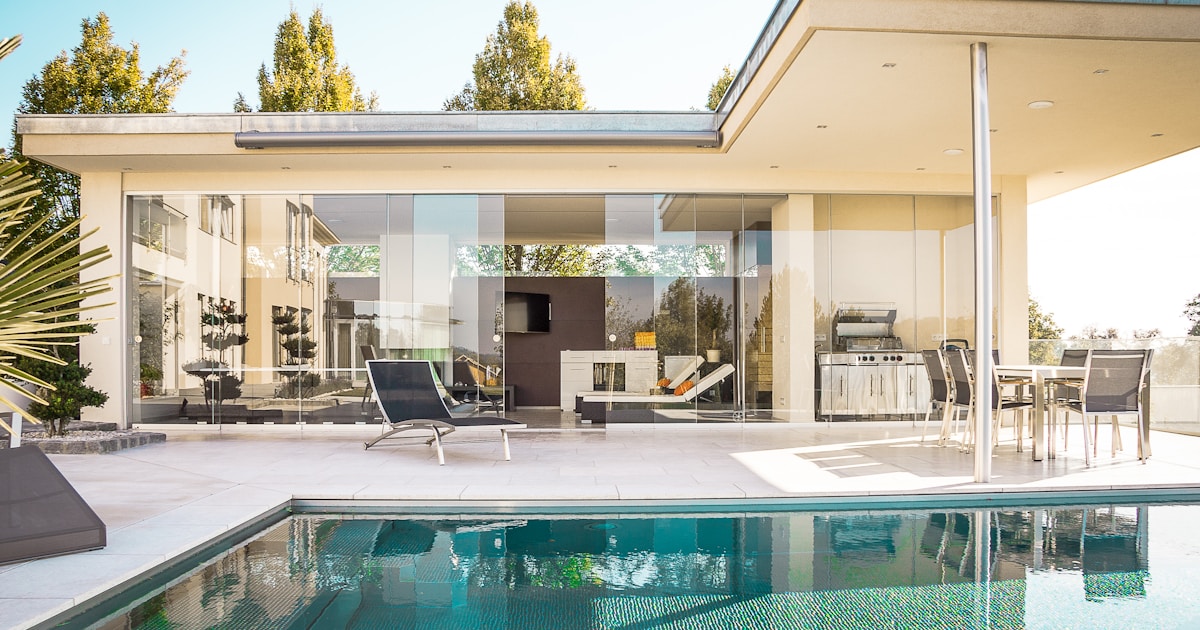
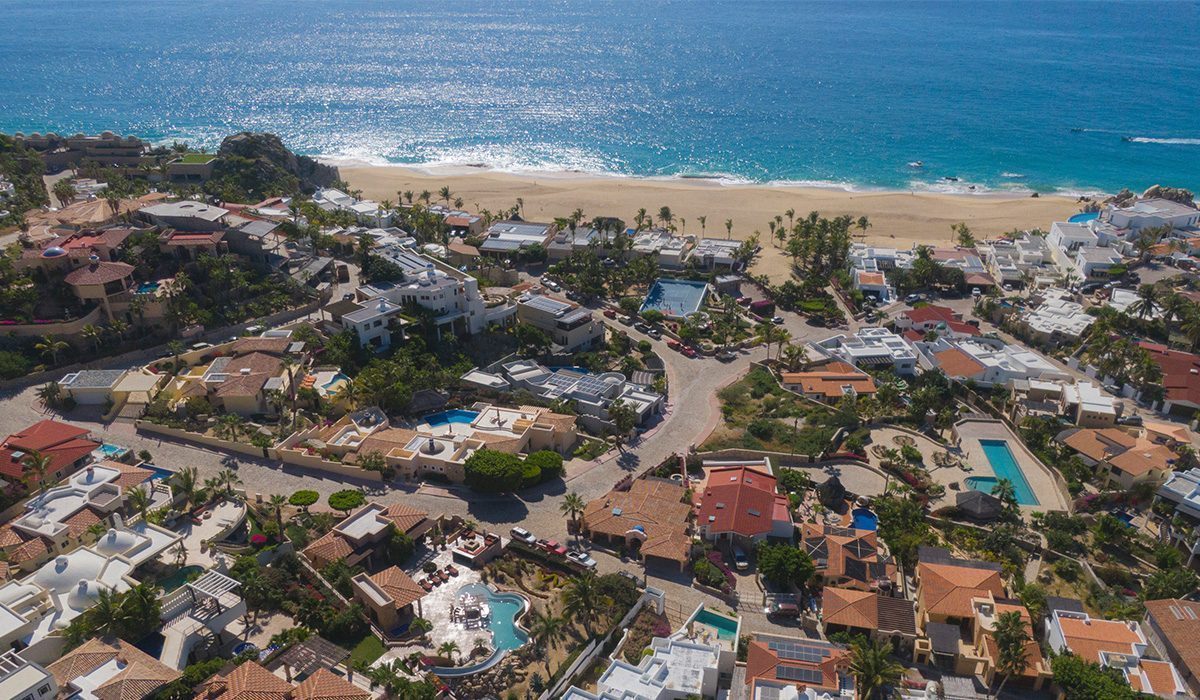
I get asked this question constantly — especially from West Coast buyers who have Hawaii on one shoulder and Cabo on the other. Both are stunning beach destinations within reach of the US mainland. Both offer luxury real estate in world-class settings. And both have loyal devotees who will tell you their choice is the only rational one.
But the numbers tell a clear story: Cabo vs Hawaii is not a toss-up. For most American buyers — especially those prioritizing investment returns, value per dollar, and accessibility — Los Cabos has decisive advantages. Hawaii wins in specific areas too, and I will give it full credit where it is earned. Here is the complete 2026 comparison.
Key Takeaways
- ✓ Cabo luxury condos ($350K-$600K) cost 40-60% less than comparable Hawaii properties ($850K+)
- ✓ Cabo gross rental yields (8-13%) significantly outperform Hawaii (5-8%)
- ✓ Cabo property taxes run $300-$1,500/year vs Hawaii's $2,000-$8,000+ for similar values
- ✓ Flight times from most US cities are 2-3 hours shorter to Cabo than to Hawaii
- ✓ Hawaii offers US legal framework familiarity; Cabo requires a fideicomiso trust ($2,000-$3,000 setup)
Considering Cabo Over Hawaii?
Our team helps West Coast buyers evaluate Los Cabos properties with the same rigor they would apply to any US investment. Data-driven guidance, no pressure.
Schedule a Free Consultation1. Real Estate Prices: The Core Advantage
This is where Cabo vs Hawaii stops being a debate and starts being math. The price differential is substantial and has widened over the past five years as Hawaii's market has continued to appreciate faster than inventory growth allows.
| Property Type | Los Cabos | Hawaii (Maui/Oahu) | Cabo Savings |
|---|---|---|---|
| Median home price | $450,000 | $850,000 | 47% |
| Beachfront 2BR condo | $350,000-$600,000 | $800,000-$1,500,000 | 50-60% |
| Luxury 3BR villa | $1,200,000-$3,000,000 | $3,000,000-$8,000,000 | 55-65% |
| Ultra-luxury estate | $3,000,000-$15,000,000 | $8,000,000-$35,000,000 | 55-60% |
| Entry-level condo | $200,000-$350,000 | $450,000-$700,000 | 50-55% |
Let me put this in concrete terms. A two-bedroom, two-bathroom oceanview condo at Quivira or Diamante in Cabo — with pool, gym, golf course access, and resort amenities — lists in the $400,000-$550,000 range. The closest Hawaiian equivalent with comparable ocean views, finishes, and amenities would be $900,000-$1,400,000 on Maui or the Big Island.
That is not a marginal difference. That is the difference between buying with cash and needing a mortgage. Or the difference between one property and two. For our international comparison buyers, the value proposition against Hawaii is even stronger than against Costa Rica.
2. Rental Income and Investment Returns
For buyers who plan to rent their property — and most second-home buyers should at least consider it — the yield comparison strongly favors Cabo.
| Metric | Los Cabos | Hawaii |
|---|---|---|
| Gross rental yield | 8-13% | 5-8% |
| Avg nightly rate (2BR) | $250-$450 | $350-$600 |
| Annual occupancy | 55-75% | 65-80% |
| Peak season occupancy | 80-95% (Dec-Apr) | 85-95% (Dec-Apr) |
| Off-season occupancy | 30-50% (Jun-Sep) | 55-70% (Sep-Nov) |
| Management fees | 20-35% | 25-40% |
| Property tax drag | $300-$1,500/yr | $2,000-$8,000+/yr |
Hawaii's nightly rates are higher in absolute terms, but the purchase price is so much higher that the yield (income as a percentage of property cost) is significantly lower. A $500,000 Cabo condo generating $50,000/year in gross rental income delivers a 10% gross yield. A $1,000,000 Hawaii property generating $65,000/year delivers 6.5%.
Factor in that Cabo's property taxes are $300-$1,500/year versus Hawaii's $2,000-$8,000+, and the net yield gap widens further. For a deep dive into Cabo rental returns specifically, see our vacation rental income ROI guide.
Appreciation Comparison
Hawaii has a longer track record with steadier, more predictable appreciation — typically 3-5% annually over the long term. Cabo's market is younger but has appreciated faster recently at 5-7% per year, with premium communities hitting 7-10%.
The caveat: Cabo's market is less liquid than Hawaii's. There are fewer comparable sales, appraisals are less standardized, and selling timelines can be longer. Hawaii's resale market functions more like the US mainland — more buyers, more data, faster transactions. For an analysis of Cabo's appreciation trajectory, read Is Cabo Real Estate a Good Investment in 2026.
3. Ownership Structure and Legal Framework
This is where Hawaii has an undeniable advantage: it operates under US law. No fideicomiso trust, no foreign ownership permits, no navigating a different legal system. You buy a property in Hawaii the same way you buy one in California or Texas.
Cabo requires a fideicomiso bank trust for foreign buyers — a well-established legal mechanism that has protected over 1 million American property owners in Mexico since 1971. But it is an additional layer of complexity:
| Legal Factor | Los Cabos | Hawaii |
|---|---|---|
| Ownership structure | Fideicomiso trust | Direct deed |
| Setup cost | $2,000-$3,000 | N/A |
| Annual maintenance | $550-$1,000 | N/A |
| Trust term | 50 years (renewable) | N/A |
| Closing timeline | 40-45 days | 30-45 days |
| Closing costs | 4-8% of price | 3-5% of price |
| Title insurance | Available (recommended) | Standard |
| Legal system | Mexican civil law | US common law |
Is the fideicomiso a dealbreaker? For most buyers, no. It is a one-time setup that your notario and attorney handle. But if the idea of owning property under a different country's legal system genuinely concerns you, that is a legitimate factor — and Hawaii eliminates that concern entirely.

4. Cost of Living Comparison
For buyers who plan to spend significant time at their property — or relocate — the daily cost of living is a major factor. Cabo wins this comparison decisively.
| Expense | Los Cabos | Hawaii |
|---|---|---|
| Dinner for two (mid-range) | $40-$70 | $80-$140 |
| Groceries (monthly, couple) | $400-$600 | $800-$1,200 |
| Domestic help (weekly) | $50-$100 | $150-$300 |
| Golf round (resort course) | $150-$280 | $200-$400 |
| Gasoline (per gallon) | $3.50-$4.00 | $4.50-$5.50 |
| Health insurance (annual) | $1,500-$4,000 | $6,000-$15,000 |
| Property taxes (annual) | $300-$1,500 | $2,000-$8,000+ |
| Utilities (monthly) | $100-$250 | $200-$400 |
The cost of living in Cabo is roughly 30-50% lower than Hawaii across most categories. Healthcare is particularly notable — private health insurance in Mexico costs a fraction of US premiums, and the quality of care in Los Cabos is excellent for a community of its size. See our healthcare guide and cost of living breakdown for details.
Domestic help — housekeeping, gardening, property maintenance — is dramatically more affordable in Cabo. Many homeowners employ weekly cleaning staff for $50-$100, something that would cost $150-$300+ in Hawaii. This makes property maintenance significantly cheaper and more accessible.
Want a Side-by-Side Analysis for Your Budget?
We build personalized cost comparisons for buyers considering Cabo vs other markets. Real numbers, not estimates. Book a call to get yours.
Book a Strategy Call5. Accessibility and Flight Times
This is one of Cabo's most underrated advantages. For the majority of US buyers — anyone living west of the Mississippi — Cabo is significantly closer than Hawaii.
| Origin City | To Los Cabos (SJD) | To Honolulu (HNL) | Cabo Advantage |
|---|---|---|---|
| Los Angeles | 2.5 hours | 5.5 hours | 3 hours |
| San Francisco | 3 hours | 5 hours | 2 hours |
| Phoenix | 2 hours | 6 hours | 4 hours |
| Dallas | 2.5 hours | 8 hours | 5.5 hours |
| Denver | 3 hours | 7 hours | 4 hours |
| Chicago | 4.5 hours | 8.5 hours | 4 hours |
| New York | 5.5 hours | 10+ hours | 4.5+ hours |
| Seattle | 4 hours | 5.5 hours | 1.5 hours |
The SJD airport has added 15+ new nonstop routes in the past two years. As of 2026, you can fly nonstop to Cabo from over 40 US and Canadian cities. Round-trip fares from the West Coast run $200-$400 on Alaska, Southwest, American, and United.
Why does this matter for real estate? Shorter flights mean more weekend visits. More weekend visits mean more personal use and higher rental occupancy when you are not there. A 2.5-hour flight from LA to Cabo is a Thursday-to-Sunday weekend trip. A 5.5-hour flight to Hawaii is a week-long commitment.

6. Lifestyle and Culture
Both destinations offer exceptional lifestyles, but they are different in character:
Cabo offers:
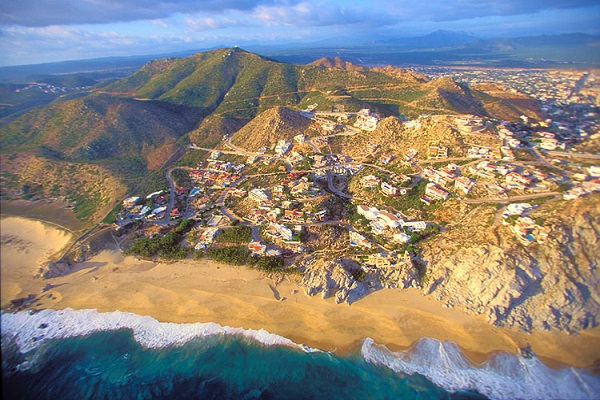
- Desert-meets-ocean landscape — dramatic, rugged, golden
- Rich Mexican culture, cuisine, and hospitality
- World-class golf (18+ courses including Tiger Woods' El Cardonal and Jack Nicklaus designs)
- Sportfishing capital of the world — marlin, tuna, dorado year-round
- Vibrant nightlife and restaurant scene
- Growing arts and cultural scene, especially in San Jose del Cabo
- Lower cost of living enabling a more luxurious daily lifestyle
Hawaii offers:
- Lush tropical landscape — green, volcanic, dramatic rainfall variation
- Unique Polynesian culture and Aloha spirit
- World-class surfing and more consistent swimming beaches
- National parks, hiking, and extensive trail systems
- US healthcare, schools, and infrastructure
- English as the primary language
- No passport or visa requirements
The lifestyle choice often comes down to personality. Hawaii attracts nature-focused, adventure-seeking buyers who value the familiar comforts of US infrastructure. Cabo attracts experience-focused buyers who value cultural immersion, value for money, and a more indulgent daily lifestyle.

7. Tax Implications
The tax picture is more nuanced than most buyers realize:
Property Tax
Cabo wins. Mexican property taxes (predial) average $300-$1,500 annually, based on the catastral value which is typically well below market value. Hawaii's property tax is based on assessed market value at rates of 0.28% (owner-occupied) to 1.05% (investment/vacation). On an $850,000 Hawaii home, expect $2,380-$8,925/year depending on use classification.
Rental Income Tax
Both countries tax rental income, but the structures differ. In Mexico, non-resident rental income is taxed at 25% of gross (without deductions) or at graduated rates on net income if you have an RFC. In Hawaii, rental income is subject to both state income tax (up to 11%) and federal income tax, plus the Transient Accommodations Tax (TAT) at 10.25% and the General Excise Tax (GET) at 4.5% on rental revenue. Hawaii's combined rental tax burden can be surprisingly high.
Capital Gains at Sale
Mexico's capital gains tax uses a progressive rate structure up to 35% but allows inflation indexing (UDIS) and deduction of improvement costs. Hawaii capital gains are subject to federal capital gains tax (15-20%) plus Hawaii state capital gains tax (7.25%). The US-Mexico tax treaty prevents double taxation through Foreign Tax Credits. For most sellers, the effective tax rates end up comparable.
8. Who Should Choose Cabo
Based on the hundreds of buyers I have advised, Cabo is the better choice when:
- You are prioritizing investment returns — higher yields, lower entry cost, lower taxes
- You live on the West Coast or in the Sun Belt and want short, frequent visits
- You value luxury lifestyle for less — fine dining, golf, domestic help at a fraction of US costs
- You enjoy cultural immersion — living in a different culture is part of the appeal
- You plan to rent the property when not using it and want the strongest net return
- You are retired or semi-retired and want your dollars to stretch further, especially on healthcare
Hawaii may be better when:
- You strongly prefer the US legal and financial system for property ownership
- You need US-based healthcare and schools with no language barrier
- You live in the Pacific Northwest where flight times to both are similar
- You value lush tropical greenery over desert-meets-ocean landscape
- You plan to live there full-time and want seamless US infrastructure (banking, mail, Amazon delivery)
9. The Bottom Line
If this were purely a financial decision, Cabo wins on almost every metric: lower purchase price, higher rental yields, lower property taxes, lower cost of living, and shorter flight times from most US cities. The only financial advantage Hawaii holds is the simplicity and familiarity of US-law ownership.
But real estate is never purely financial. It is lifestyle, emotion, and personal connection to a place. I have clients who visited Cabo once and knew immediately. I have others who took three trips before they were ready. And I have a few who ultimately chose Hawaii because the US-law familiarity mattered more to them than the financial upside — and that is a legitimate choice.
My recommendation: visit both before you buy. Spend at least a week in Los Cabos exploring different communities — Cabo San Lucas, the Corridor, San Jose del Cabo, and even the East Cape. If the energy, the culture, and the value proposition resonate, you will know. And the numbers will confirm what you are already feeling. Browse our development guides to start evaluating specific properties.
Ready to Compare Cabo Properties to Your Hawaii Shortlist?
Our team regularly works with buyers evaluating Cabo against Hawaii. We will show you exactly what your budget gets you in Los Cabos — with real data, not sales pitches.
Contact Us TodayFrequently Asked Questions
Is Cabo cheaper than Hawaii for real estate?+
Significantly. The median home price in Hawaii is approximately $850,000 (statewide, 2026), while luxury condos in Los Cabos start at $350,000-$600,000. A beachfront two-bedroom condo that costs $1.2 million in Maui has an equivalent in Cabo for $450,000-$700,000. Even at the ultra-luxury tier, Cabo offers more property per dollar — a $3M villa in Cabo would cost $5-8M in comparable Hawaiian locations.
Which has better rental income — Cabo or Hawaii?+
Cabo generally delivers higher gross rental yields. A $500,000 condo in Los Cabos can generate $40,000-$65,000 in annual gross rental income (8-13% gross yield). A comparable $1,000,000 property in Hawaii generates $50,000-$80,000 (5-8% gross yield). When you factor in that Cabo's property taxes are a fraction of Hawaii's, the net yield difference is even more pronounced. However, Hawaii benefits from year-round demand stability while Cabo has stronger seasonality.
How do property taxes compare between Cabo and Hawaii?+
Cabo property taxes (predial) run $300-$1,500 annually for most properties. Hawaii property taxes average 0.28% of assessed value — for an $850,000 home, that is roughly $2,380/year, though owner-occupied exemptions can reduce this. For investment properties, Hawaii's effective rate is higher at 0.45-1.05%. The property tax difference alone can be $1,000-$5,000+ per year in Cabo's favor.
Is it harder to buy property in Cabo than Hawaii?+
The Cabo buying process requires a fideicomiso bank trust for foreign buyers (setup $2,000-$3,000, annual fee $550-$1,000) and takes 40-45 days from offer to close. Hawaii follows standard US real estate law with no additional ownership structure required. Cabo is more complex but well-established — over 1 million Americans own property in Mexico. The fideicomiso gives you full ownership rights including the ability to sell, rent, remodel, and inherit.
How do flight times compare to Cabo vs Hawaii from the West Coast?+
Cabo wins on accessibility from most US cities. Los Angeles to SJD airport is 2.5 hours; Los Angeles to Honolulu is 5.5 hours. San Francisco to Cabo is 3 hours vs 5 hours to Honolulu. Dallas to Cabo is 2.5 hours vs 8 hours to Honolulu. Phoenix to Cabo is 2 hours vs 6 hours to Honolulu. Only Pacific Northwest cities (Seattle, Portland) have comparable flight times to both destinations.
Is Cabo safer than Hawaii for property investment?+
Both are generally safe for property investment but carry different risks. Hawaii has natural disaster exposure (hurricanes, volcanic activity, tsunamis) and is subject to strict state and local regulations that can change. Cabo's risks include hurricane season (September-October), the fideicomiso legal structure (well-tested but different from US law), and currency exchange fluctuations. Both markets have strong, established legal frameworks for property ownership.
Can I use my property as a primary residence in Cabo?+
Yes. Many Americans live in Los Cabos full-time on temporary or permanent resident visas. Mexico's temporary resident visa allows stays of up to 4 years, and permanent residency is available after that. Healthcare is accessible and affordable. International schools serve expat families. The cost of living is 30-50% lower than Hawaii. For details on relocation, see our guide on how to move to Cabo.
Which market has better appreciation — Cabo or Hawaii?+
Hawaii has historically appreciated at 3-5% annually over the long term. Cabo has appreciated at 5-7% annually over the past decade, with premium communities seeing 7-10% appreciation. However, Cabo's market is younger and less liquid than Hawaii's, meaning individual property results vary more. Both markets benefit from limited land supply and strong demand from US buyers.

Aaron Cuha
Real Estate Advisor & Los Cabos Market Expert
Real estate advisor and founder of Living In Cabo. 15+ years helping families navigate complex real estate decisions. Strategic partner with Ronival — Baja's largest brokerage.