Los Cabos and Mérida are the two Mexican real estate markets I get asked about most — and they could not be more different. Cabo is ocean, desert, and luxury resort living. Mérida is colonial architecture, Mayan culture, and city life at a fraction of the price. Here is how they actually compare for American and Canadian buyers in 2026.
Key Takeaways
- ✓ Mérida median home price: $150K–$350K vs. Los Cabos median condo: $450K+ — roughly 3x the space per dollar
- ✓ Cabo vacation rental income: $40K–$80K/year gross vs. Mérida: $15K–$30K — but cap rates can be comparable
- ✓ SJD has 30+ US nonstop routes; Mérida has 3–4, making Cabo dramatically easier to reach
- ✓ Mérida sits outside the restricted zone — no fideicomiso required, saving $2K+ upfront and $500–$800/year
- ✓ Climate: Cabo is dry desert (350+ sunny days); Mérida is tropical humid (100°F+ summers, heavy rains Jun–Oct)
Considering Both Markets?
We specialize in Los Cabos and can help you understand exactly how the two markets compare for your budget, lifestyle, and investment goals.
Talk to Our TeamPrice Comparison: What Your Dollar Actually Buys
This is where the conversation starts for most buyers, and it is where the two markets diverge most dramatically.
In Mérida, a renovated colonial home in the Centro Historico — two bedrooms, courtyard, pool, 2,000+ square feet — runs $180,000 to $300,000. In the northern colonias like Montebello or Temozón Norte, new construction homes with modern finishes and pools list at $200,000 to $400,000. A penthouse condo in a new development near the Paseo de Montejo runs $120,000 to $250,000.
In Los Cabos, $300,000 gets you a studio or small one-bedroom in a secondary location like El Tezal or Fonatur. A two-bedroom ocean-view condo in a community like Quivira or Cabo del Sol starts at $500,000 to $800,000. Luxury villas in Pedregal or Palmilla begin at $1.5 million and run well past $10 million.
The price gap is real and it is significant. According to the Los Cabos Association of Realtors, the median transaction price for foreign buyers in Los Cabos reached $620,000 in H1 2026. In Mérida, the comparable figure from the Yucatán real estate association is approximately $220,000. Mérida buyers get roughly three times the physical space per dollar.
Lifestyle: Beach Resort vs. Colonial City
This is the question that actually matters more than price, and it is the one most people get wrong by looking at spreadsheets instead of asking themselves how they want to spend their Tuesdays.
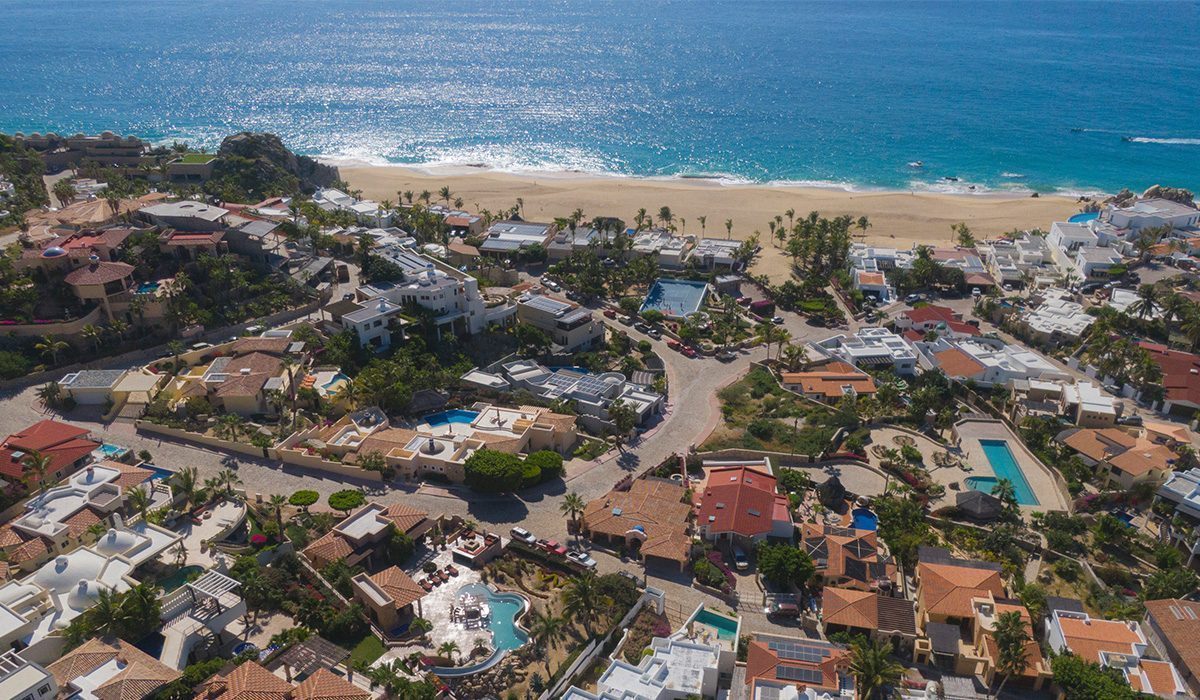
Los Cabos is an outdoor lifestyle. Your week revolves around the ocean — surfing at Cerritos, snorkeling at Chileno Bay, sportfishing off the Corridor, golf at one of 14 championship courses, or sitting on your terrace watching the Sea of Cortez turn gold at sunset. The social scene is resort-driven: beach clubs, pool bars, sunset dinners at El Farallon or Sunset Monalisa. The expat community is estimated at 15,000 to 20,000 and skews wealthy, seasonal, and American.
Mérida is a city lifestyle. Your week revolves around culture — galleries, cafés, live music in the plazas, the Sunday Paseo de Montejo street fair, Mayan ruins at Uxmal 45 minutes away, cenotes for swimming. The social scene is neighborhood-driven: mezcal bars in Santiago, brunch spots in Santa Ana, art openings in Centro. The expat community is estimated at 10,000 to 15,000 and skews creative, budget-conscious, and culturally curious. The beach is 30 minutes away at Progreso or Celestún — nice for a day trip, not a daily ritual.
I walk buyers through this distinction every week: Do you want your home to feel like a permanent vacation, or a permanent relocation into a different culture? Cabo delivers the first. Mérida delivers the second. Neither is wrong, but they are very different lives.
Climate: Desert vs. Tropical
Climate is the sleeper issue that catches people off guard after they have already bought.
Los Cabos sits at the tip of the Baja peninsula in a desert climate. We get 350+ days of sunshine, average humidity around 30–40% most of the year (spiking to 60–70% in September), and temperatures that range from 68°F in January to 95°F in August. It rains meaningfully only during hurricane season (August–October) and even then, storms are infrequent. Most days are blue sky and dry heat.
Mérida sits in the Yucatán lowlands at a tropical latitude. Humidity runs 70–90% year-round. Summer temperatures regularly exceed 100°F with heat indexes above 110°F. The rainy season from June through October brings heavy afternoon downpours and mosquitoes. The Yucatán sits in a more active hurricane zone than Baja — Hurricane Beryl in July 2024 reminded residents of that reality.
I have walked property in both cities in August. In Cabo, I was comfortable in a polo shirt. In Mérida, I was drenched in sweat within 20 minutes. If you are coming from the American Southwest or Mountain West, Cabo's climate will feel familiar. If you are coming from the Southeast, Mérida's humidity might feel like home — or like exactly what you were trying to escape.
Rental Income and Investment Returns
Los Cabos is the clear winner for vacation rental income. The combination of 30+ nonstop US routes, world-class resorts, and a strong tourism brand means Cabo properties command premium nightly rates:
- Cabo one-bedroom condo: $150–$300/night, 60–75% occupancy in peak season → $40,000–$60,000 gross annually
- Cabo luxury villa: $500–$2,000+/night, 50–65% occupancy → $80,000–$200,000+ gross annually
- Mérida Centro colonial home: $80–$150/night, 40–55% occupancy → $15,000–$25,000 gross annually
- Mérida modern condo: $60–$120/night, 35–50% occupancy → $10,000–$20,000 gross annually
However, because Mérida purchase prices are so much lower, the cap rate math can be surprisingly competitive. A $200,000 Mérida property generating $18,000 net delivers a 9% cap rate. A $600,000 Cabo condo generating $45,000 net delivers a 7.5% cap rate. The absolute dollar returns favor Cabo; the percentage returns are closer than most people expect.
The key difference is risk profile. Cabo has deeper tourism demand and more established rental infrastructure with professional management companies. Mérida's vacation rental market is growing but less mature, and occupancy can be volatile outside of winter months. For our detailed Cabo rental income analysis, see our Cabo ROI guide.
Want to Run the Numbers for Your Budget?
We can model projected rental income, cap rates, and total cost of ownership for specific Cabo communities based on your investment criteria.
Book a CallLegal Structure: Fideicomiso vs. Direct Ownership
This is one of the biggest practical differences between the two markets.
Los Cabos sits within Mexico's restricted zone — within 50 km of the coast — so foreign buyers must hold property through a fideicomiso (bank trust) or a Mexican corporation. The fideicomiso costs $1,500–$2,000 to establish and $500–$800 per year to maintain. It works well and is well-established, but it is an additional layer of cost and complexity.
Mérida sits 35 km from the coast and well over 100 km from any international border. It is outside the restricted zone entirely. Foreigners can buy property under dominio pleno — fee simple direct ownership, exactly like buying in the US. No trust, no annual bank fees, no SRE permit. Your name goes directly on the escritura. This simplifies the purchase process and reduces ongoing costs by $500–$800 per year.
Property taxes in both locations are dramatically lower than the US. Mérida's predial tax runs approximately 0.08–0.12% of assessed value annually. Los Cabos runs 0.1–0.15%. On a $300,000 property, expect $300–$450 per year in either market. For the full tax picture, see our Cabo property tax guide.
Getting There: Flights and Access
This is where Los Cabos has an overwhelming advantage.
SJD International Airport receives 30+ nonstop routes from US and Canadian cities. From Los Angeles, you are 2.5 hours away. From Dallas, 3 hours. From Denver, 3.5. From New York, 5.5. Multiple airlines compete on every major route, keeping fares reasonable — $200–$400 round trip from most West Coast cities.
Mérida's Manuel Crescencio Rejón International Airport (MID) has far fewer international options. As of 2026, nonstop service from the US is limited to Miami (American), Houston (United), and seasonal Dallas (American). Most travelers from the West Coast or Northeast connect through Mexico City or Cancún, adding 2–4 hours and $100–$300 to the journey. Total travel time from LAX to Mérida typically runs 8–12 hours with connections versus 2.5 hours nonstop to Cabo.
If you plan to visit your property frequently — monthly weekends, for example — the flight access advantage alone can justify Cabo's higher property prices. Six extra hours of travel each direction, 12 times a year, adds up to more than a week of your life spent in airports.
Healthcare Comparison
Both markets offer good healthcare for expats, but the depth and specialization differ.
Los Cabos has several modern private hospitals including H+ Hospital, BlueNet Hospital, and Hospiten. Specialist care, dental work, and elective procedures are readily available. Medical tourism is a growing sector. For comprehensive coverage, see our Los Cabos healthcare guide.
Mérida has a deeper medical infrastructure for a city its size (1.1 million metro population versus 350,000 in Los Cabos). Star Médica, Hospital CIMA, and Centro Médico de las Américas all offer US-equivalent care at Mexican prices. Mérida has been a medical tourism destination for longer than Cabo and has more specialist physicians per capita. The International Insurance group rates Mérida among the top 5 medical destinations in Latin America.
Property Appreciation History
Los Cabos has delivered stronger appreciation over the past decade. According to market data from the Los Cabos Association of Realtors, the median transaction price has increased approximately 65% from 2016 to 2026. Post-COVID demand — driven by remote work migration and new flight routes — accelerated appreciation to 8–12% annually from 2021 to 2024, with moderation to 6–8% in 2025–2026.
Mérida has also seen strong appreciation, particularly in Centro Historico and northern developments. Colonial renovation projects that sold for $80,000 in 2015 trade for $200,000+ today. The Yucatán state government reports 5–8% annual appreciation across the broader market. The upside: Mérida feels earlier in its appreciation curve. The downside: it also has a thinner resale market with fewer international buyers competing for inventory.
Who Should Buy Where
Choose Los Cabos if you:
- Want ocean-centric, resort-style living
- Plan to generate significant vacation rental income
- Value easy US flight access for frequent visits
- Prefer dry, sunny desert climate year-round
- Have a budget of $500K+ and want luxury amenities — golf, beach clubs, spa
- Want a proven, liquid resale market
Choose Mérida if you:
- Want to immerse in Mexican culture, history, and language
- Have a tighter budget ($150K–$350K) and want maximum space
- Prefer city conveniences — walkability, cafés, galleries, markets
- Are comfortable with tropical humidity and rainy seasons
- Want direct ownership without fideicomiso complexity
- Are looking for earlier-stage appreciation potential
There is no wrong answer here — only wrong expectations. I have seen buyers choose Mérida for the price and then miss the ocean every single day. I have seen buyers choose Cabo for the beach and then miss the cultural depth. Be honest with yourself about which Tuesday you are designing for, and the market choice becomes obvious.
For more market comparisons, see our guides to Cabo vs Puerto Vallarta, Cabo vs Costa Rica, and Cabo vs San Miguel de Allende.
Ready to Explore Los Cabos?
If Cabo is calling, we will help you find the right community, negotiate the right price, and close with confidence. Our team knows every neighborhood, every development, and every hidden listing.
Get StartedFrequently Asked Questions
Is Mérida cheaper than Cabo for real estate?+
Significantly. The median home price for foreign buyers in Mérida's desirable Centro Historico or northern colonias runs $150,000 to $350,000 USD. In Los Cabos, the median condo starts around $450,000 and luxury communities begin at $800,000+. Mérida offers roughly 3x the square footage per dollar compared to coastal Cabo communities.
Which has better rental income — Cabo or Mérida?+
Los Cabos produces significantly higher vacation rental income. Cabo condos in popular communities generate $40,000 to $80,000 annually in gross rental revenue versus $15,000 to $30,000 for comparable Mérida properties. However, Mérida's lower purchase prices mean cap rates are sometimes comparable at 5–7% for both markets.
How many direct flights go to Mérida vs Cabo from the US?+
SJD airport in Los Cabos receives 30+ nonstop routes from US and Canadian cities including LAX, DFW, JFK, SFO, Denver, Chicago, Seattle, and Toronto. Mérida's MID airport has far fewer international options — typically Miami, Houston, and seasonal Dallas service. Most US travelers connect through Mexico City or Cancún to reach Mérida.
What is the climate difference between Cabo and Mérida?+
Los Cabos has a desert climate with 350+ days of sunshine, low humidity for most of the year, and average highs of 80–95°F. Mérida sits in the tropical Yucatán with high humidity year-round (70–90%), summer temperatures regularly exceeding 100°F, and a pronounced rainy season from June through October. Most expats find Cabo's climate significantly more comfortable.
Do I need a fideicomiso to buy in Mérida?+
No. Mérida sits more than 100 km from any coast or international border, placing it outside Mexico's restricted zone. Foreigners can own property directly under dominio pleno (fee simple) without a bank trust. This saves the $1,500–$2,000 fideicomiso setup fee and $500–$800 annual maintenance that Cabo buyers pay.
Which is safer — Cabo or Mérida?+
Both are among Mexico's safest cities for foreigners. Mérida consistently ranks as one of the safest cities in all of the Americas, with violent crime rates below many US cities. Los Cabos has higher overall crime statistics but expat and tourist communities like Pedregal, Palmilla, and the Corridor are very safe with gated security. Both are dramatically safer than the US-Mexico border regions that dominate headlines.

Aaron Cuha
Real Estate Advisor & Los Cabos Market Expert
Real estate advisor and founder of Living In Cabo. 15+ years helping families navigate complex real estate decisions. Strategic partner with Ronival — Baja's largest brokerage.